How Food Helps Animals Heal
Interactive passage with audio narration, comprehension questions, and printable PDF.
By completing this purchase you agree to our Terms of Use and Privacy Policy. Your subscription renews automatically until you cancel. You can cancel anytime from your account settings. All sales are final and non-refundable. Digital content is available for download in your account immediately upon purchase.
What's included
How Food Helps Animals Heal preview and details
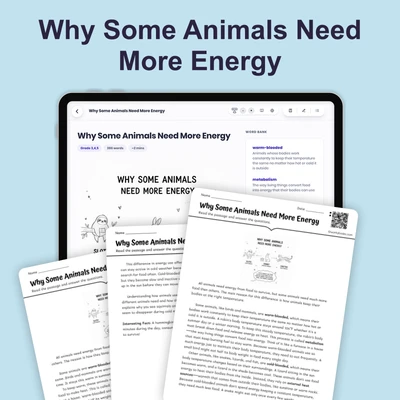
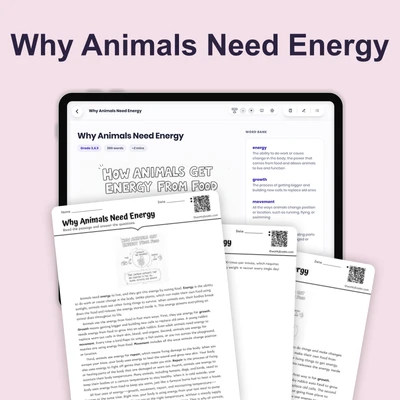
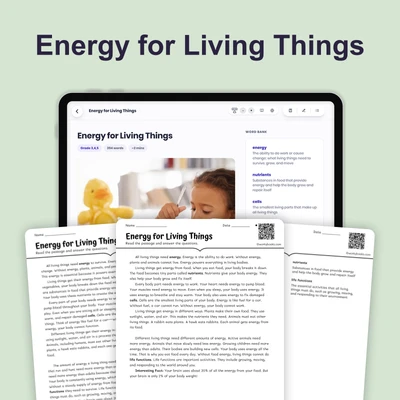
About this printable How Food Helps Animals Heal science reading passage, NGSS-aligned (Grades 4-6)
Sample passage and quiz from How Food Helps Animals Heal
Reading passage and comprehension quiz preview
How Food Helps Animals Heal
Energy is the ability to do work or cause change. Animals get energy from the food they eat. This energy does more than help animals run, jump, and play. It also powers something happening inside their bodies all the time: repair work.
Every animal body is constantly fixing itself. When you get a cut, your body works to close the wound and grow new skin. When a bone breaks, special cells build new bone material to make it strong again. Even when you are not injured, your body is busy replacing old, worn-out cells with fresh new ones. All of this repair work requires energy, just like building or fixing something requires fuel.
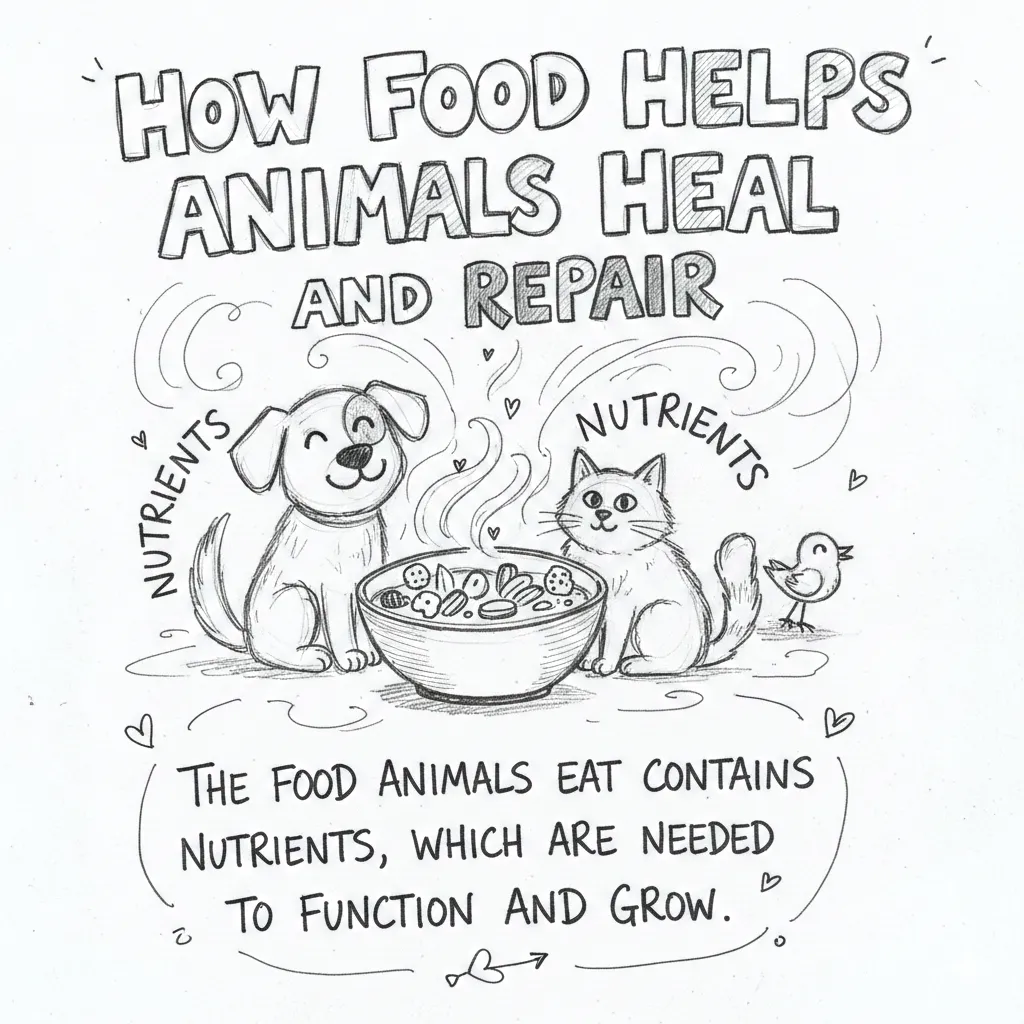
The food animals eat contains nutrients, which are substances the body needs to function and grow. When food is digested, or broken down in the stomach and intestines, these nutrients are released. The body then uses these nutrients and the energy they provide to make repairs. For example, proteins from foods like meat, beans, and eggs help build new cells and repair damaged tissue. Without enough food energy, the body cannot make these repairs effectively.
Body repair happens in many ways. When you scrape your knee, blood cells rush to the area to stop bleeding and fight germs. Then, new skin cells grow to cover the wound. If you break a bone, special bone cells called osteoblasts work to build new bone tissue, making the bone whole again. This process can take weeks or months and requires steady energy from food. Your body also replaces millions of cells every single day. Red blood cells, which carry oxygen throughout your body, only live for about four months before they need to be replaced. Skin cells are replaced about every two to four weeks.
Fighting off sickness also requires energy. When germs enter your body, your immune system (the body's defense system) creates special cells to attack and destroy them. Making these defender cells and keeping them working takes a lot of energy from food. This is why doctors often tell sick people to eat well and rest—the body needs fuel to fight the illness and repair any damage the germs caused.
Without food, animals cannot heal injuries, replace worn-out parts, or fight off disease. Food provides the energy and building materials that keep animal bodies healthy and working properly throughout their entire lives.
Interesting Fact: Your body replaces about 330 billion cells every single day, which means you get a mostly new body approximately every seven to ten years!
Comprehension quiz (8 questions)
1. What do animals get from food?
2. What are nutrients?
3. How long do red blood cells live?
4. Why do sick people need food?
5. What happens when food is digested?
6. What do osteoblasts do in the body?
7. The body replaces cells even when healthy.
8. What does immune system mean?
Perfect for the way you teach
- Build comprehension skills
- Auto-graded quiz
- Differentiated reading
- Read together at home
- Improve fluency
- Quiet reading time
- Reading curriculum support
- Independent practice
- Track Lexile growth