How Food Helps Animals Move
Interactive passage with audio narration, comprehension questions, and printable PDF.
By completing this purchase you agree to our Terms of Use and Privacy Policy. Your subscription renews automatically until you cancel. You can cancel anytime from your account settings. All sales are final and non-refundable. Digital content is available for download in your account immediately upon purchase.
What's included
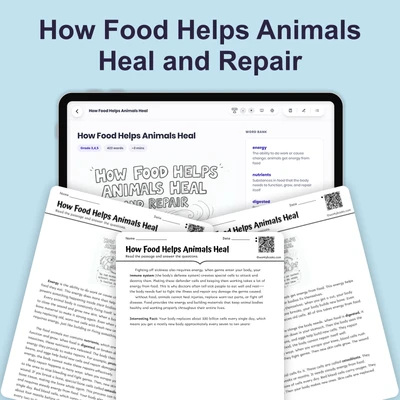
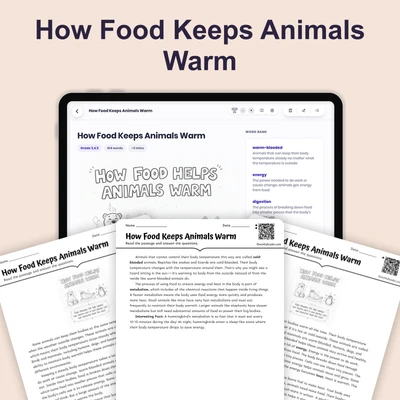
How Food Helps Animals Move preview and details
About this printable How Food Helps Animals Move science reading passage, NGSS-aligned (Grades 4-6)
Sample passage and quiz from How Food Helps Animals Move
Reading passage and comprehension quiz preview
How Food Helps Animals Move
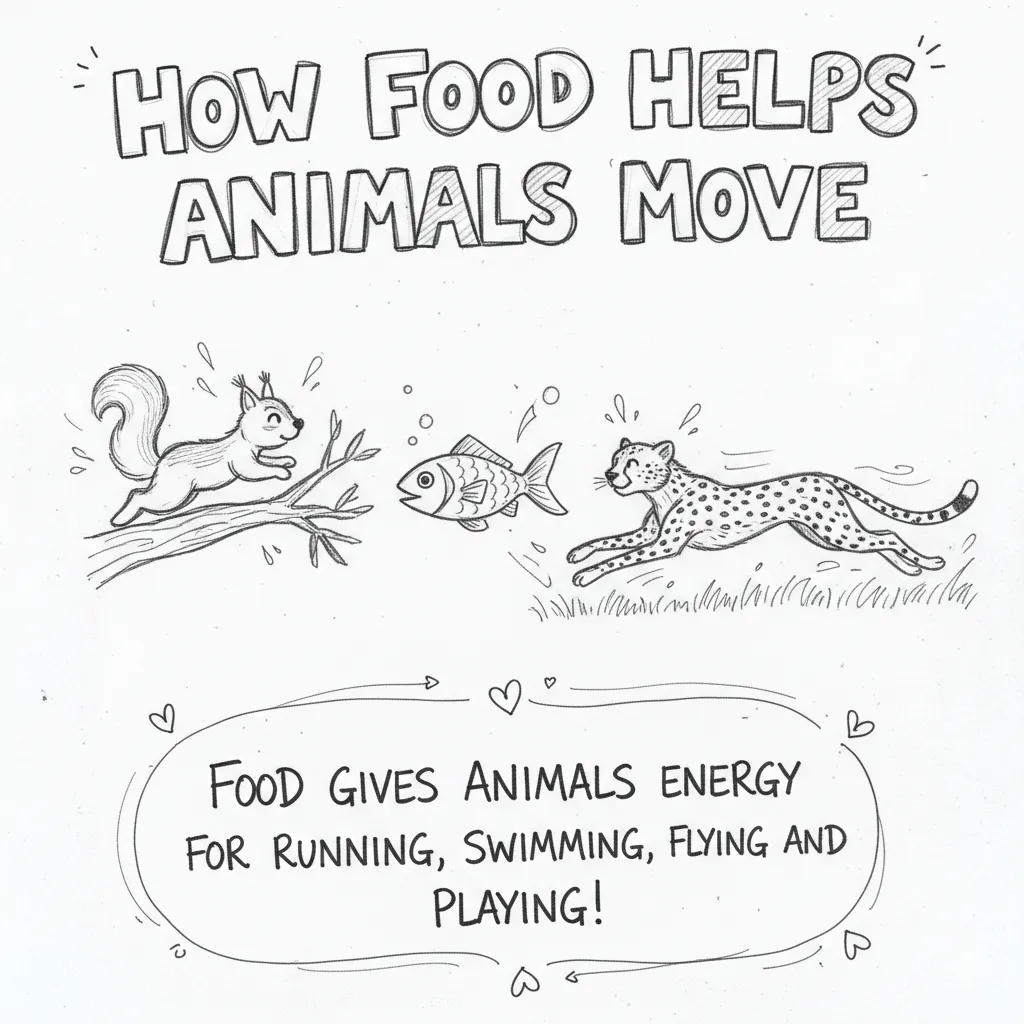
All animals need to move to survive. They move to find food, escape danger, and search for shelter. But how do animals get the power to move? The answer is energy — the ability to do work or cause change. Animals get energy from the food they eat, and this energy powers every single movement they make.
When an animal eats food, its body breaks down the food during a process called digestion. Digestion is when the body breaks food into tiny pieces that can be used by cells. The energy stored in food is then released and sent to all parts of the body through the blood. This energy travels to muscles — the body parts that make movement possible. Muscles are like stretchy rubber bands attached to bones. When muscles tighten and relax, they pull on bones and create movement.
Think of it this way: a car needs gasoline to move. The engine burns the gasoline and turns it into energy that makes the wheels turn. Animals work in a similar way. Food is like gasoline for an animal's body. The body uses the energy from food to make muscles work, which creates motion — any change in position or place.
Different animals move in different ways, and each type of movement requires energy. A cheetah running at full speed uses a lot of energy very quickly. A bird flying across the sky flaps its wings hundreds of times, and each flap needs energy from food. Even a snake slithering slowly across the ground is using energy stored in its muscles. Animals that move more need to eat more food to replace the energy they use.
Movement isn't just about running or flying. Even when an animal is resting, its body is still moving on the inside. The heart is a muscle that pumps blood all day and all night. The lungs move to bring in air. The stomach muscles push food through the digestive system. All of these movements need energy from food. Without food, an animal's muscles would not have the energy to work, and the animal could not survive.
The amount of food an animal needs depends on how much it moves. A hummingbird beats its wings up to 80 times per second, so it must eat almost constantly. An animal like a sloth moves very slowly and sleeps most of the day, so it needs much less food. The more an animal moves, the more fuel — or food energy — it needs to keep going.
Interesting Fact: A tiny shrew must eat almost its entire body weight in food every single day because its heart beats over 1,000 times per minute, using huge amounts of energy just to stay alive!
Comprehension quiz (8 questions)
1. What do animals get from food?
2. What is digestion?
3. What body parts create movement?
4. Why does a hummingbird need more food?
5. How is food like gasoline?
6. What happens when muscles tighten?
7. The heart needs energy even when resting.
8. What does motion mean?
Perfect for the way you teach
- Build comprehension skills
- Auto-graded quiz
- Differentiated reading
- Read together at home
- Improve fluency
- Quiet reading time
- Reading curriculum support
- Independent practice
- Track Lexile growth