Why Some Animals Need More Energy
Interactive passage with audio narration, comprehension questions, and printable PDF.
By completing this purchase you agree to our Terms of Use and Privacy Policy. Your subscription renews automatically until you cancel. You can cancel anytime from your account settings. All sales are final and non-refundable. Digital content is available for download in your account immediately upon purchase.
What's included
Why Some Animals Need More Energy preview and details
About this printable Why Some Animals Need More Energy science reading passage, NGSS-aligned (Grades 4-6)
Sample passage and quiz from Why Some Animals Need More Energy
Reading passage and comprehension quiz preview
Why Some Animals Need More Energy
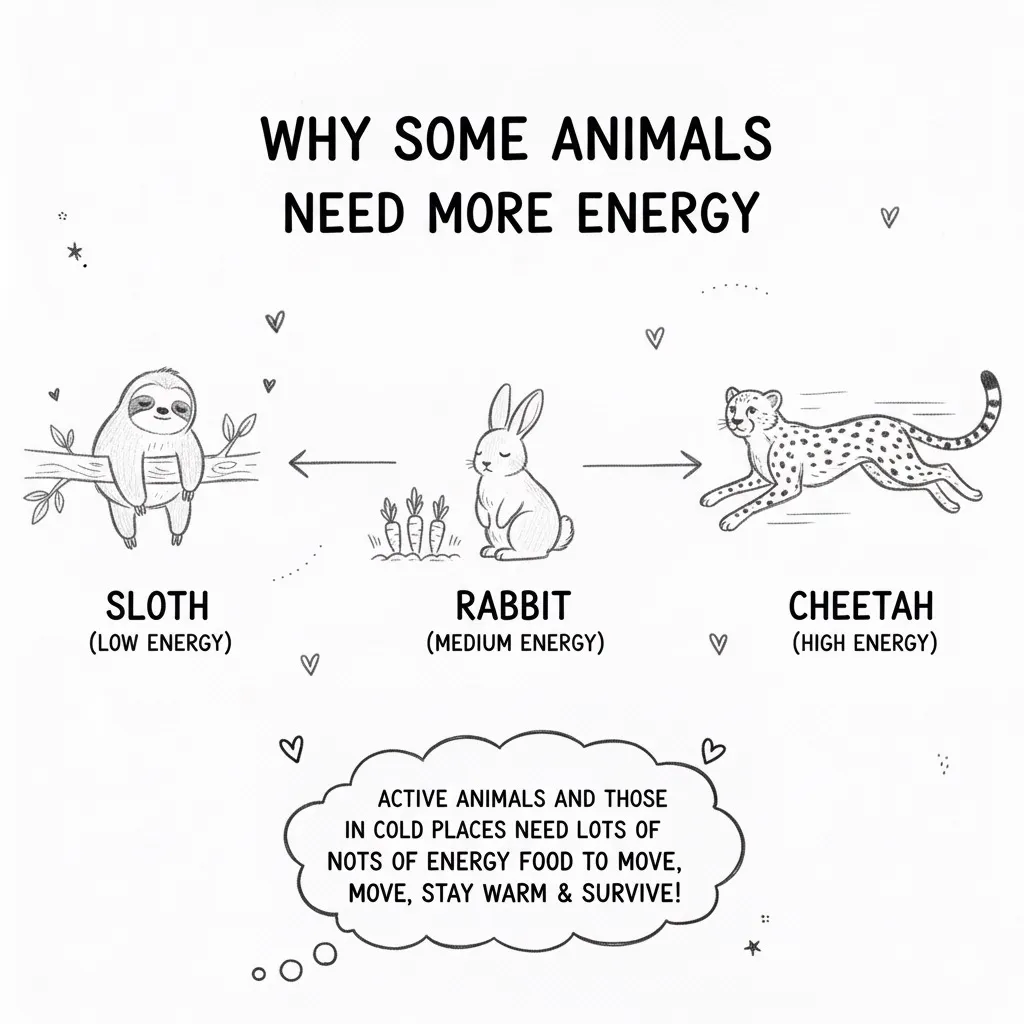
All animals need energy from food to survive, but some animals need much more food than others. The main reason for this difference is how animals keep their bodies at the right temperature.
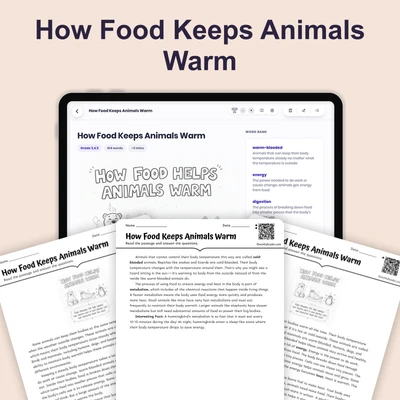
Some animals, like birds and mammals, are warm-blooded, which means their bodies work constantly to keep their temperature the same no matter how hot or cold it is outside. A robin's body temperature stays around 104°F whether it's a summer day or a winter morning. To keep this steady temperature, the robin's body must break down food and release energy as heat. This process is called metabolism—the way living things convert food into energy. Think of it like a furnace in a house that must keep burning fuel to stay warm. Because warm-blooded animals use so much energy just to maintain their body temperature, they need to eat frequently. A small bird might eat half its body weight in food every single day.
Other animals, like snakes, lizards, and fish, are cold-blooded, which means their body temperature changes based on their surroundings. A lizard sitting in the sun becomes warm, and a lizard in the shade becomes cool. These animals don't use food energy to heat their bodies from the inside. Instead, they rely on external heat sources—warmth that comes from outside their bodies, like sunshine or warm rocks. Because cold-blooded animals don't spend energy keeping a constant temperature, they need much less food. A snake might eat only once every few weeks.
This difference in energy use affects how animals behave. Warm-blooded animals can stay active in cold weather because they generate their own heat, but they must search for food often. Cold-blooded animals save energy by not heating themselves, but they become slow and inactive when it's cold outside. They often need to warm up in the sun before they can move quickly.
Understanding how animals use energy helps scientists predict how much food different animals need and how they survive in different environments. It also explains why you see squirrels and birds active all winter, while snakes and turtles seem to disappear during cold months.
Interesting Fact: A hummingbird's metabolism is so fast that it must eat every 10-15 minutes during the day, consuming more than its own body weight in nectar daily just to survive!
Comprehension quiz (8 questions)
1. What does metabolism mean?
2. Why do warm-blooded animals eat frequently?
3. How often might a snake eat?
4. What happens when a lizard sits in shade?
5. Why can warm-blooded animals stay active in winter?
6. What do cold-blooded animals rely on for warmth?
7. Cold-blooded animals need more food than warm-blooded animals.
8. What is an external heat source?
Perfect for the way you teach
- Build comprehension skills
- Auto-graded quiz
- Differentiated reading
- Read together at home
- Improve fluency
- Quiet reading time
- Reading curriculum support
- Independent practice
- Track Lexile growth