How Food Keeps Animals Warm
Interactive passage with audio narration, comprehension questions, and printable PDF.
By completing this purchase you agree to our Terms of Use and Privacy Policy. Your subscription renews automatically until you cancel. You can cancel anytime from your account settings. All sales are final and non-refundable. Digital content is available for download in your account immediately upon purchase.
What's included
How Food Keeps Animals Warm preview and details
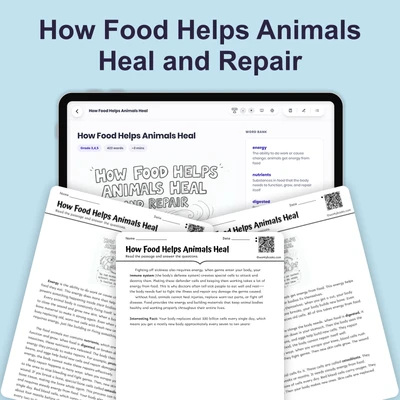
About this printable How Food Keeps Animals Warm science reading passage, NGSS-aligned (Grades 4-6)
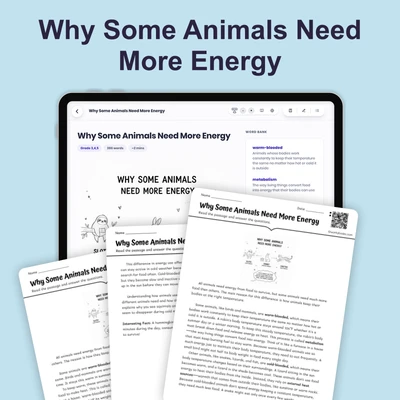
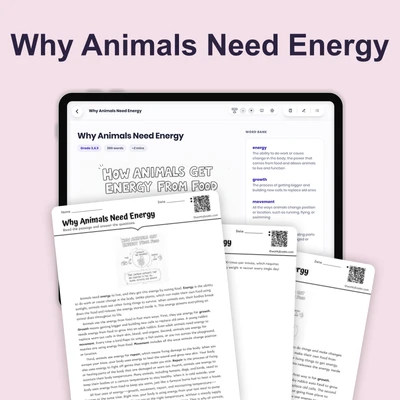
Sample passage and quiz from How Food Keeps Animals Warm
Reading passage and comprehension quiz preview
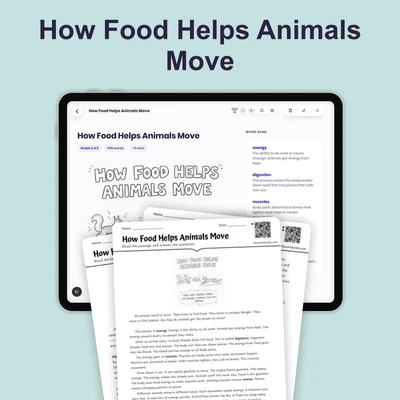
How Food Keeps Animals Warm
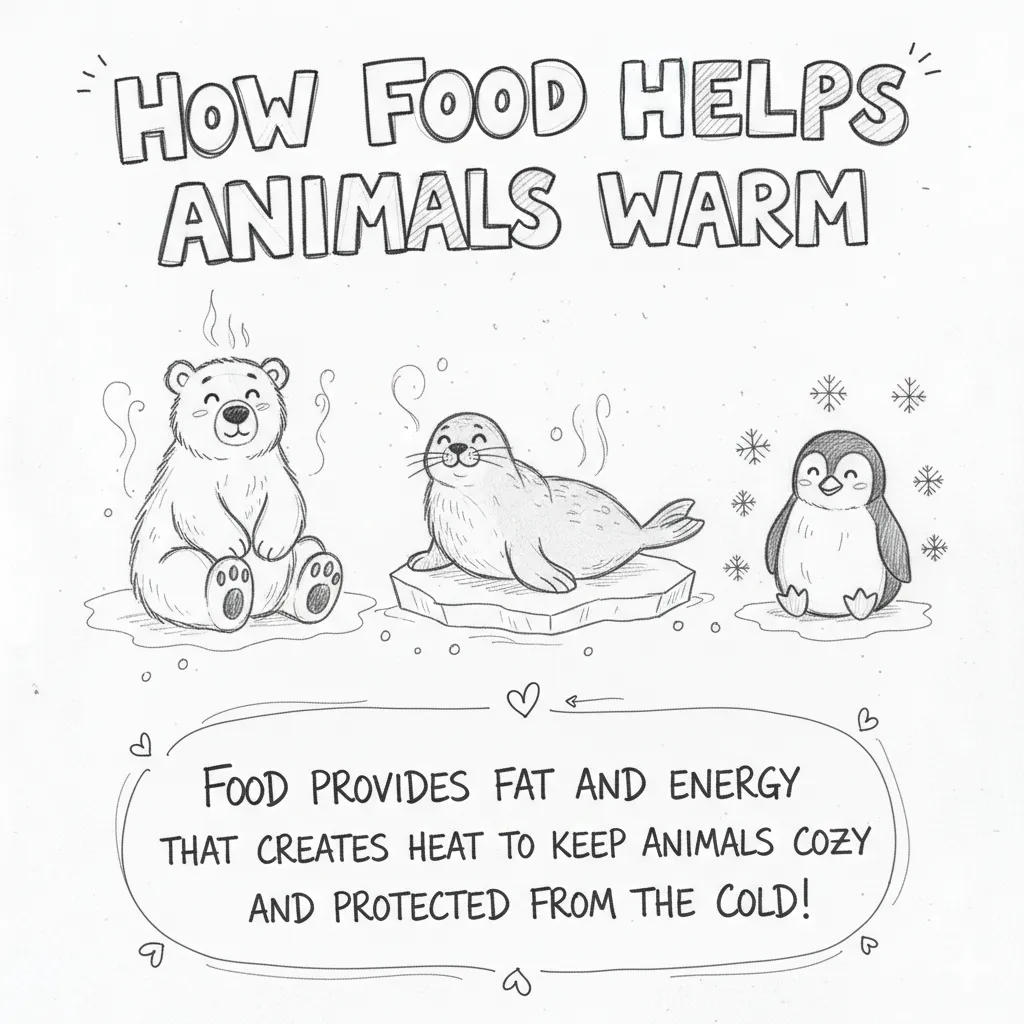
Some animals can keep their bodies at the same temperature all the time, even when the weather outside changes. These animals are called warm-blooded animals, which means their body temperature stays steady whether it's hot or cold outside. Birds and mammals, including humans, dogs, and bears, are all warm-blooded. This ability to maintain body warmth helps these animals stay active and healthy in different environments.
Keeping a steady body temperature takes a lot of energy—the power needed to do work or cause change. Warm-blooded animals get this energy from the food they eat. Inside their bodies, food is broken down through a process called digestion, which turns food into smaller pieces that cells can use. Once the food is digested, the body's cells use it to release energy. Some of this energy helps animals move, grow, and think. But a large amount of the energy is released as heat, which is thermal energy that warms the body.
Think of your body like a furnace that burns fuel to make heat. Just as a furnace needs wood or gas to keep a house warm, your body needs food to keep you warm. When it's cold outside, warm-blooded animals need even more food because their bodies work harder to stay warm. This is why some animals eat much more during winter months. For example, a small bird might eat half its body weight in food each day during winter just to maintain its body temperature.
Animals that cannot control their body temperature this way are called cold-blooded animals. Reptiles like snakes and lizards are cold-blooded. Their body temperature changes with the temperature around them. That's why you might see a lizard sitting in the sun—it's warming its body from the outside instead of from the inside like warm-blooded animals do.
The process of using food to create energy and heat in the body is part of metabolism, which includes all the chemical reactions that happen inside living things. A faster metabolism means the body uses food energy more quickly and produces more heat. Small animals like mice have very fast metabolisms and must eat frequently to maintain their body warmth. Larger animals like elephants have slower metabolisms but still need substantial amounts of food to power their big bodies.
Interesting Fact: A hummingbird's metabolism is so fast that it must eat every 10-15 minutes during the day! At night, hummingbirds enter a sleep-like state where their body temperature drops to save energy.
Comprehension quiz (8 questions)
1. What are warm-blooded animals?
2. Where do warm-blooded animals get energy?
3. What is digestion?
4. Why do animals eat more in winter?
5. How do cold-blooded animals warm their bodies?
6. What does fast metabolism mean?
7. Cold-blooded animals can keep steady body temperature.
8. What is metabolism?
Perfect for the way you teach
- Build comprehension skills
- Auto-graded quiz
- Differentiated reading
- Read together at home
- Improve fluency
- Quiet reading time
- Reading curriculum support
- Independent practice
- Track Lexile growth