John Cabot: Exploring North America — Reading Comprehension
Rate this
Premium Resource
Present
Present in classroom. No work saved
Assign
Classroom with student accounts, Track progress
Quick Play
No student accounts, assign with a link
Grades
3
4
5
Standards
D2.HIS.1.3-5
D2.HIS.2.3-5
D2.HIS.3.3-5
RI.4.3
RI.4.4
W.4.2
PRINT+DIGITAL RESOURCE
This learning resource is available in interactive and printable formats. The interactive worksheet can be played online and assigned to students. The Printable PDF version can be downloaded and printed for completion by hand.
This engaging reading passage explores the life and voyages of John Cabot, an important explorer who helped England find a path to North America. Students will learn about Cabot’s bravery, his historic journey across the Atlantic Ocean in 1497, and how his discoveries influenced English exploration and later settlements in the New World. The passage uses a clear, chronological structure and simple language to build foundational history knowledge and literacy skills. Key vocabulary is highlighted and explained in a glossary. Activities include a comprehensive quiz, writing prompts, and graphic organizers to support deeper understanding. A timeline charts major events in Cabot’s journey, and the passage concludes with a fascinating historical fact. Aligned with C3 history and Common Core standards, this resource also features a Spanish translation and read aloud audio, making it accessible and engaging for all learners.
CONTENT PREVIEW
Expand content preview
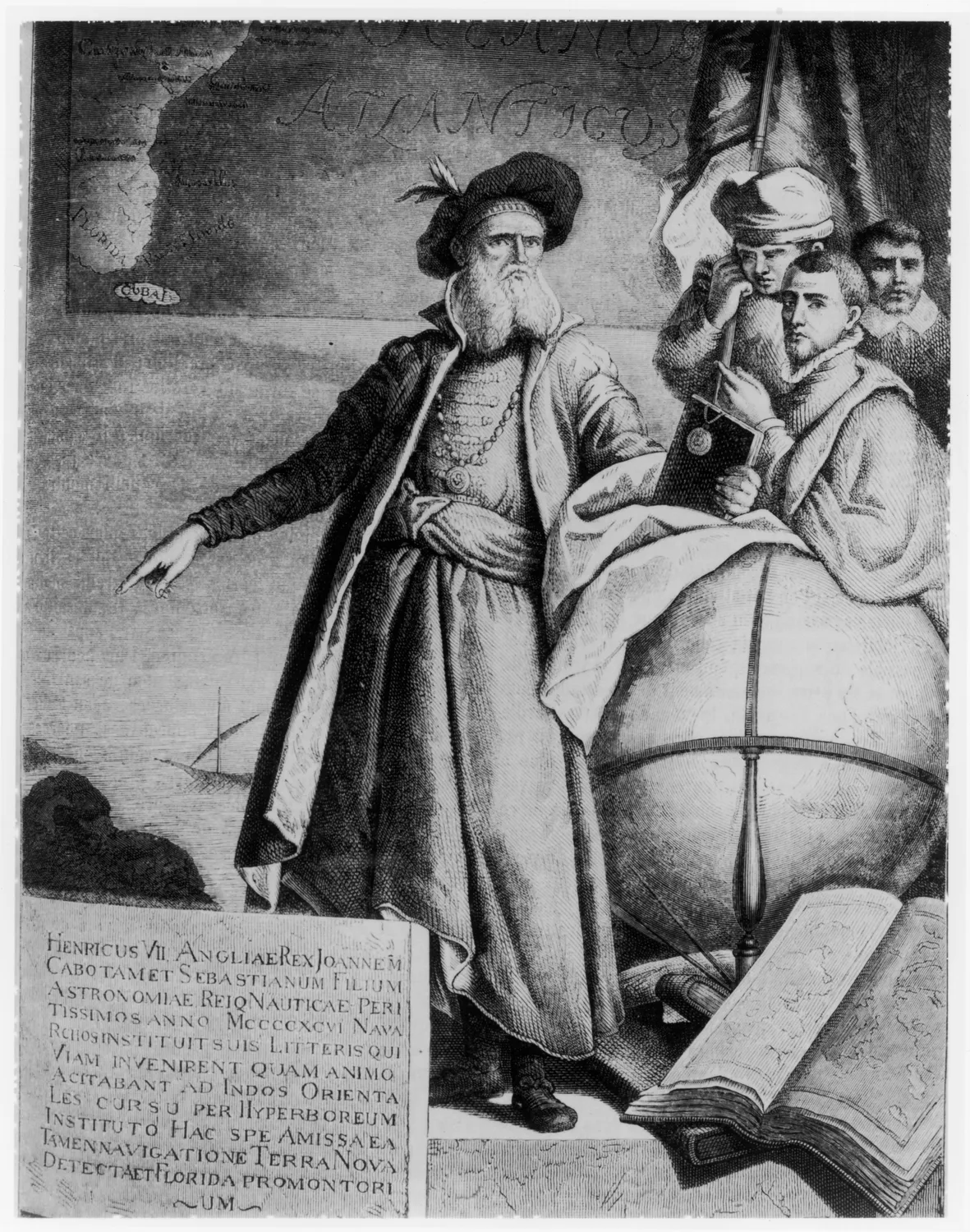
"John Cabot" / Wikimedia Commons (Public domain).
John Cabot was an Italian explorer who became an important figure in U.S. history. In the late 1400s, countries in Europe wanted to find new trade routes and lands. England wanted to compete with Spain and Portugal, who had already claimed large areas in the New World.
Cabot was born as Giovanni Caboto in Italy. He moved to England to seek support for his voyage. King Henry VII of England gave Cabot permission to explore new lands for England. Cabot believed he could reach Asia by sailing west across the Atlantic Ocean, just as Christopher Columbus had tried.
In May 1497, Cabot set sail from Bristol, England, on a small ship called the Matthew. He sailed with a small crew and faced many dangers, including storms and unknown waters. After about a month at sea, Cabot’s ship reached land. He became one of the first Europeans since the Vikings to reach the coast of North America. Most historians believe he landed somewhere in what is now Canada.
Cabot claimed the land for England by planting a flag. This act was very important. It gave England the right to claim and later settle parts of North America. Cabot’s voyage was the first recorded English exploration of the New World, and it started England’s interest in building colonies there.
After returning to England, Cabot was celebrated for his discovery. The king rewarded him, and Cabot planned more journeys, but he never returned to North America. Still, his first voyage had a lasting impact. It opened the way for later explorers and helped England become a powerful country in the Americas.
Cabot’s journey is remembered as a moment of bravery and adventure. His exploration changed history by giving England a claim to the land that would one day become the United States.
Interesting Fact: John Cabot’s real name was Giovanni Caboto, but he is known by his English name because he sailed for England.
What country did John Cabot sail for?
EnglandSpainPortugalFrance
When did Cabot reach North America?
1497162017761400
What was the name of Cabot’s ship?
MatthewSanta MariaMayflowerEndeavour
Why was Cabot’s voyage important?
It gave England a claimHe found goldHe started a warHe met Native Americans
What effect did Cabot’s voyage have?
England could build coloniesSpain became strongerPortugal ruled AmericaCabot stayed in America
What was Cabot’s real name?
Giovanni CabotoChristopher ColumbusHenry HudsonMarco Polo
Cabot never returned to North America.
TrueFalse
What does 'colony' mean?
Land ruled by another countryA kind of shipA group of explorersA trade route
Perfect For:
👩🏫 Teachers
• Reading comprehension practice
• Auto-graded assessments
• Literacy skill development
👨👩👧👦 Parents
• Reading practice at home
• Comprehension improvement
• Educational reading time
🏠 Homeschoolers
• Reading curriculum support
• Independent reading practice
• Progress monitoring
Reading Features:
📖
Reading Passage
Engaging fiction or nonfiction text
❓
Comprehension Quiz
Auto-graded questions
📊
Instant Feedback
Immediate results and scoring
📄
Printable Version
Download for offline reading
🔊
Read Aloud
Voice-over with word highlighting
Reviews & Ratings
No reviews yet. Be the first to share your experience!
Related Content
Informational Text —Healthy Teeth and Gums
RI.4.10RI.4.3RF.4.4RF.4.4.A
Informational Text —Migratory Birds
Engage young minds with this worksheet that delves into the wonders of migratory birds. Learn about their extraordinary ...
RI.4.10RI.4.3RF.4.4RF.4.4.A
Natural Disasters and Urban flooding
This reading comprehension worksheet focuses on the topic of natural disasters, specifically urban flooding. Following t...
RI.4.44-ESS3ESS3.B4-ESS3-1
The Formation of Fossils
L.4.2.DL.4.6RI.4.4
Climate and Water Cycle
W.4.2.ARI.4.4RI.4.1
Ocean Acidification
Download this reading comprehension worksheet about ocean acidification. The worksheet includes an informational text ab...
RI.4.4
Understanding Climate Action Context Clues
Understanding Climate Action" worksheet, aligned with CCS L.4.4.A and NGSS. This resource introduces key concepts such a...
L.4.4.ARI.4.1RI.4.4
Informational Text —The History of Toothpaste
RI.4.4RI.4.4
Informational Text —All About Dentists
Students read an informational text explaining what dentists do and how they are trained. Aligned to RI.4.3-2
RI.4.10RI.4.3RF.4.4RF.4.4.A
The Role of Pollinators in Nature
Learn about the fascinating world of pollinators and discover their crucial role in the reproductive process of flowerin...
RI.4.2RI.4.3RI.4.4RI.5.1
Pollination: A Crucial Ecosystem Service
Explore the vital role of pollination beyond plant reproduction, as it sustains ecosystems by ensuring food security, pr...
RI.4.2RI.4.3RI.4.4RI.5.1
Seed Dispersal: How Plants Travel
Plants may seem stationary, but their seeds have amazing ways to travel! Explore the fascinating world of seed dispersal...
RI.4.2RI.4.3RI.4.4RI.5.1
The States of Matter: Solid
Discover the differences between solids, liquids and gases by exploring how their particles are arranged and move. This ...
RI.4.2RI.4.3RI.4.4RI.5.1
What is a Simple Machine
Discover the power of simple machines! This informational text explores how basic tools like levers, pulleys and incline...
RI.4.2RI.4.3RI.4.4RI.5.1
The Life Cycle of a Salmon
Salmon have a remarkable life cycle that takes them from rivers to the ocean and back again. They hatch as alevin, grow ...
RI.3.1RI.4.4RI.4.2
Journey of a Sea Turtle
Sea turtles lay their eggs on beaches, and their hatchlings begin a dangerous journey to the ocean. After growing in the...
RI.3.1RI.4.4RI.4.2
Heroes for Freedom: Harriet Tubman
Harriet Tubman, born into slavery, became a hero who risked her life to lead others to freedom through the Underground R...
RI.3.1RI.4.4RI.4.2RI.5.2
Heroes for Freedom: Fannie Lou Hamer
Fannie Lou Hamer overcame racial segregation and poverty to become a powerful voice for civil rights. Her fight for voti...
RI.3.1RI.4.4RI.4.2RI.5.2
Sports: Lionel Messi
Lionel Messi, known for his unparalleled dribbling and passing, has broken records, won multiple FIFA Ballon d'Or awards...
RI.3.1RI.4.4RI.4.2RI.5.2
Natural Disaster: Droughts
Droughts are long periods with insufficient water, leading to crop failures and water shortages. Conserving water and pl...