Main causes of a heat dome? — Reading Comprehension
Rate this|
23
Present
Present in classroom. No work saved
Assign
Classroom with student accounts, Track progress
Quick Play
No student accounts, assign with a link
Grades
4
5
Standards
RI.5.1
PRINT+DIGITAL RESOURCE
This learning resource is available in interactive and printable formats. The interactive worksheet can be played online and assigned to students. The Printable PDF version can be downloaded and printed for completion by hand.
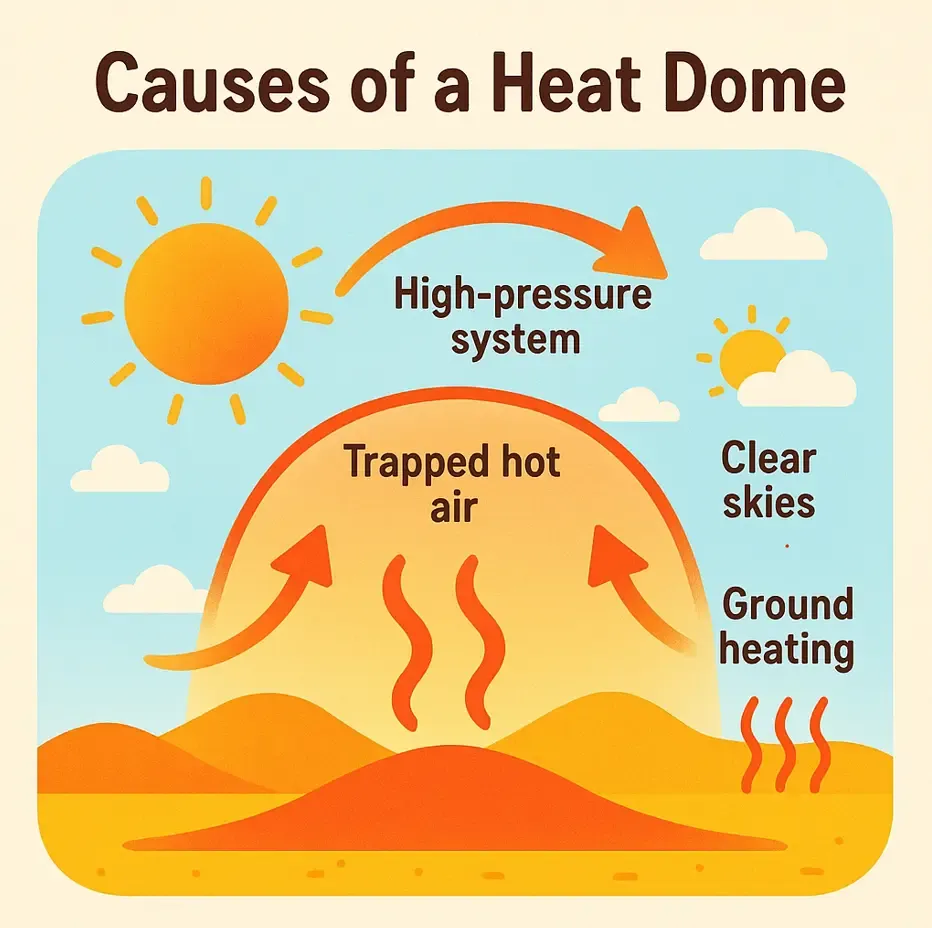
Heat domes are caused by specific atmospheric patterns, primarily involving high-pressure systems. These high-pressure areas act like a cap, trapping hot air underneath and preventing it from escaping. Clear skies and calm weather associated with these systems allow the sun to continuously heat the ground and air, increasing temperatures. Occasionally, warmer-than-usual ocean temperatures contribute to the formation of heat domes by heating the air above, which then moves over land. Climate change can intensify and increase the frequency of these events. Understand the main causes of heat domes and test your knowledge with engaging multiple-choice questions.
CONTENT PREVIEW
Expand content preview
Heat domes are caused by special patterns in the way air moves high up in the sky. These patterns are part of our planet's weather system.
The main cause of a heat dome is high pressure in the atmosphere. This is an area where the air pressure is higher than the areas around it. This high pressure acts like a cap, trapping hot air underneath.
High-pressure systems often bring clear skies and calm weather. The sun keeps shining through the clear skies, heating the ground and the air even more. With nowhere for the hot air to go, it just keeps getting hotter.
In a heat dome, a very strong high-pressure system gets stuck in one place. It's like a big, invisible mountain of air that doesn't want to move.
Sometimes, changes in ocean temperatures can help create the conditions for a heat dome. When ocean water is warmer than usual, it can cause the air above it to heat up too. This warm air can then move over land, creating a heat dome. Climate change can make heat domes more common and intense.
What is the main cause of a heat dome?
Low pressure in the atmosphereHigh pressure in the atmosphereStrong windsHeavy rainfall
What kind of weather does a high-pressure system often bring?
Rainy and windyCloudy and coolStormy and wetClear and calm
How can ocean temperatures affect heat domes?
They have no effectColder oceans create more heat domesOnly frozen oceans cause heat domesWarmer oceans can contribute to heat dome formation
What can make heat domes more common and intense?
More treesIncreased rainfallClimate changeColder winters
Perfect For:
👩🏫 Teachers
• Reading comprehension practice
• Auto-graded assessments
• Literacy skill development
👨👩👧👦 Parents
• Reading practice at home
• Comprehension improvement
• Educational reading time
🏠 Homeschoolers
• Reading curriculum support
• Independent reading practice
• Progress monitoring
Reading Features:
📖
Reading Passage
Engaging fiction or nonfiction text
❓
Comprehension Quiz
Auto-graded questions
📊
Instant Feedback
Immediate results and scoring
📄
Printable Version
Download for offline reading
🔊
Read Aloud
Voice-over with word highlighting
Reviews & Ratings
No reviews yet. Be the first to share your experience!
Related Content
Pandas—Informational Text
This informational text on pandas is a great way to practice reading comprehension. Students will read the text then ans...
RI.5.1RI.5.10
The Role of Pollinators in Nature
Learn about the fascinating world of pollinators and discover their crucial role in the reproductive process of flowerin...
RI.4.2RI.4.3RI.4.4RI.5.1
Pollination: A Crucial Ecosystem Service
Explore the vital role of pollination beyond plant reproduction, as it sustains ecosystems by ensuring food security, pr...
RI.4.2RI.4.3RI.4.4RI.5.1
Seed Dispersal: How Plants Travel
Plants may seem stationary, but their seeds have amazing ways to travel! Explore the fascinating world of seed dispersal...
RI.4.2RI.4.3RI.4.4RI.5.1
The States of Matter: Solid
Discover the differences between solids, liquids and gases by exploring how their particles are arranged and move. This ...
RI.4.2RI.4.3RI.4.4RI.5.1
What is a Simple Machine
Discover the power of simple machines! This informational text explores how basic tools like levers, pulleys and incline...
RI.4.2RI.4.3RI.4.4RI.5.1
Health Risks of Heat Domes
Heat domes pose significant health risks as our bodies struggle to maintain a safe temperature in extreme heat. Dehydrat...
RI.5.1
Staying Safe During Heat Domes
RI.5.1
Sunspots and Solar Flares
This quiz is designed to test your understanding of the fascinating phenomena of sunspots and solar flares, as described...
RI.4.1RI.4.4RI.5.1ESS1.A
Simple Machines: How They Work
Students read an informative paragraph on simple machines and fill in key technical vocabulary terms to demonstrate unde...
RI.4.2RI.4.3RI.4.4RI.5.1
The 13th Amendment Ends Slavery
This passage explores the history and impact of the 13th Amendment, which ended slavery in the United States. Students w...