Mass Production and Assembly Lines
Interactive passage with audio narration, comprehension questions, and printable PDF.
By completing this purchase you agree to our Terms of Use and Privacy Policy. Your subscription renews automatically until you cancel. You can cancel anytime from your account settings. All sales are final and non-refundable. Digital content is available for download in your account immediately upon purchase.
What's included
Mass Production and Assembly Lines preview and details
About this printable Mass Production and Assembly Lines reading passage (Grades 6-8)
Sample passage and quiz from Mass Production and Assembly Lines
Reading passage and comprehension quiz preview
Mass Production and Assembly Lines
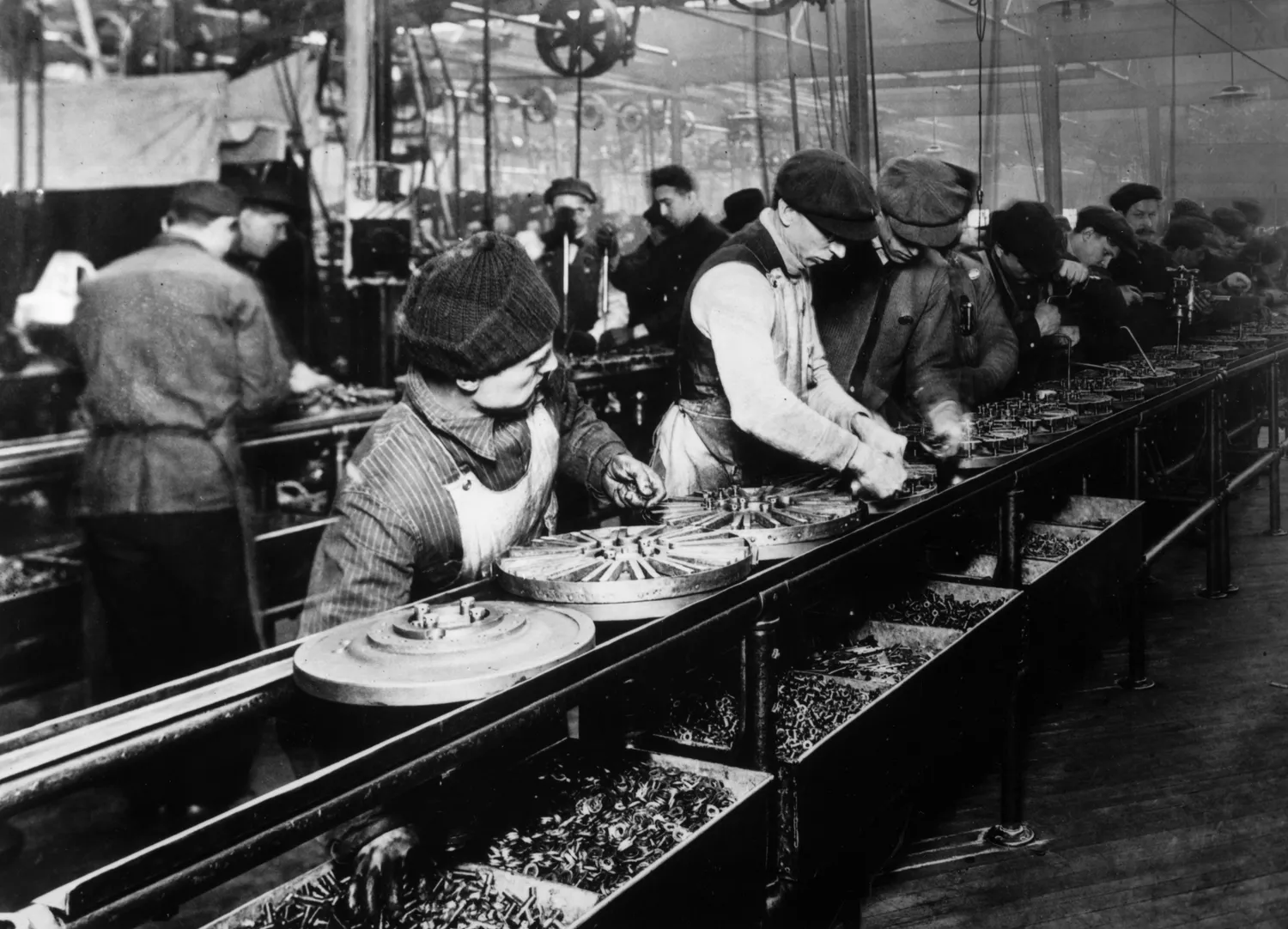
"Ford assembly line - 1913" /
Source: Wikimedia Commons (Public domain).
The arrival of mass production and assembly lines in the early 20th century marked a turning point in American manufacturing. Factories began to organize work into simple, repetitive tasks. Instead of one person building a product from start to finish, each worker completed a specific step. This method, known as the assembly line, dramatically increased efficiency and lowered the cost of goods.
Before these innovations, many products were made by skilled craftspeople, who took a long time to finish each item. As demand for goods like automobiles grew, this old system could not keep up. The introduction of the assembly line solved several problems at once. By dividing the work, factories could produce more items faster. This process is called standardization, meaning each part and finished product was almost identical. Standardization made repairs easier and reduced waste.
Henry Ford was one of the most influential figures in perfecting the assembly line. At Ford’s Detroit factory in 1913, moving conveyor belts carried car parts from worker to worker. Each person repeated the same job, such as attaching a wheel or installing a windshield. This system shortened the time to build a car from over twelve hours to just ninety-three minutes. As a result, Ford was able to lower prices and pay workers higher wages, making cars affordable for many Americans.
However, the system also had drawbacks. Factory work became more repetitive and sometimes boring. Workers no longer needed special skills, and their jobs could feel less rewarding. Some people worried that machines would replace human labor or that workers would be treated like parts of a machine themselves. Labor unions formed to protect workers’ rights and push for better conditions.
Despite these challenges, mass production and assembly lines spread rapidly to other industries. Factories making household appliances, clothing, and even food soon adopted these methods. This led to an explosion of affordable goods and contributed to the growth of the American middle class. It also meant more people could buy things that were once considered luxuries, such as cars, radios, and refrigerators.
In summary, the rise of mass production and assembly lines solved the problem of slow, expensive manufacturing. It created new opportunities but also brought new challenges for workers and society. By increasing efficiency and lowering costs, these innovations shaped the modern American economy and changed everyday life for millions.
Interesting Fact: Henry Ford’s $5-a-day wage, introduced in 1914, was more than double the average pay at the time, attracting thousands of workers to his factories.
Comprehension quiz (8 questions)
1. Who perfected the assembly line?
2. What year did Ford introduce the assembly line?
3. What did Ford pay workers in 1914?
4. How did mass production affect prices?
5. Why did unions form in factories?
6. What is standardization?
7. Mass production made goods affordable. True or false?
8. Which word means making things quickly and cheaply?
Perfect for the way you teach
- Build comprehension skills
- Auto-graded quiz
- Differentiated reading
- Read together at home
- Improve fluency
- Quiet reading time
- Reading curriculum support
- Independent practice
- Track Lexile growth