The Growth of Big Business
Interactive passage with audio narration, comprehension questions, and printable PDF.
By completing this purchase you agree to our Terms of Use and Privacy Policy. Your subscription renews automatically until you cancel. You can cancel anytime from your account settings. All sales are final and non-refundable. Digital content is available for download in your account immediately upon purchase.
What's included
The Growth of Big Business preview and details
About this printable The Growth of Big Business reading passage (Grades 6-8)
Sample passage and quiz from The Growth of Big Business
Reading passage and comprehension quiz preview
The Growth of Big Business
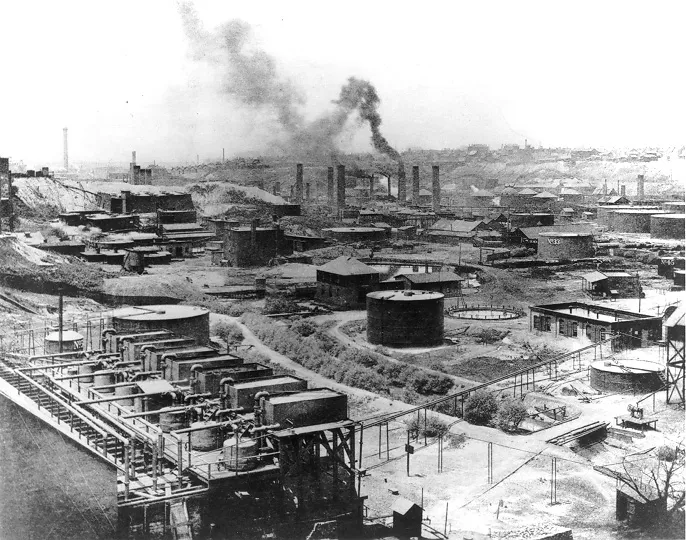
"Standard Oil" /
Source: Wikimedia Commons (Public domain).
During the late 1800s and early 1900s, the United States experienced a major shift in its economy as big business began to dominate American life. This period, known as the Progressive Era, saw the rise of powerful corporations—large companies owned by many investors that were able to raise huge amounts of money. Over time, these corporations grew by consolidation, which means combining smaller companies into one larger business. This process changed how Americans worked, shopped, and lived.
One key feature of this new economic system was expansion. Businesses used new technologies, such as the assembly line and railroads, to produce goods on a much larger scale. The growth in industry—including steel, oil, and railroads—allowed companies to make products faster and cheaper than ever before. Entrepreneurs like John D. Rockefeller and Andrew Carnegie built vast empires by controlling every step of their industries, from raw materials to finished goods.
However, the rapid growth of big business was not without its problems. As companies merged and expanded, some became monopolies, meaning they controlled almost all of one type of business. This often led to higher prices and less choice for consumers. Many workers faced difficult conditions, including long hours and low pay. Labor unions formed to fight for better wages and safer workplaces, leading to major strikes and conflicts between workers and business owners.
Government officials and reformers began to worry about the power of these massive corporations. They passed new regulations to limit monopolies and protect consumers. Laws like the Sherman Antitrust Act tried to encourage competition and prevent one company from controlling an entire industry. At the same time, some people believed that big business was necessary for American progress, because it created jobs and led to new inventions.
The growth of big business also had lasting effects on American society. Cities expanded as people moved to work in factories and offices. Consumer culture grew as advertising and department stores became more common. The changes brought both opportunities—such as higher standards of living—and challenges, including economic inequality and debates about the role of government in the economy.
Overall, the rise of big business during the Progressive Era was a time of both excitement and conflict. By comparing the benefits and problems of large corporations, historians can better understand how industry shaped modern America. The choices made during this period continue to influence the country’s economy and society today.
Interesting Fact: By 1900, the largest 1% of American corporations produced nearly half of all manufactured goods in the country.
Comprehension quiz (8 questions)
1. What is a corporation?
2. Which industry did Andrew Carnegie control?
3. What year was the Sherman Antitrust Act passed?
4. Why did some companies become monopolies?
5. How did big business affect workers?
6. What was one solution to monopolies?
7. Big business created both benefits and problems.
8. What does 'consolidation' mean?
Perfect for the way you teach
- Build comprehension skills
- Auto-graded quiz
- Differentiated reading
- Read together at home
- Improve fluency
- Quiet reading time
- Reading curriculum support
- Independent practice
- Track Lexile growth