New Immigrants and New Jobs — Reading Comprehension
Rate this
Premium Resource
Present
Present in classroom. No work saved
Assign
Classroom with student accounts, Track progress
Quick Play
No student accounts, assign with a link
Grades
3
4
5
Standards
D2.HIS.2.3-5
D2.HIS.3.3-5
RI.4.3
RI.4.4
W.4.2
PRINT+DIGITAL RESOURCE
This learning resource is available in interactive and printable formats. The interactive worksheet can be played online and assigned to students. The Printable PDF version can be downloaded and printed for completion by hand.
This engaging reading passage explores the experiences of new immigrants and the rise of new jobs during the Progressive Era in U.S. history. Students will learn how millions of immigrants arrived between the late 1800s and early 1900s, seeking better lives and opportunities. The passage highlights their journey through Ellis Island, the types of jobs they found in fast-growing cities and factories, and how their hard work helped shape America’s future. Students will also discover key vocabulary, answer comprehension questions, and analyze cause-and-effect relationships using interactive activities. This lesson is aligned with C3 Framework (D2.His.2.3-5, D2.His.3.3-5) and Common Core (RI.4.3, RI.4.4, W.4.2) standards. Includes a timeline, glossary, graphic organizers, and a Spanish translation. Perfect for teaching about the Progressive Era, industrial growth, and the contributions of immigrants to American society. Includes read aloud audio and visual supports for classroom use.
CONTENT PREVIEW
Expand content preview
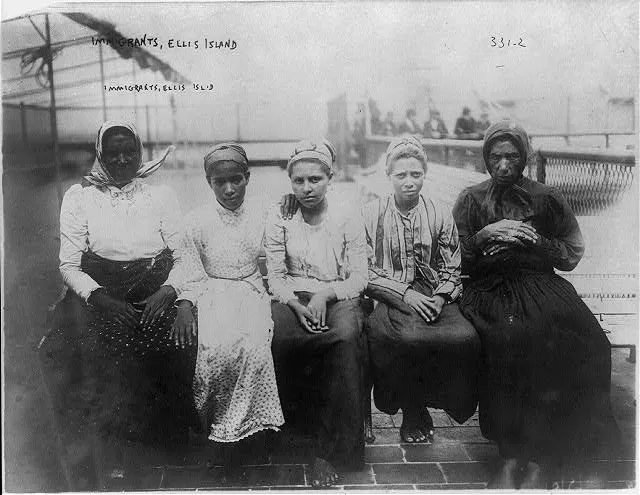
Immigrants, Ellis Island Source: Library of Congress - Bain, George Grantham, 1865-1944
After 1869, the completion of the transcontinental railroad changed California forever. Trains could now travel all the way from the eastern United States to California. This made it much easier for people to move west. Thousands of newcomers rode trains looking for new lives, farmland, and jobs.
Railroad companies saw an opportunity to make money by selling land and tickets. They created colorful posters and advertisements. These ads promised that California was a paradise, with rich soil for farming, mild weather, and beautiful scenery. Many families from the East, Midwest, and even other countries read about these promises. They dreamed of a better future in California.
The journey west by train was much faster than crossing plains and mountains by wagon. People could travel in days instead of months. Settlers brought their hopes and belongings. They started new towns, planted crops, and built homes along the rail lines. The railroad companies sometimes gave people free or cheap land to encourage them to stay and build.
The new railroad towns quickly grew. As more people arrived, stores, schools, and churches were built. Some towns became cities. California’s population increased rapidly. The state became known for its rich farmland and busy cities.
The railroads also brought workers from other countries. Many Chinese immigrants helped build the tracks. Later, people from Mexico, Japan, and Europe arrived to work on farms and in cities. These groups added to California’s diversity. They brought new foods, languages, and traditions.
Not everyone benefited equally. Sometimes, newcomers faced hard work, unfair treatment, or broken promises. But many people worked together to build better lives for themselves and their families.
The railroads made California a place where people from many backgrounds came together. This changed the state’s culture and economy. Railroads helped connect California to the rest of the country and the world.
Interesting Fact: The transcontinental railroad was finished at Promontory Summit, Utah, in 1869. The famous “Golden Spike” joined the rails, linking East and West.
When was the transcontinental railroad finished?
1869184919001776
Which group helped build the railroad?
Chinese immigrantsPilgrimsSpanish soldiersGold miners
What did railroad companies promise in ads?
California was a paradiseFree gold for allFree train ridesNo work needed
Why did people move to California?
For new jobs and farmlandTo find piratesTo escape the weatherTo visit family
How did railroads change California’s population?
It grew quicklyIt became smallerOnly adults movedPeople left cities
What was one effect of new towns?
More schools and storesFewer peopleNo jobsNo churches
Railroads connected California to the country. True or false?
TrueFalse
What does 'diversity' mean in the passage?
Different backgroundsOne languageNo jobsOnly farmers
Perfect For:
👩🏫 Teachers
• Reading comprehension practice
• Auto-graded assessments
• Literacy skill development
👨👩👧👦 Parents
• Reading practice at home
• Comprehension improvement
• Educational reading time
🏠 Homeschoolers
• Reading curriculum support
• Independent reading practice
• Progress monitoring
Reading Features:
📖
Reading Passage
Engaging fiction or nonfiction text
❓
Comprehension Quiz
Auto-graded questions
📊
Instant Feedback
Immediate results and scoring
📄
Printable Version
Download for offline reading
🔊
Read Aloud
Voice-over with word highlighting
Reviews & Ratings
No reviews yet. Be the first to share your experience!
Related Content
Native American Tribes Across America
This engaging history reading passage introduces students to Native American tribes across America, focusing on their da...
D2.HIS.1.3-5D2.HIS.2.3-5RI.4.1RI.4.2
Teepees: Homes on the Great Plains
This engaging history reading passage introduces students to teepees, the unique homes of Native American tribes on the ...
D2.HIS.2.3-5D2.HIS.14.3-5RI.4.1RI.4.2RI.4.4
Traditional Native American Clothing
This engaging history passage explores traditional Native American clothing and how it reflected the environment, values...
D2.HIS.2.3-5D2.HIS.3.3-5RI.4.3RI.4.4
The Iroquois Confederacy: A System of Peace
This engaging U.S. History reading passage introduces students to the Iroquois Confederacy, a powerful alliance of Nativ...
D2.HIS.2.3-5D2.HIS.3.3-5RI.4.3RI.4.4
The Cherokee Nation: History and Culture
This reading passage explores the rich history and culture of the Cherokee Nation, one of the largest Native American tr...
D2.HIS.2.3-5D2.HIS.14.3-5RI.4.3RI.4.4RI.4.10
The Sioux: Warriors and Tribal Leaders
This history reading passage explores the Sioux Nation, focusing on their roles as warriors and tribal leaders. Students...
D2.HIS.1.3-5D2.HIS.2.3-5RI.4.1RI.4.3
Native American Respect for Nature
This engaging history reading passage explores Native American respect for nature, emphasizing the close relationship be...
D2.HIS.2.3-5D2.HIS.3.3-5RI.4.3RI.4.4
Jamestown: The First Permanent English Colony
This engaging history passage explores the founding of Jamestown, the first permanent English colony in America. Aligned...
D2.HIS.1.3-5D2.HIS.2.3-5RI.4.3RI.4.4
Pocahontas and the Powhatan People
This engaging reading passage explores the life of Pocahontas and the Powhatan people and their important role in early ...
D2.HIS.1.3-5D2.HIS.2.3-5RI.4.1RI.4.3
Colonial Children: School and Chores
This reading passage explores the daily lives of colonial children, focusing on their experiences at school and their ma...
D2.HIS.2.3-5D2.HIS.3.3-5RI.4.1RI.4.2RI.4.4
Colonial Clothing and Homemade Goods
This engaging U.S. history passage explores the daily life of early American colonists with a focus on colonial clothing...
D2.HIS.2.3-5RI.4.3RI.4.4
Colonial Jobs: Blacksmiths, Bakers, and Craftsmen
This engaging history reading passage explores the vital roles of blacksmiths, bakers, and craftsmen in colonial America...
D2.HIS.2.3-5D2.HIS.3.3-5RI.4.3RI.4.4
Colonial Towns and Village Life
This engaging history reading passage explores the daily life, work, and unity found in colonial towns and villages. Ali...
D2.HIS.1.3-5D2.HIS.2.3-5RI.4.3RI.4.4
Colonial Trade with England and Africa
This history reading passage explores colonial trade between the American colonies, England, and Africa, focusing on the...
D2.HIS.2.3-5D2.HIS.14.3-5RI.4.3RI.4.4
Benjamin Franklin: Printer, Inventor, and Leader
This history reading passage explores the life and achievements of Benjamin Franklin, one of America's most important ea...
D2.HIS.2.3-5D2.HIS.3.3-5RI.4.1RI.4.3
George Washington Leads the Army
This engaging history reading passage explores how George Washington bravely led the Continental Army during the America...
D2.HIS.1.3-5D2.HIS.2.3-5RI.4.3RI.4.4
Women and Children During the Revolutionary War
This reading passage explores the important roles women and children played during the Revolutionary War. Students will ...
D2.HIS.2.3-5RI.4.3RI.5.3
African Americans Fight for Freedom
This educational passage explores the brave and inspiring story of how African Americans fought for freedom in the Unite...
D2.HIS.2.3-5D2.HIS.3.3-5RI.4.3RI.4.4
The Battle of Yorktown Ends War
This engaging U.S. history reading passage explores the Battle of Yorktown, a key event that ended the American Revoluti...
D2.HIS.1.3-5D2.HIS.2.3-5RI.4.1RI.4.3
Loyalists vs. Patriots: Divided Families
This engaging U.S. history reading passage explores the division between Loyalists and Patriots during the American Revo...