Pearl Harbor Attack December 7 1941
Interactive passage with audio narration, comprehension questions, and printable PDF.
By completing this purchase you agree to our Terms of Use and Privacy Policy. Your subscription renews automatically until you cancel. You can cancel anytime from your account settings. All sales are final and non-refundable. Digital content is available for download in your account immediately upon purchase.
What's included
Pearl Harbor Attack December 7 1941 preview and details
About this printable Pearl Harbor Attack December 7 1941 reading passage (Grades 6-8)
Sample passage and quiz from Pearl Harbor Attack December 7 1941
Reading passage and comprehension quiz preview
Pearl Harbor Attack
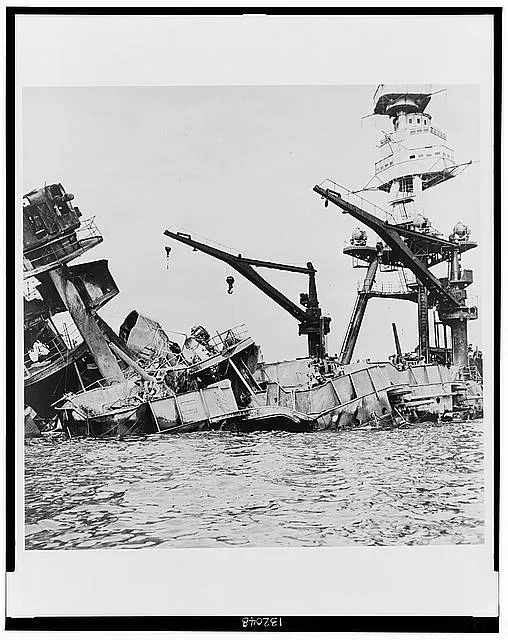
Source: Library of Congress
On December 7, 1941, the United States naval base at Pearl Harbor in Hawaii was attacked by the Japanese military. Early that morning, hundreds of Japanese planes flew over the harbor and dropped bombs and torpedoes on American ships and aircraft. The surprise attack lasted less than two hours, but it resulted in the deaths of over 2,400 Americans and caused severe damage to the Pacific Fleet. This event is often considered a major turning point in world history.
The path to Pearl Harbor was shaped by tensions between the United States and Japan over control of resources and influence in Asia. Japan wanted to expand its territory and needed oil, rubber, and other materials. The United States had placed economic sanctions on Japan to protest its actions in China and Southeast Asia. These policies increased resentment in Japan and pushed its leaders to seek a military solution. The Japanese government believed that a sudden, powerful attack could cripple the American navy and give Japan time to secure its new territories.
The attack on Pearl Harbor was carefully planned. Japanese ships traveled secretly across the Pacific Ocean and launched more than 350 aircraft at the base. American forces were caught off guard and tried to defend themselves, but the damage was severe. Eight battleships were damaged or destroyed, along with hundreds of airplanes. The destruction shocked the American public and caused widespread fear and anger throughout the country.
President Franklin D. Roosevelt addressed the nation the next day. He called December 7, 1941, "a date which will live in infamy." Congress responded to Roosevelt's speech by passing a declaration of war against Japan. This decision brought the United States fully into World War II. Soon after, Germany and Italy declared war on the United States, making the conflict truly global.
The effects of the Pearl Harbor attack were immediate and far-reaching. Military enlistments surged as Americans united to support the war effort. Factories switched from producing consumer goods to making weapons and supplies for the military. The attack also had serious consequences for Japanese Americans, many of whom faced discrimination and were forced into internment camps by the U.S. government.
Looking back, historians argue about whether the attack was truly a surprise and if it could have been prevented. Some evidence suggests warnings were missed or ignored. However, most agree that Pearl Harbor changed the course of the war and the future of the United States. The country became a leader on the world stage and played a decisive role in defeating the Axis powers.
Interesting Fact: The USS Arizona, one of the battleships sunk during the attack, still rests at the bottom of Pearl Harbor as a memorial to those who lost their lives.
Comprehension quiz (8 questions)
1. When did Pearl Harbor attack happen?
2. Who attacked Pearl Harbor?
3. What was Pearl Harbor?
4. Why did Japan want to attack?
5. How did the U.S. respond to the attack?
6. What was one effect on Japanese Americans?
7. Pearl Harbor attack led U.S. into WWII. True or false?
8. What does 'infamy' mean?
Common Core standards for Pearl Harbor Attack December 7 1941
Explain events, procedures, ideas, or concepts in a historical, scientific, or technical text, including what happened and why, based on specific information in the text.
Determine the meaning of general academic and domain-specific words or phrases in a text relevant to a grade 4 topic or subject area.
Write informative/explanatory texts to examine a topic and convey ideas and information clearly.
Perfect for the way you teach
- Build comprehension skills
- Auto-graded quiz
- Differentiated reading
- Read together at home
- Improve fluency
- Quiet reading time
- Reading curriculum support
- Independent practice
- Track Lexile growth