Reading Passage

Plant Roots Break Rocks Apart

Interactive passage with audio narration, comprehension questions, and printable PDF.

No ratings yet
Grades 3–6ScienceElaEnglish · SpanishInteractive · Printable

What's included

Reading passage
Audio narration
Comprehension quiz
Writing activity
Glossary & flashcards
Differentiated version
Spanish translation

Plant Roots Break Rocks Apart preview and details

About this printable Plant Roots Break Rocks Apart science reading passage, NGSS-aligned (Grades 3-6)

This engaging science passage, designed for grades 4 and 5 and aligned with NGSS standards, explores the fascinating process of how plant roots break rocks apart. Written in simple language, the passage explains key concepts such as weathering, erosion, and the role of roots in changing the Earth’s surface. Students will discover vocabulary words like soil, minerals, and nutrients, and learn how trees, grass, and even sidewalk weeds can split rocks over time. Real-world examples and an interesting science fact make the content relatable and fun. The resource includes a Spanish translation, a glossary of important terms, audio integration for accessibility, and interactive comprehension and writing activities. This lesson is perfect for classrooms aiming to build science literacy and critical thinking skills while meeting curriculum requirements. Keywords: plant roots, rocks, weathering, NGSS, soil, erosion, passage, quiz.
Written by Workybooks TeamPublished by Workybooks
Preview

Sample passage and quiz from Plant Roots Break Rocks Apart

Reading passage and comprehension quiz preview

How Plants Break Rocks
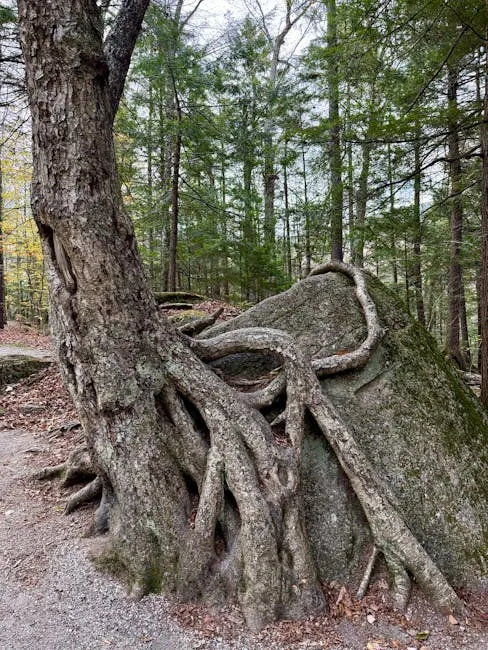
Twisted tree roots embrace a large boulder in a lush forest setting.
"Twisted tree roots embrace a large boulder in a lush forest setting." Image by Alireza AM / 
Source: Pexels.

Weathering is the process that breaks down rocks into smaller pieces. One type of weathering happens when plants break rocks apart. This process is called biological weathering because living things cause it. Understanding how plants break rocks helps us see how Earth's surface changes over time.

When a seed falls into a crack in a rock, it can begin to grow. The young plant sends roots down into the crack. Roots are the parts of a plant that grow underground and take in water. As the roots grow thicker and longer, they push against the sides of the crack. This pushing force is strong enough to make the crack wider.

Over many years, the roots keep growing and pushing. Eventually, the crack becomes so wide that the rock splits apart. This happens very slowly, but the plant's roots are powerful. You may have seen tree roots cracking a sidewalk or driveway. The same thing happens to rocks in nature.

Biological weathering is important because it helps break down large rocks into smaller pieces. These smaller pieces can become soil, which other plants need to grow. It is like how a wedge splits wood—the root acts as a natural wedge inside the rock.

Interesting Fact: Some ancient temples and buildings have been split apart by tree roots growing for hundreds of years, showing just how powerful this slow process can be!

Comprehension quiz (8 questions)

1. What is weathering?

Process that breaks down rocks
How plants make food
When water freezes in winter
How soil is made from leaves

2. What are roots?

Parts of plants above ground
Parts that grow underground
Seeds that fall from trees
Cracks in large rocks

3. Where does a seed land to start?

In a puddle of water
On top of a rock
In a crack in rock
Under the soil only

4. Why do roots split rocks apart?

Roots shrink as they dry out
Roots push as they grow thicker
Roots pull rocks together tightly
Roots make rocks very wet

5. What example shows roots breaking things?

Leaves falling from trees in autumn
Flowers blooming in the spring
Tree roots cracking a sidewalk
Rain washing away dirt

6. How does biological weathering help soil form?

It makes rocks grow larger
It breaks rocks into smaller pieces
It stops plants from growing
It freezes water in cracks

7. Biological weathering happens very quickly.

True
False

8. What does biological weathering mean?

Wind blowing on rocks
Living things breaking rocks
Water freezing in winter
Rocks melting in heat
Who it's for

Perfect for the way you teach

Teachers
  • Build comprehension skills
  • Auto-graded quiz
  • Differentiated reading
Parents
  • Read together at home
  • Improve fluency
  • Quiet reading time
Homeschoolers
  • Reading curriculum support
  • Independent practice
  • Track Lexile growth
Topics

Reviews & Ratings

No reviews yet. Be the first to share your experience!

More reading you might love

19 more
Passage
Weathering and Soil Formation - reading educational content

Weathering and Soil Formation

Reading Passage

$1.50
Passage
How Do Destructive Forces Wear Down Land - reading educational content

How Do Destructive Forces Wear Down Land

Reading Passage · MS-ESS2-1

$1.50
Passage
Water Erosion - reading educational content

Water Erosion

Reading Passage

$1.50
Passage
Weathering - reading educational content

Weathering

Reading Passage · MS-ESS2-1

$1.50
Passage
Plants Help Stop Soil Erosion - reading educational content

Plants Help Stop Soil Erosion

Reading Passage

Free
Passage
How People Prevent Erosion - reading educational content

How People Prevent Erosion

Reading Passage

$1.50
Passage
Wind Erosion - reading educational content

Wind Erosion

Reading Passage

Free
Interactive
Weathering Types Word Sort - game educational content

Weathering Types Word Sort

Game · 4-ESS2-1

$1.50
Passage
How are Canyons Formed - reading educational content

How are Canyons Formed

Reading Passage

$1.50
Passage
Mountain Erosion - reading educational content

Mountain Erosion

Reading Passage

$1.50
Passage
How Water Breaks Down Rocks - reading educational content

How Water Breaks Down Rocks

Reading Passage

$1.50
Passage
How Does Wind Form Sand Dunes - reading educational content

How Does Wind Form Sand Dunes

Reading Passage · MS-ESS2-2

$1.50
Passage
How Do Beaches Get Sand - reading educational content

How Do Beaches Get Sand

Reading Passage · MS-ESS2-2

$1.50
Passage
Erosion - reading educational content

Erosion

Reading Passage · MS-ESS2-1

$1.50
Passage
Earth Changes Over Millions of Years - reading educational content

Earth Changes Over Millions of Years

Reading Passage

$1.50
Passage
Tools and Technology in Earth Science - reading educational content

Tools and Technology in Earth Science

Reading Passage · MS-ESS2-2

$1.50
Passage
How Coastlines Change Over Time - reading educational content

How Coastlines Change Over Time

Reading Passage · MS-ESS2-2

$1.50
Interactive
Earth Changes Word Sort - game educational content

Earth Changes Word Sort

Game

$1.50
Passage
How GPS Technology Map Earth's Surface - reading educational content

How GPS Technology Map Earth's Surface

Reading Passage · MS-ESS2-1

$1.50
Copyright © 2026 Workybooks. Made with ♥ in California.