Railroad Workers: Chinese and Irish Labor
Interactive passage with audio narration, comprehension questions, and printable PDF.
By completing this purchase you agree to our Terms of Use and Privacy Policy. Your subscription renews automatically until you cancel. You can cancel anytime from your account settings. All sales are final and non-refundable. Digital content is available for download in your account immediately upon purchase.
What's included
Railroad Workers: Chinese and Irish Labor preview and details
About this printable Railroad Workers: Chinese and Irish Labor reading passage (Grades 6-8)
Sample passage and quiz from Railroad Workers: Chinese and Irish Labor
Reading passage and comprehension quiz preview
Railroad Workers Immigrants
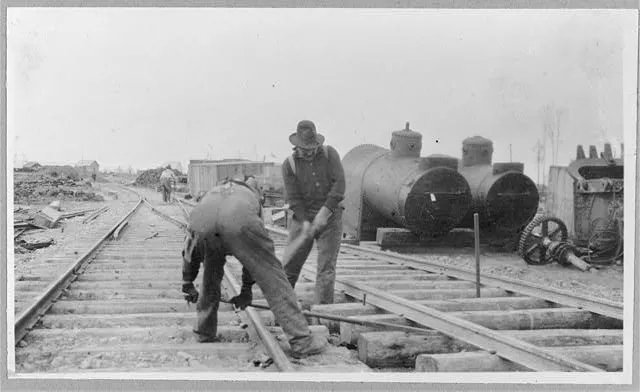
Source: Library of Congress
The transcontinental railroad was one of the most ambitious construction projects in United States history. Beginning in the 1860s, it connected the East and West coasts, transforming travel, commerce, and settlement patterns. However, building this railroad required a massive workforce. Thousands of immigrants, especially from China and Ireland, performed the hard labor that made the project possible.
Chinese and Irish workers faced dangerous and difficult conditions. The work was physically demanding, as laborers had to blast through mountains, lay tracks across deserts, and build bridges over rivers. They used explosives and heavy tools, which often led to injuries or even death. Extreme weather, such as scorching summers and freezing winters, made daily life even more challenging. Despite these hazards, many immigrants continued to work, driven by the hope of earning money and building a better future.
The Chinese laborers were especially vital to the Central Pacific Railroad, which built tracks eastward from California. They were often assigned the most dangerous tasks, such as tunneling through the Sierra Nevada mountains. While the Irish workers also faced hardships on the Union Pacific line, the Chinese immigrants endured widespread discrimination. They earned less pay and lived in segregated camps, often isolated from other workers. Both groups, however, experienced prejudice and unfair treatment compared to American-born workers.
Their contribution to the railroad’s success was enormous. By providing steady, reliable labor, immigrant workers helped the companies meet tight deadlines and overcome engineering obstacles. When the Central Pacific and Union Pacific lines met at Promontory Summit, Utah, in 1869, the country celebrated a new era of connection and growth. However, the ceremony and photographs barely acknowledged the immigrant workers’ essential role.
The challenges these workers faced highlight important issues in American history. Their experiences reveal the complex interactions between economic opportunity and social barriers. Although they came seeking a better life, many immigrants found themselves exploited and excluded. Their story is an example of how progress often depends on the sacrifice and resilience of people who are overlooked or mistreated.
Today, historians use evidence such as pay records, personal accounts, and photographs to better understand these workers’ experiences. Recognizing their efforts helps us appreciate the diversity and complexity of American history. The story of immigrant railroad workers reminds us that the nation’s achievements were built by people from many backgrounds, working together under difficult circumstances.
Interesting Fact: Some Chinese railroad workers later became successful business owners in Western towns, helping to shape local communities long after the railroad was completed.
Comprehension quiz (8 questions)
1. When did construction on the transcontinental railroad begin?
2. Which two immigrant groups mainly worked on the railroad?
3. Where did the Central Pacific and Union Pacific railroads meet?
4. Why was the work dangerous for railroad workers?
5. How did discrimination affect Chinese workers?
6. What was one effect of the workers’ contribution?
7. Immigrant workers were celebrated at the railroad ceremony. True or false?
8. What does 'contribution' mean in the passage?
Common Core standards for Railroad Workers: Chinese and Irish Labor
Explain events, procedures, ideas, or concepts in a historical, scientific, or technical text, including what happened and why, based on specific information in the text.
Determine the meaning of general academic and domain-specific words or phrases in a text relevant to a grade 4 topic or subject area.
Write informative/explanatory texts to examine a topic and convey ideas and information clearly.
Perfect for the way you teach
- Build comprehension skills
- Auto-graded quiz
- Differentiated reading
- Read together at home
- Improve fluency
- Quiet reading time
- Reading curriculum support
- Independent practice
- Track Lexile growth