Spinning Jenny Invention
Interactive passage with audio narration, comprehension questions, and printable PDF.
By completing this purchase you agree to our Terms of Use and Privacy Policy. Your subscription renews automatically until you cancel. You can cancel anytime from your account settings. All sales are final and non-refundable. Digital content is available for download in your account immediately upon purchase.
What's included
Part of this bundle

Spinning Jenny Invention preview and details
About this printable Spinning Jenny Invention reading passage (Grades 3-5)
Sample passage and quiz from Spinning Jenny Invention
Reading passage and comprehension quiz preview
Spinning Jenny Invention
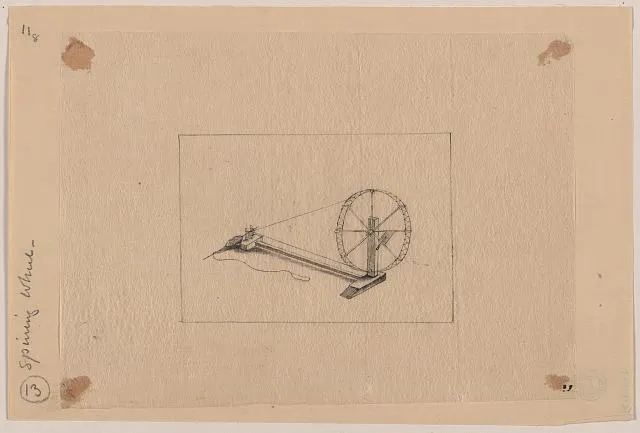
Source: Library of Congress
The Spinning Jenny was an important invention that changed how people made cloth. In the 1760s, a man named James Hargreaves from England created this machine. Before the Spinning Jenny, making thread for cloth was slow. Workers used a spinning wheel, which could only spin one thread at a time. This meant it took a long time to make enough thread for fabric.
James Hargreaves wanted to help his family and other workers save time. He watched his wife spin thread and saw the spinning wheel tip over. This gave him an idea. If he could make a machine with more spindles, one worker could spin many threads at once. In 1764, Hargreaves built the first Spinning Jenny. It could spin eight threads at the same time. Later, improved versions could spin even more threads.
The Spinning Jenny made a big difference in the textile industry. Factories could make more cloth quickly and cheaply. This helped make clothes less expensive. Families who once had only a few outfits could now buy more clothing. The Spinning Jenny also helped people get jobs in factories. Many workers left farms to work in cities.
This invention was important during the Progressive Era in the United States. The country was changing. People were moving to cities, and machines were making work faster. The Spinning Jenny was one of the first machines to help start the Industrial Revolution. Other machines followed, but the Spinning Jenny showed how inventions could improve life for many people.
Even though the Spinning Jenny was first used in England, its idea soon spread to America. American factories used similar machines to make thread and cloth. This helped the United States grow and become a strong country. More goods could be made and sold. Factories offered steady jobs, and cities became busier places.
In the end, the Spinning Jenny changed the way people made and bought clothes. It made life easier for families and created new jobs for workers. The invention is remembered as an important step in the history of making things by machine.
Interesting Fact: The Spinning Jenny got its name from James Hargreaves’ daughter, who was named Jenny.
Comprehension quiz (8 questions)
1. Who invented the Spinning Jenny?
2. How many threads did the first Spinning Jenny spin?
3. Where was the Spinning Jenny first invented?
4. Why was the Spinning Jenny important?
5. What happened after the Spinning Jenny was used?
6. How did the Spinning Jenny help families?
7. The Spinning Jenny was named after Hargreaves' daughter. True or false?
8. What does 'textile industry' mean?
Common Core standards for Spinning Jenny Invention
Explain events, procedures, ideas, or concepts in a historical, scientific, or technical text, including what happened and why, based on specific information in the text.
Determine the meaning of general academic and domain-specific words or phrases in a text relevant to a grade 4 topic or subject area.
Write informative/explanatory texts to examine a topic and convey ideas and information clearly.
Perfect for the way you teach
- Build comprehension skills
- Auto-graded quiz
- Differentiated reading
- Read together at home
- Improve fluency
- Quiet reading time
- Reading curriculum support
- Independent practice
- Track Lexile growth