This learning resource is available in interactive and printable formats. The interactive worksheet can be played online and assigned to students. The Printable PDF version can be downloaded and printed for completion by hand.
This engaging reading passage introduces fourth-grade students to the concept of straight wave patterns as outlined in NGSS standard 4-PS4-1. Students learn that waves can travel in different patterns depending on how they are created. The passage uses accessible examples like ocean waves approaching a beach and compares straight wave patterns to circular patterns created by dropping a pebble in water. Through clear explanations and relatable analogies, students build foundational understanding of wave behavior and wave patterns. The passage is audio-integrated to support diverse learners and includes a simplified differentiated version for students reading below grade level. Accompanying activities include comprehension questions, writing prompts, and graphic organizers that reinforce understanding of how wave patterns form and differ based on their source. This resource aligns with NGSS Disciplinary Core Idea PS4.A: Wave Properties and prepares students for hands-on investigations of wave phenomena.
CONTENT PREVIEW
Expand content preview
A wave is a disturbance that moves energy from one place to another. Waves travel in different patterns depending on how they are created. Understanding wave patterns helps scientists predict how waves will move and where their energy will go.
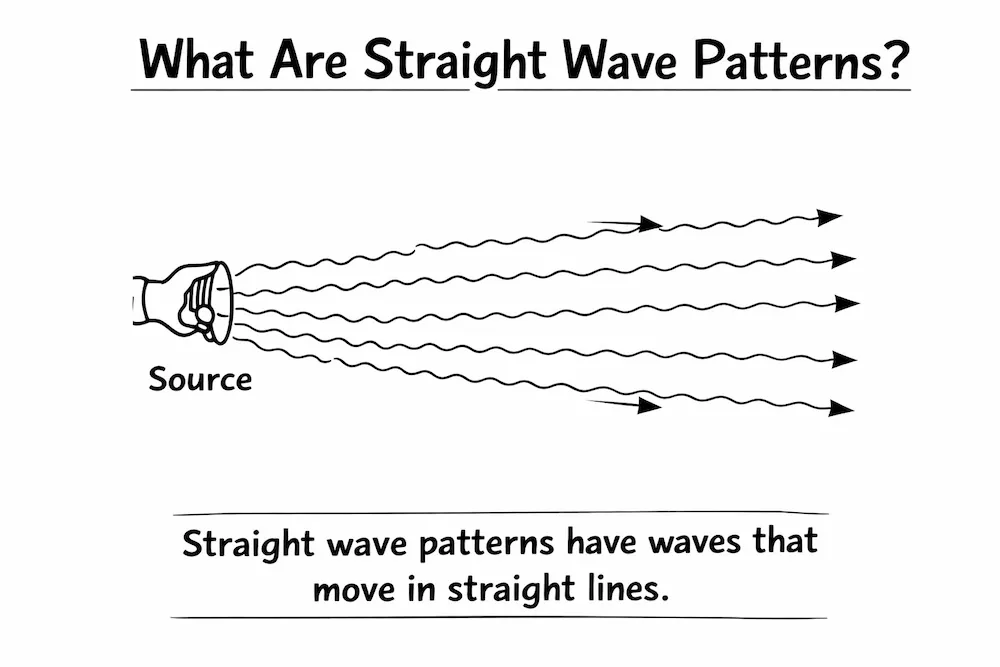
Some waves travel in straight lines. A straight line is the shortest path between two points. When you watch ocean waves coming toward a beach, you can see them moving in long, straight rows. These waves form far out in the ocean when wind blows across the water surface. The wind creates waves that travel in the same direction, forming straight, parallel lines called wave fronts. Wave fronts are the leading edges of waves moving together.
Other waves travel in circular patterns. When you drop a pebble into a calm pond, you see ripples spreading outward in circles. The circles get bigger and bigger as the wave moves away from where the pebble landed. This happens because the energy spreads out equally in all directions from one point.
The shape of a wave pattern depends on its source. A large, moving source like wind blowing across the ocean creates straight wave patterns. A single point source, like a pebble hitting water, creates circular patterns. Both patterns carry energy, but they spread that energy differently across the water.
What does a wave move?
Energy from place to placeWater onlySand and rocksWind across the ocean
What creates straight ocean wave patterns?
A pebble dropping in waterWind blowing across the oceanFish swimming in circlesBoats moving through water
What are wave fronts?
The back of wavesWaves that stop movingLeading edges of waves togetherCircles in the water
Why do pebbles create circular patterns?
Energy spreads equally all directionsPebbles are always roundWater only moves in circlesWind pushes water in circles
What determines a wave's pattern shape?
The color of the waterHow deep the water isThe source that creates itThe temperature outside
Ocean waves approaching beach move straight.
TrueFalse
Which creates a single point source?
Wind blowing across oceanA pebble hitting waterWaves at the beachLarge storm systems
What is a straight line?
The longest path between pointsA curved pathShortest path between two pointsA circular path
Perfect For:
👩🏫 Teachers
• Reading comprehension practice
• Auto-graded assessments
• Literacy skill development
👨👩👧👦 Parents
• Reading practice at home
• Comprehension improvement
• Educational reading time
🏠 Homeschoolers
• Reading curriculum support
• Independent reading practice
• Progress monitoring
Reading Features:
📖
Reading Passage
Engaging fiction or nonfiction text
❓
Comprehension Quiz
Auto-graded questions
📊
Instant Feedback
Immediate results and scoring
📄
Printable Version
Download for offline reading
🔊
Read Aloud
Voice-over with word highlighting
Reviews & Ratings
No reviews yet. Be the first to share your experience!
Related Content
What Is Wave Amplitude
This engaging 250-word reading passage introduces fourth-grade students to the concept of wave amplitude as outlined in ...
NGSS 4-PS4-1
Wave Crests and Troughs
This engaging 250-word passage introduces Grade 4-5 students to the fundamental parts of transverse waves: crests and tr...
NGSS 4-PS4-1
Circular Wave Patterns
This engaging 250-word science passage introduces Grade 4-5 students to circular wave patterns and how they behave in na...
NGSS 4-PS4-1
What Are Parts of a Wave
This comprehensive Grade 4 physical science reading passage introduces students to the fundamental parts of a wave, alig...
NGSS 4-PS4-1
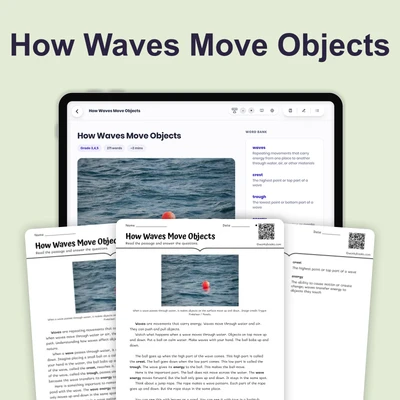
How Waves Move Objects
This engaging 250-word reading passage introduces fourth-grade students to the fundamental concept of how waves move obj...
NGSS 4-PS4-1
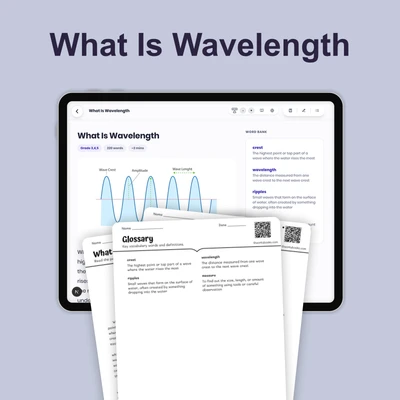
What Is Wavelength
This 250-word reading passage introduces fourth-grade students to the concept of wavelength as outlined in NGSS standard...
NGSS 4-PS4-1
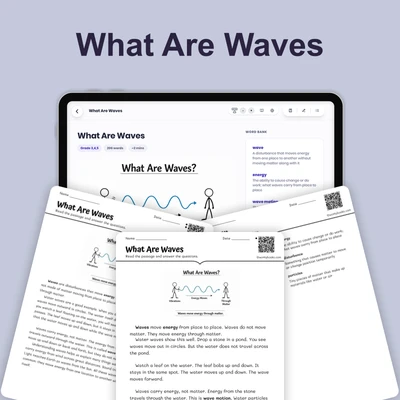
What Are Waves
This comprehensive reading passage on waves is specifically designed for Grade 4 students and aligns with NGSS standard ...