This learning resource is available in interactive and printable formats. The interactive worksheet can be played online and assigned to students. The Printable PDF version can be downloaded and printed for completion by hand.
This engaging 250-word reading passage introduces fourth-grade students to the concept of wave amplitude as outlined in NGSS standard 4-PS4-1. Students learn that amplitude is the height of a wave measured from the middle to the crest, and that larger amplitude indicates more energy. The passage uses relatable examples such as ocean waves and sound to help students understand how wave size connects to energy. Audio-integrated features support diverse learners, while the simplified differentiated version ensures accessibility for students reading below grade level. Spanish translations of both versions are included to support bilingual learners. The passage is accompanied by comprehension activities including multiple-choice questions testing recall and application, writing prompts requiring students to explain and connect concepts, and graphic organizers that help visualize the relationship between amplitude and energy. This resource aligns with NGSS Disciplinary Core Idea PS4.A: Wave Properties, providing foundational knowledge that prepares students for hands-on investigations and deeper exploration of wave phenomena. Perfect for introducing wave concepts in elementary physical science units.
CONTENT PREVIEW
Expand content preview
Waves are all around us. They move through water, air, and even solid objects. Every wave has special features that scientists measure. One important feature is called amplitude.
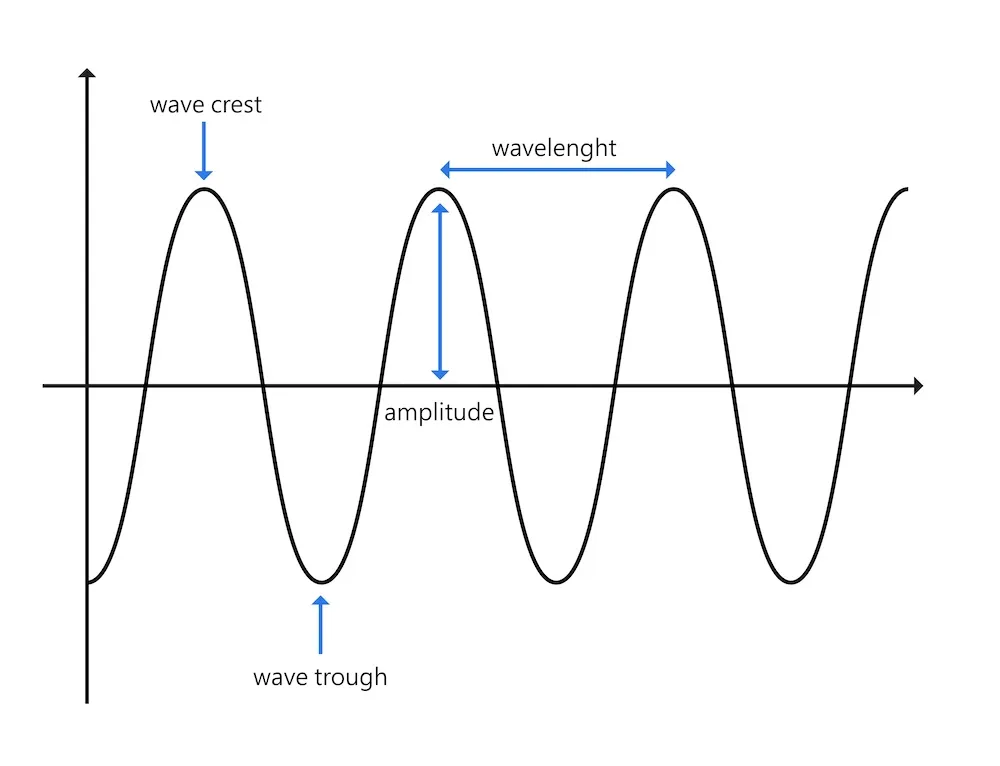
Amplitude is the height of a wave measured from the middle to the top. The top of a wave is called the crest. The bottom of a wave is called the trough. To find amplitude, you measure from the middle line (called the rest position) straight up to the crest. You can also measure down to the trough. Both distances are the same.
Amplitude tells us how much energy a wave carries. Energy is the ability to do work or cause change. A wave with big amplitude has more energy than a wave with small amplitude. Think about ocean waves. A tall wave crashing on the beach has lots of energy. It can move sand and push objects around. A tiny ripple barely moves anything because it has less energy.
Sound waves also have amplitude. When you shout, you make sound waves with big amplitude. The sound is loud because those waves carry more energy to your ears. When you whisper, the sound waves have small amplitude and less energy. That is why whispers are quiet.
Understanding amplitude helps us predict what waves can do. Scientists and engineers use this knowledge to study ocean waves, design speakers, and even understand earthquakes.
What is amplitude?
The length of a waveThe height of a waveThe speed of a waveThe color of a wave
What is the top of a wave called?
TroughMiddleCrestBottom
Where do you measure amplitude from?
Bottom to topMiddle to crestSide to sideEnd to end
Why does a tall ocean wave move sand?
It is blueIt is wetIt has more energyIt is cold
What happens when you shout?
You make small amplitude sound wavesYou make big amplitude sound wavesYou make no sound wavesYou make slow sound waves
Why are whispers quiet?
They have small amplitude and less energyThey have big amplitude and more energyThey move very fastThey have no crest
Bigger amplitude always means more energy.
TrueFalse
What does energy mean?
The color of somethingThe ability to do work or cause changeThe size of somethingThe temperature of something
Perfect For:
👩🏫 Teachers
• Reading comprehension practice
• Auto-graded assessments
• Literacy skill development
👨👩👧👦 Parents
• Reading practice at home
• Comprehension improvement
• Educational reading time
🏠 Homeschoolers
• Reading curriculum support
• Independent reading practice
• Progress monitoring
Reading Features:
📖
Reading Passage
Engaging fiction or nonfiction text
❓
Comprehension Quiz
Auto-graded questions
📊
Instant Feedback
Immediate results and scoring
📄
Printable Version
Download for offline reading
🔊
Read Aloud
Voice-over with word highlighting
Reviews & Ratings
No reviews yet. Be the first to share your experience!
Related Content
Wave Crests and Troughs
This engaging 250-word passage introduces Grade 4-5 students to the fundamental parts of transverse waves: crests and tr...
NGSS 4-PS4-1
Circular Wave Patterns
This engaging 250-word science passage introduces Grade 4-5 students to circular wave patterns and how they behave in na...
NGSS 4-PS4-1
What Are Parts of a Wave
This comprehensive Grade 4 physical science reading passage introduces students to the fundamental parts of a wave, alig...
NGSS 4-PS4-1
How Waves Move Objects
This engaging 250-word reading passage introduces fourth-grade students to the fundamental concept of how waves move obj...
NGSS 4-PS4-1
Straight Wave Pattern
This engaging reading passage introduces fourth-grade students to the concept of straight wave patterns as outlined in N...
NGSS 4-PS4-1
What Is Wavelength
This 250-word reading passage introduces fourth-grade students to the concept of wavelength as outlined in NGSS standard...
NGSS 4-PS4-1
What Are Waves
This comprehensive reading passage on waves is specifically designed for Grade 4 students and aligns with NGSS standard ...