This learning resource is available in interactive and printable formats. The interactive worksheet can be played online and assigned to students. The Printable PDF version can be downloaded and printed for completion by hand.
This engaging passage explores the invention of the telegraph and its vital role during the Progressive Era of U.S. history. Students will learn how Samuel Morse's invention changed communication, helping people share news quickly across great distances. The reading passage uses simple language and a clear timeline to explain key events, figures, and cause-and-effect relationships. Students can also access a Spanish translation, glossary, and multiple-choice quiz. The passage aligns with C3 Framework D2.His.3.3-5 and common core standards RI.4.3, RI.4.4, and W.4.2, ensuring historical accuracy and literacy skill development. Activities include a timeline, writing prompts, and graphic organizers to help students analyze and connect the invention of the telegraph to modern technology. The passage also features a relevant public domain image, read aloud audio, and ELA-focused vocabulary, making it perfect for U.S. history lessons.
CONTENT PREVIEW
Expand content preview
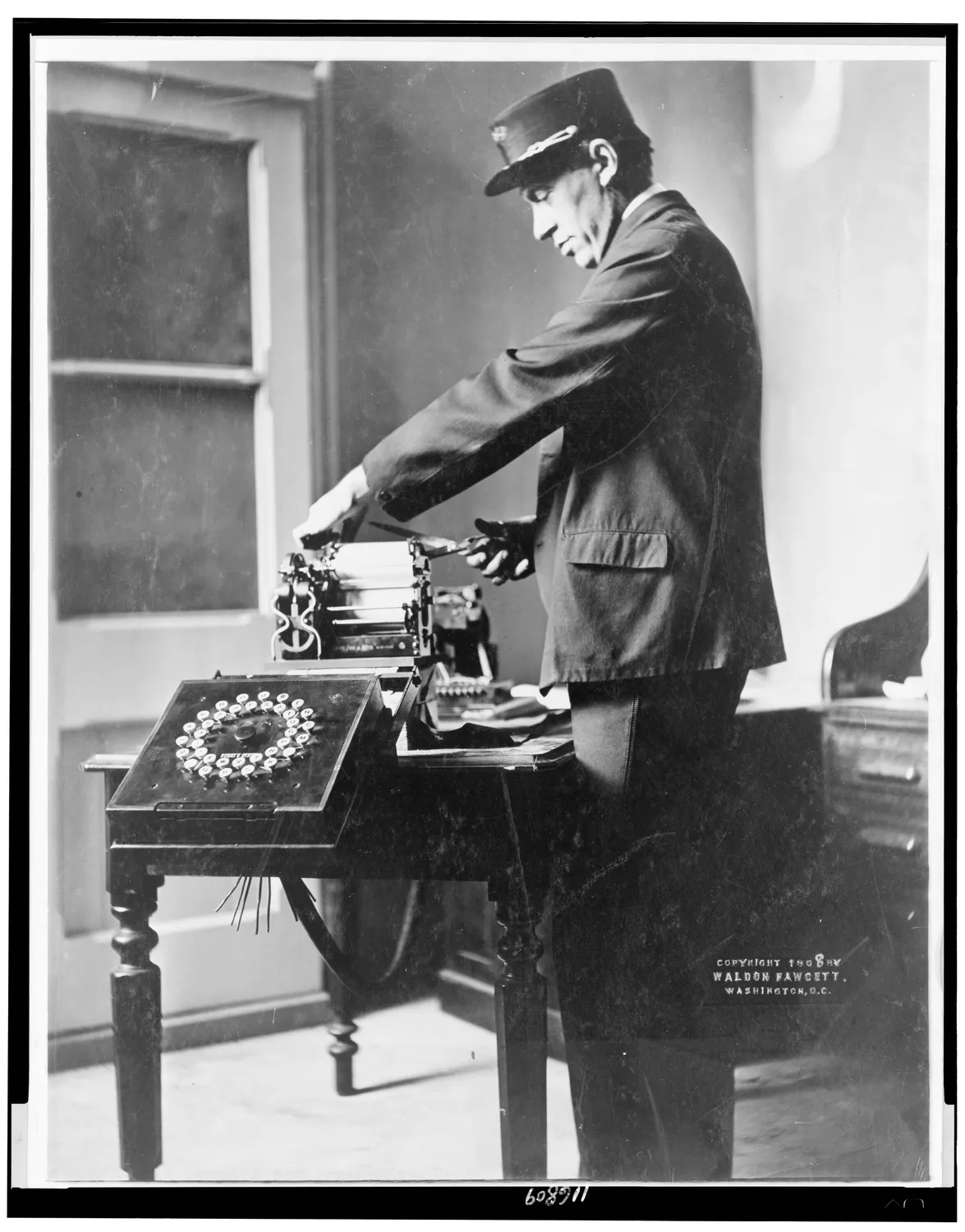
"Printing telegraph by National Photo Company Collection / Wikimedia Commons
The telegraph was an important invention that changed the way people shared news in the United States. Before the telegraph, people sent messages by letter. Letters traveled by horse, train, or ship. This could take days or even weeks. People needed a faster way to send important news and information.
In the 1830s, Samuel Morse began working on a new idea. He wanted to send messages using electricity. Morse and his team built a system with wires that could carry signals for many miles. He invented a special code called Morse code. This code used dots and dashes to stand for letters and numbers. By pressing a key, a person could tap out a message. The message would travel along the wire and be heard at the other end as a series of clicks.
In 1844, Samuel Morse sent the first official telegraph message from Washington, D.C., to Baltimore, Maryland. The message said, "What hath God wrought?" People were amazed. News that once took days to travel could now reach faraway cities in seconds. Businesses, newspapers, and families all began to use the telegraph.
The telegraph helped the United States grow and change during the Progressive Era. Railroads used the telegraph to keep trains on schedule. Leaders sent important orders during wars. The country started to feel smaller and more connected. People could learn about events as they happened. The telegraph was the first form of instant messaging.
Over time, telegraph wires stretched across the country. Messages could even be sent across the ocean by underwater cables. The telegraph made it possible for people to share ideas and news quickly. It brought people together and helped shape modern communication.
Interesting Fact: The last commercial telegraph message in the United States was sent in 2006, over 160 years after Samuel Morse sent his first message.
Who invented the telegraph?
Samuel MorseThomas EdisonAlexander BellGeorge Washington
What year was the first telegraph message sent?
1844177619012006
Which two cities did the first message connect?
Washington, D.C. and BaltimoreNew York and BostonChicago and DallasLos Angeles and Seattle
Why was the telegraph important?
It sent messages quicklyIt made foodIt cleaned waterIt built houses
How did Morse code work?
Dots and dashes for lettersPictures for wordsColors for citiesNumbers for trains
What was one effect of the telegraph?
People got news fasterHorses became fasterLetters disappearedTrains stopped working
The telegraph made instant messaging possible.
TrueFalse
What does 'telegraph' mean?
Machine sending messages by wiresA math toolA food recipeA kind of train
Perfect For:
👩🏫 Teachers
• Reading comprehension practice
• Auto-graded assessments
• Literacy skill development
👨👩👧👦 Parents
• Reading practice at home
• Comprehension improvement
• Educational reading time
🏠 Homeschoolers
• Reading curriculum support
• Independent reading practice
• Progress monitoring
Reading Features:
📖
Reading Passage
Engaging fiction or nonfiction text
❓
Comprehension Quiz
Auto-graded questions
📊
Instant Feedback
Immediate results and scoring
📄
Printable Version
Download for offline reading
🔊
Read Aloud
Voice-over with word highlighting
Reviews & Ratings
No reviews yet. Be the first to share your experience!
Related Content
Informational Text —Healthy Teeth and Gums
RI.4.10RI.4.3RF.4.4RF.4.4.A
Informational Text —Migratory Birds
Engage young minds with this worksheet that delves into the wonders of migratory birds. Learn about their extraordinary ...
RI.4.10RI.4.3RF.4.4RF.4.4.A
Natural Disasters and Urban flooding
This reading comprehension worksheet focuses on the topic of natural disasters, specifically urban flooding. Following t...
RI.4.44-ESS3ESS3.B4-ESS3-1
The Formation of Fossils
L.4.2.DL.4.6RI.4.4
Climate and Water Cycle
W.4.2.ARI.4.4RI.4.1
Ocean Acidification
Download this reading comprehension worksheet about ocean acidification. The worksheet includes an informational text ab...
RI.4.4
Understanding Climate Action Context Clues
Understanding Climate Action" worksheet, aligned with CCS L.4.4.A and NGSS. This resource introduces key concepts such a...
L.4.4.ARI.4.1RI.4.4
Informational Text —The History of Toothpaste
RI.4.4RI.4.4
Informational Text —All About Dentists
Students read an informational text explaining what dentists do and how they are trained. Aligned to RI.4.3-2
RI.4.10RI.4.3RF.4.4RF.4.4.A
The Role of Pollinators in Nature
Learn about the fascinating world of pollinators and discover their crucial role in the reproductive process of flowerin...
RI.4.2RI.4.3RI.4.4RI.5.1
Pollination: A Crucial Ecosystem Service
Explore the vital role of pollination beyond plant reproduction, as it sustains ecosystems by ensuring food security, pr...
RI.4.2RI.4.3RI.4.4RI.5.1
Seed Dispersal: How Plants Travel
Plants may seem stationary, but their seeds have amazing ways to travel! Explore the fascinating world of seed dispersal...
RI.4.2RI.4.3RI.4.4RI.5.1
The States of Matter: Solid
Discover the differences between solids, liquids and gases by exploring how their particles are arranged and move. This ...
RI.4.2RI.4.3RI.4.4RI.5.1
What is a Simple Machine
Discover the power of simple machines! This informational text explores how basic tools like levers, pulleys and incline...
RI.4.2RI.4.3RI.4.4RI.5.1
The Life Cycle of a Salmon
Salmon have a remarkable life cycle that takes them from rivers to the ocean and back again. They hatch as alevin, grow ...
RI.3.1RI.4.4RI.4.2
Journey of a Sea Turtle
Sea turtles lay their eggs on beaches, and their hatchlings begin a dangerous journey to the ocean. After growing in the...
RI.3.1RI.4.4RI.4.2
Heroes for Freedom: Harriet Tubman
Harriet Tubman, born into slavery, became a hero who risked her life to lead others to freedom through the Underground R...
RI.3.1RI.4.4RI.4.2RI.5.2
Heroes for Freedom: Fannie Lou Hamer
Fannie Lou Hamer overcame racial segregation and poverty to become a powerful voice for civil rights. Her fight for voti...
RI.3.1RI.4.4RI.4.2RI.5.2
Sports: Lionel Messi
Lionel Messi, known for his unparalleled dribbling and passing, has broken records, won multiple FIFA Ballon d'Or awards...
RI.3.1RI.4.4RI.4.2RI.5.2
Natural Disaster: Droughts
Droughts are long periods with insufficient water, leading to crop failures and water shortages. Conserving water and pl...