What Is a Paleoclimatologist? — Reading Comprehension
Rate this
Premium Resource
Present
Present in classroom. No work saved
Assign
Classroom with student accounts, Track progress
Quick Play
No student accounts, assign with a link
Grades
3
4
5
6
7
8
PRINT+DIGITAL RESOURCE
This learning resource is available in interactive and printable formats. The interactive worksheet can be played online and assigned to students. The Printable PDF version can be downloaded and printed for completion by hand.
This NGSS-aligned reading passage introduces middle school students to the field of paleoclimatology. Students learn how paleoclimatologists study ancient climates by analyzing natural clues called climate proxies, such as ice cores, tree rings, fossils, and ocean sediments. The passage explains how this information helps us understand long-term changes in Earth’s climate and compare them to modern-day global warming. It supports NGSS standards on Earth's history and systems, encourages critical thinking, and connects scientific careers to real-world climate challenges.
CONTENT PREVIEW
Expand content preview
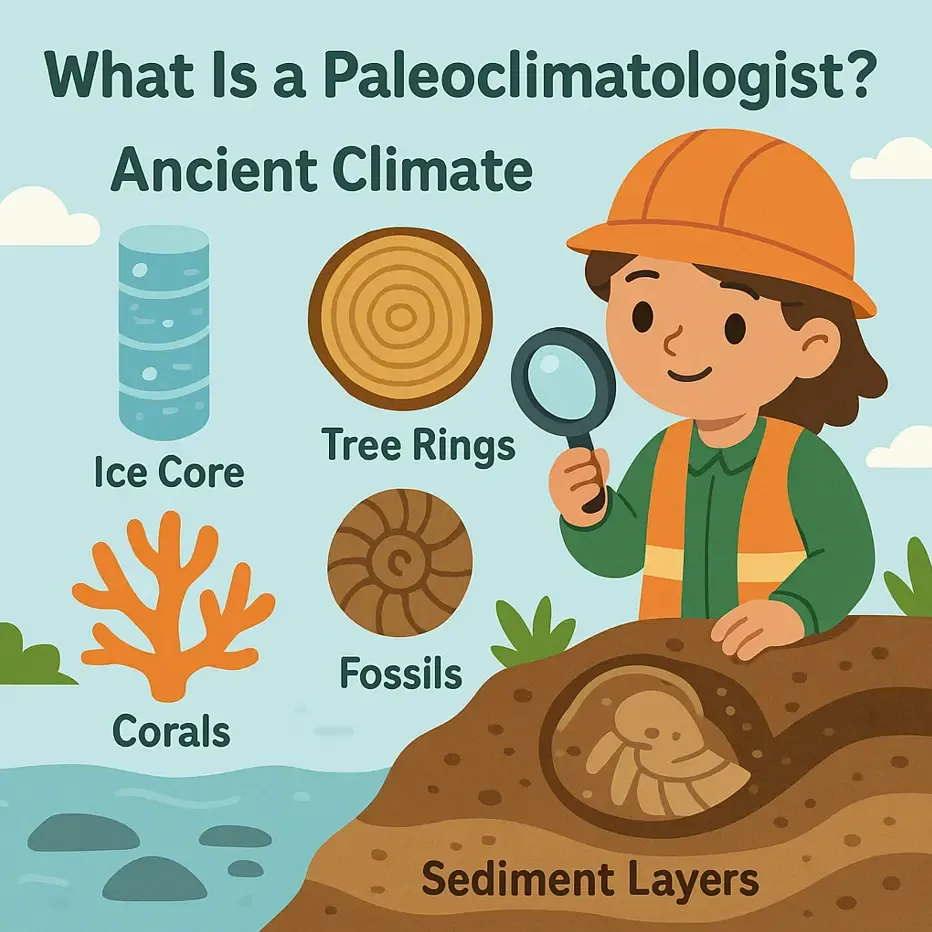
A paleoclimatologist is a scientist who studies Earth’s ancient climates. The word “paleo” means “old,” and “climatologist” refers to someone who studies climate. So, a paleoclimatologist looks at what the climate was like thousands—or even millions—of years ago.
But how can scientists learn about climates from the past? Paleoclimatologists don’t use weather records like we do today. Instead, they use clues from nature, called climate proxies. These clues include ice cores, tree rings, fossils, corals, and even sediment layers from the bottoms of lakes and oceans. For example, the thickness of a tree ring can show if a year was wet or dry. Bubbles trapped in ice can tell us how much carbon dioxide (CO₂) was in the air thousands of years ago.
Studying ancient climates helps scientists understand how Earth’s climate has changed over time. They’ve discovered that the planet has gone through ice ages, warm periods, and many natural cycles. By comparing the past with today’s climate, paleoclimatologists can better understand how human activities, like burning fossil fuels, are now causing faster and more intense warming.
Paleoclimatologists work with other scientists, including geologists, biologists, and atmospheric scientists, to build a full picture of Earth’s climate history. Their research helps improve climate models and predict what might happen in the future.
Understanding Earth’s past helps us prepare for the future. Paleoclimatologists remind us that while climate change has always happened, today’s changes are happening at a much faster rate—and we need to take action.
Fun Fact: The oldest ice core ever drilled is over 800,000 years old, and it still holds tiny bubbles of ancient air!
What does a paleoclimatologist study?
Earthquakes and volcanoesPast climate conditionsOcean wavesMoon phases
What is a “climate proxy”?
A new weather toolA fossil used for fuelA natural clue that shows past climateA person who predicts rainfall
Which of the following is NOT a climate proxy?
Ice coresTree ringsOcean sedimentsSolar panels
Why do paleoclimatologists study ancient climates?
To build rocketsTo understand how Earth’s climate has changedTo grow new kinds of treesTo find gold and silver
What can ice core bubbles tell us?
How tall trees wereWhat kind of animals livedThe amount of carbon dioxide in the air long agoHow much salt was in the ocean
Who might work with a paleoclimatologist?
Music teachersFarmersGeologists and biologistsActors
What is the main idea of the passage?
Paleoclimatologists build weather stationsPaleoclimatologists explore ancient toolsPaleoclimatologists study Earth’s past climates to help us understand today’s changesPaleoclimatologists find animals underground
What makes today’s climate change different from the past?
It’s moving more slowlyIt is only happening in the ArcticIt is mostly caused by human activity and happening fasterIt is colder than usual
Perfect For:
👩🏫 Teachers
• Reading comprehension practice
• Auto-graded assessments
• Literacy skill development
👨👩👧👦 Parents
• Reading practice at home
• Comprehension improvement
• Educational reading time
🏠 Homeschoolers
• Reading curriculum support
• Independent reading practice
• Progress monitoring
Reading Features:
📖
Reading Passage
Engaging fiction or nonfiction text
❓
Comprehension Quiz
Auto-graded questions
📊
Instant Feedback
Immediate results and scoring
📄
Printable Version
Download for offline reading
🔊
Read Aloud
Voice-over with word highlighting
Reviews & Ratings
No reviews yet. Be the first to share your experience!
Related Content
Tools and Technology in Earth Science
This middle school science reading passage explores the wide range of tools and technologies used in Earth science, from...
MS-ESS2-2MS-ESS3-2MS-ETS1-1MS-PS4-3
What Is Earth Science?
This engaging middle school science passage introduces students to the field of Earth science, aligning with NGSS standa...
MS-ESS1MS-ESS2MS-ESS3SEP
Scientific Inquiry in Earth Science
This passage explores scientific inquiry in Earth science for grades 6-8, aligned with NGSS standards MS-ESS1-4, MS-ESS2...
MS-ESS1-4MS-ESS2-1MS-ESS3-5SEP
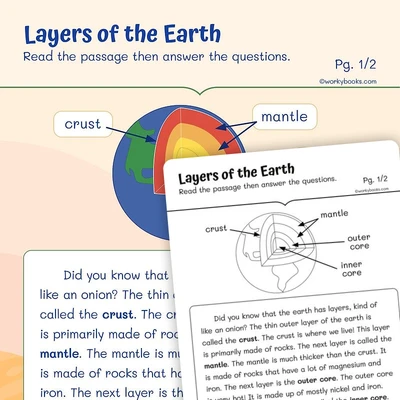
Interpreting visual information on Layers of the Earth
This informational text on the layers of the earth is a great way to practice using images during reading. Students will...
RI.1.7RI.10RF.1.4.ARF.1.4
What's The Main Idea?
These short science texts are a great way to practice main idea. Students will read the paragraphs and then choose the m...
RI.2.6
What Is Space Weather and How Does It Affect the Earth?
This NGSS-aligned science passage for middle school explains what space weather is and how it affects Earth. Students le...
MS-ESS2-2
Reading for Main Details—Birds
This informational text on birds is a great way to practice main idea. Students will read the passage, then give the mai...
RI.2.6RI.2.8
Koi Fish—What’s the Main Idea?
This informational text on koi fish is a great introduction to teaching main idea. Students will be asked, in multiple c...
RI.3.2RF.3.4RI.3.1
Reading for Main Details—Beavers Teeth
This informational text on beavers is a great way to practice main idea. Students will read the passage, then give the m...
RI.2.6RI.2.10
Spider—Main Idea
This informational text on spiders is a great introduction to teaching main idea. Students will be asked, in multiple ch...
RI.3.2RF.3.4RI.3.1RI.2.6
Earth: Our Home in Space
This engaging Grade 4-5 science passage, aligned to NGSS, introduces students to Earth's special place in the solar syst...
Reading for Main Details—Veternarians
Practie summarizing paragraphs with this fun informational text on veternarians! Students will give the main idea of eac...
RI.2.2RI.2.10
Earth's Spheres
This middle school science passage introduces students to Earth's four major spheres: the geosphere, hydrosphere, atmosp...
MS-ESS2-4MS-ESS2-6
The Solar System—Informational Text
This informational text is a great way for early readers to practice their comprehension skills. Students will read the ...
RI.K.7
Main Idea and Supporting Details in Informational Text
RI.3.1RI.3.2RI.3.8
Penguins— Main Purpose
This informational text on penguins with comprehension questions is a great way to practice reading fluency and main ide...
RI.1.2RI.1.10RF.1.4.ARF.1.4.B
Informational Text — Astronauts
Practice this second grade context clues worksheet with this informational text on astronauts. Students will read the te...
RI.2.4RI.2.10RI.3.4RI.3.10
Reading for Main Details—Orcas
Practie summarizing paragraphs with this fun science informational text on orcas! Students will give the main idea of ea...
RI.2.2RI.2.10
Informational Text —Learn About Dinosaurs
This informational text on dinosaurs with comprehension questions to follow is perfect for teaching main idea. Students ...
RF.3.4RF.3.4.ARF.3.4.CRI.3.2
Informational Text — Habitats
This short informational text on habitats will teach your students what a habitat is, as well as provide some examples o...