What Is Storm Surge and Why Is It So Dangerous? — Reading Comprehension
Rate this
Present
Present in classroom. No work saved
Assign
Classroom with student accounts, Track progress
Quick Play
No student accounts, assign with a link
Grades
3
4
5
6
7
8
PRINT+DIGITAL RESOURCE
This learning resource is available in interactive and printable formats. The interactive worksheet can be played online and assigned to students. The Printable PDF version can be downloaded and printed for completion by hand.
This NGSS-aligned reading passage introduces middle school students to the concept of storm surge, a major hazard caused by hurricanes. The passage explains how storm surge forms when hurricane winds push ocean water onto land, especially during high tide. It covers how geography and storm strength influence flood severity, and why coastal areas are at high risk. With clear vocabulary and real-world examples like Hurricane Katrina, students learn how preparation, forecasting, and protective structures like levees and sea walls can save lives. This text supports science comprehension and aligns with NGSS Earth and Space Science standards.
CONTENT PREVIEW
Expand content preview
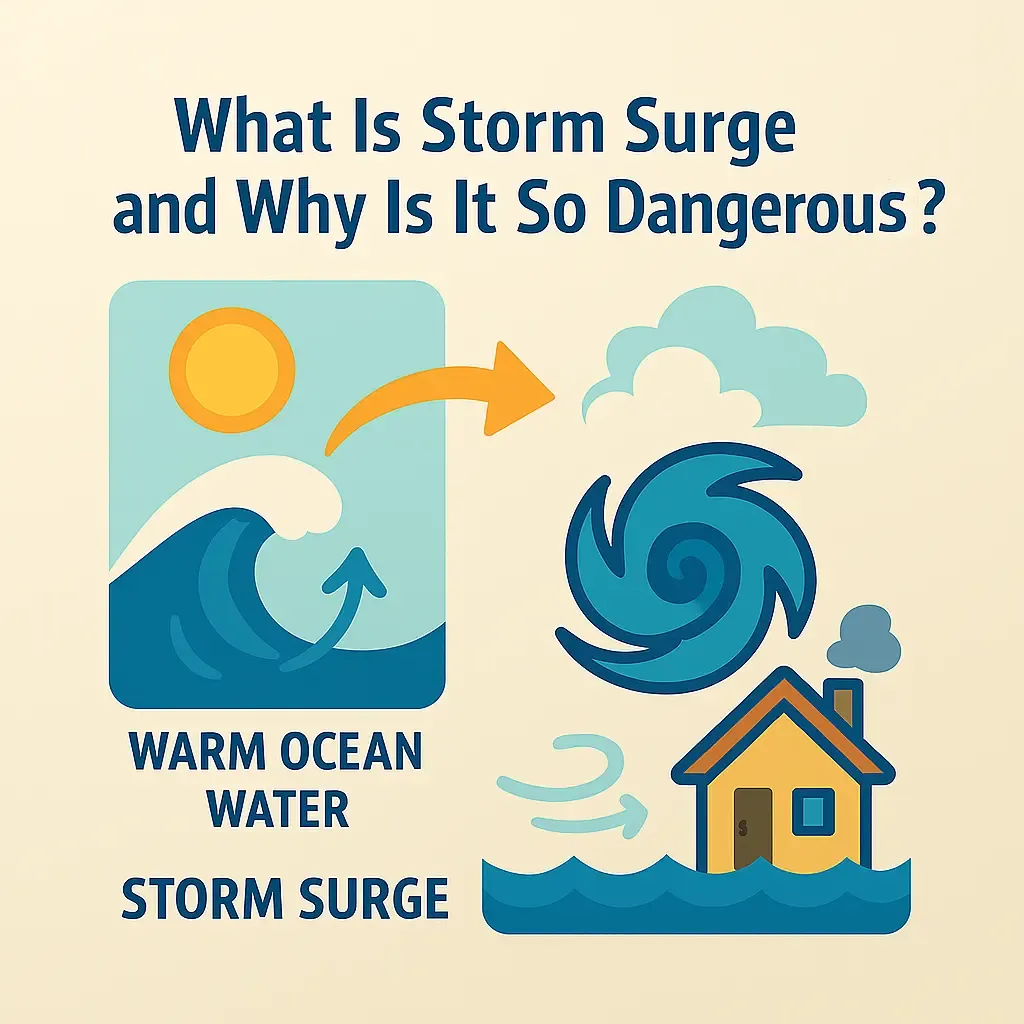
When a hurricane approaches land, one of the biggest threats is something called a storm surge. A storm surge is a fast rise in sea level caused by the strong winds of a storm pushing ocean water toward the coast. This wall of water can flood towns, destroy buildings, and wash away roads. It is often the deadliest part of a hurricane.
Storm surge happens when powerful hurricane winds push ocean water onshore. The water level rises much higher than the normal tides. If the storm hits during high tide, the flooding can be even worse. In some cases, water levels can rise over 20 feet above normal sea level.
Several factors affect how bad a storm surge can be. These include the strength of the hurricane, the shape of the coastline, and how fast the storm is moving. Flat, low-lying areas are at the greatest risk. Places like the Gulf Coast in the United States are especially vulnerable because of their geography.
Storm surge is dangerous because it happens quickly and with great force. It can knock down buildings, carry cars away, and trap people who did not evacuate in time. That’s why scientists and emergency officials use storm forecasts and evacuation zones to warn people early.
Understanding storm surge helps communities prepare and reduce the damage. Engineers build sea walls and levees in some areas to protect against flooding. Knowing the risk of storm surge is a key part of staying safe during hurricanes.
Fun Fact: During Hurricane Katrina in 2005, the storm surge reached 27.8 feet in Mississippi—the highest ever recorded in the U.S.!
What is a storm surge?
A burst of lightningSudden snowfallA rise in sea level caused by storm windsHeavy rainfall during a storm
What causes a storm surge?
Cold air mixing with warm airWind pushing ocean water inlandEarthquakes under the seaTornadoes touching down
When is storm surge flooding the worst?
During low tideDuring sunsetDuring high tideDuring dry seasons
Which part of a hurricane is often the deadliest?
The eyeRainbandsStorm surgeThunder
What areas are most at risk from storm surge?
MountainsCities far inlandFlat coastal areasForests
How can storm surge be prevented or reduced?
By cutting down treesBy building sea walls and leveesBy planting cropsBy driving cars away
What is the main idea of this passage?
Hurricanes are less dangerous than tornadoesStorm surge is a major hurricane threat and needs preparationOcean water helps plants growEvacuations are never needed
If a storm is coming during high tide, what should people expect?
Lower water levelsNo dangerGreater flood riskSnow
Perfect For:
👩🏫 Teachers
• Reading comprehension practice
• Auto-graded assessments
• Literacy skill development
👨👩👧👦 Parents
• Reading practice at home
• Comprehension improvement
• Educational reading time
🏠 Homeschoolers
• Reading curriculum support
• Independent reading practice
• Progress monitoring
Reading Features:
📖
Reading Passage
Engaging fiction or nonfiction text
❓
Comprehension Quiz
Auto-graded questions
📊
Instant Feedback
Immediate results and scoring
📄
Printable Version
Download for offline reading
🔊
Read Aloud
Voice-over with word highlighting
Reviews & Ratings
No reviews yet. Be the first to share your experience!
Related Content
Tools and Technology in Earth Science
This middle school science reading passage explores the wide range of tools and technologies used in Earth science, from...
MS-ESS2-2MS-ESS3-2MS-ETS1-1MS-PS4-3
What Is Earth Science?
This engaging middle school science passage introduces students to the field of Earth science, aligning with NGSS standa...
MS-ESS1MS-ESS2MS-ESS3SEP
Scientific Inquiry in Earth Science
This passage explores scientific inquiry in Earth science for grades 6-8, aligned with NGSS standards MS-ESS1-4, MS-ESS2...
MS-ESS1-4MS-ESS2-1MS-ESS3-5SEP
Interpreting visual information on Layers of the Earth
This informational text on the layers of the earth is a great way to practice using images during reading. Students will...
RI.1.7RI.10RF.1.4.ARF.1.4
What's The Main Idea?
These short science texts are a great way to practice main idea. Students will read the paragraphs and then choose the m...
RI.2.6
What Is Space Weather and How Does It Affect the Earth?
This NGSS-aligned science passage for middle school explains what space weather is and how it affects Earth. Students le...
MS-ESS2-2
Reading for Main Details—Birds
This informational text on birds is a great way to practice main idea. Students will read the passage, then give the mai...
RI.2.6RI.2.8
Koi Fish—What’s the Main Idea?
This informational text on koi fish is a great introduction to teaching main idea. Students will be asked, in multiple c...
RI.3.2RF.3.4RI.3.1
Spider—Main Idea
This informational text on spiders is a great introduction to teaching main idea. Students will be asked, in multiple ch...
RI.3.2RF.3.4RI.3.1RI.2.6
Reading for Main Details—Beavers Teeth
This informational text on beavers is a great way to practice main idea. Students will read the passage, then give the m...
RI.2.6RI.2.10
Reading for Main Details—Veternarians
Practie summarizing paragraphs with this fun informational text on veternarians! Students will give the main idea of eac...
RI.2.2RI.2.10
Earth: Our Home in Space
This engaging Grade 4-5 science passage, aligned to NGSS, introduces students to Earth's special place in the solar syst...
Earth's Spheres
This middle school science passage introduces students to Earth's four major spheres: the geosphere, hydrosphere, atmosp...
MS-ESS2-4MS-ESS2-6
The Solar System—Informational Text
This informational text is a great way for early readers to practice their comprehension skills. Students will read the ...
RI.K.7
Main Idea and Supporting Details in Informational Text
RI.3.1RI.3.2RI.3.8
Penguins— Main Purpose
This informational text on penguins with comprehension questions is a great way to practice reading fluency and main ide...
RI.1.2RI.1.10RF.1.4.ARF.1.4.B
Informational Text — Astronauts
Practice this second grade context clues worksheet with this informational text on astronauts. Students will read the te...
RI.2.4RI.2.10RI.3.4RI.3.10
Informational Text —Learn About Dinosaurs
This informational text on dinosaurs with comprehension questions to follow is perfect for teaching main idea. Students ...
RF.3.4RF.3.4.ARF.3.4.CRI.3.2
Reading for Main Details—Orcas
Practie summarizing paragraphs with this fun science informational text on orcas! Students will give the main idea of ea...
RI.2.2RI.2.10
The Diameter of Earth
This science reading passage explains the diameter of Earth, describing it as about 12,742 kilometers or 7,918 miles acr...