Why Europeans Immigrated to Colonial America
Interactive passage with audio narration, comprehension questions, and printable PDF.
By completing this purchase you agree to our Terms of Use and Privacy Policy. Your subscription renews automatically until you cancel. You can cancel anytime from your account settings. All sales are final and non-refundable. Digital content is available for download in your account immediately upon purchase.
What's included
Why Europeans Immigrated to Colonial America preview and details
About this printable Why Europeans Immigrated to Colonial America reading passage (Grades 6-8)
Sample passage and quiz from Why Europeans Immigrated to Colonial America
Reading passage and comprehension quiz preview
European Colonial Immigration
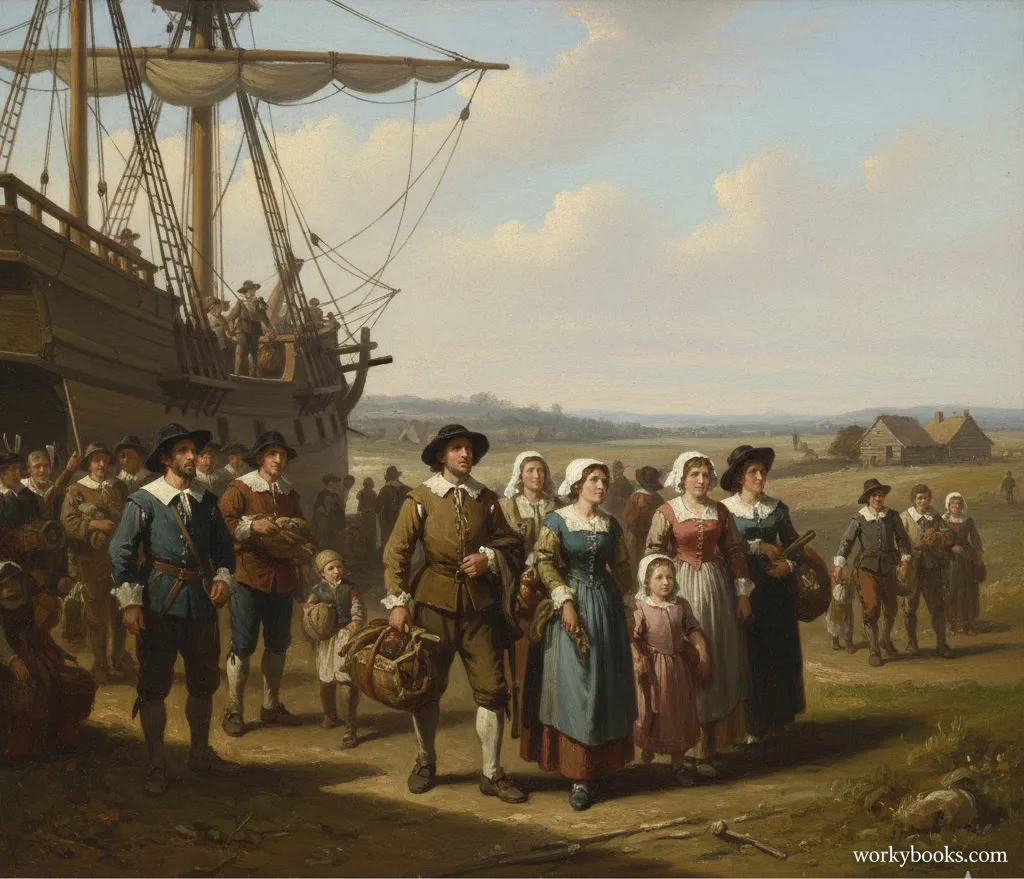
European colonial immigration to North America transformed the continent in the seventeenth and eighteenth centuries. Driven by religious persecution, poverty, and the hope for opportunity, thousands of people left their homelands. Their journeys and settlements laid the foundation for the diverse societies that would become the United States.
One major reason for emigration from Europe was religious conflict. Many groups, such as the English Puritans and French Huguenots, faced discrimination and punishment in their home countries for their beliefs. In England, strict laws limited the practice of religions other than Anglicanism. As a result, some sought freedom in the American colonies, where they hoped to build communities based on their faith. The search for religious liberty shaped colonies like Massachusetts and Pennsylvania.
Economic hardship also encouraged settlers to move. In several European countries, poor harvests, high taxes, and lack of jobs made daily life difficult. For example, land in England and the Netherlands was expensive, and many farmers could not own property. The promise of land and better wages in America was a powerful incentive. Indentured servants, who agreed to work for a number of years in exchange for passage, made up a large part of the early colonial population.
Despite sharing the goal of a better life, the English, Dutch, French, and Spanish settlers had different motives and established diverse colonies. The English often focused on permanent settlements and self-government. Colonies like Virginia relied on tobacco farming and the labor of indentured servants and enslaved Africans. In contrast, the Dutch built New Netherland (later New York), emphasizing trade and cooperation with Native Americans. The French established Quebec and Louisiana, focusing on fur trading, alliances, and Catholic missions. Spanish colonists controlled Florida and the Southwest, aiming to expand their empire and convert Indigenous peoples to Catholicism.
The arrival of Europeans brought significant change and new challenges. Settlers often clashed with Native Americans, leading to conflict and sometimes violence. Competition for land and resources shaped the development of each colony. While some groups found religious freedom and new economic chances, others—especially Indigenous peoples—faced loss of land, disease, and disruption of their way of life. These complex interactions influenced the future of North America.
Despite hardships, many immigrants persevered. Their diverse backgrounds, experiences, and goals created the foundation of American society. Over time, the blending of cultures, languages, and traditions resulted in unique colonial identities.
Interesting Fact: More than half of the English immigrants to the colonies in the 1600s arrived as indentured servants, working years to earn their freedom and a chance at a new life.
Comprehension quiz (8 questions)
1. What was a main reason for emigration?
2. Which colony focused on tobacco farming?
3. Who established New Netherland?
4. Why did many settlers become indentured servants?
5. How did French colonies differ from English?
6. What was a result of colonial immigration?
7. English settlers always had peaceful relations. True or false?
8. What does 'incentive' mean in the passage?
Common Core standards for Why Europeans Immigrated to Colonial America
Explain events, procedures, ideas, or concepts in a historical, scientific, or technical text, including what happened and why, based on specific information in the text.
Determine the meaning of general academic and domain-specific words or phrases in a text relevant to a grade 4 topic or subject area.
Write informative/explanatory texts to examine a topic and convey ideas and information clearly.
Perfect for the way you teach
- Build comprehension skills
- Auto-graded quiz
- Differentiated reading
- Read together at home
- Improve fluency
- Quiet reading time
- Reading curriculum support
- Independent practice
- Track Lexile growth