
Passage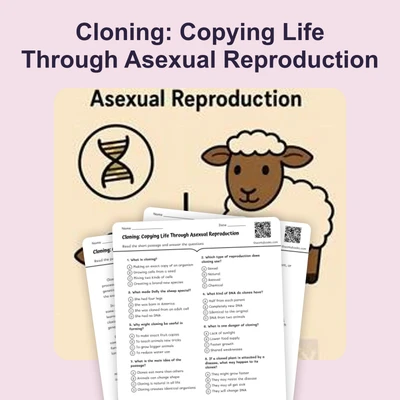
Grades 5–8
Cloning: Copying Life Through Asexual Reproduction
Reading Passage · MS-LS3-1
$1.50

Explore our Agriculture and Biotechnology curriculum resources for grades K-8. This hub offers printable and digital worksheets, activities, reading passages, games, and graphic organizers that build understanding of farming, food production, and genetic science. Some resources are free; most require a membership.
Reading Passage · MS-LS3-1
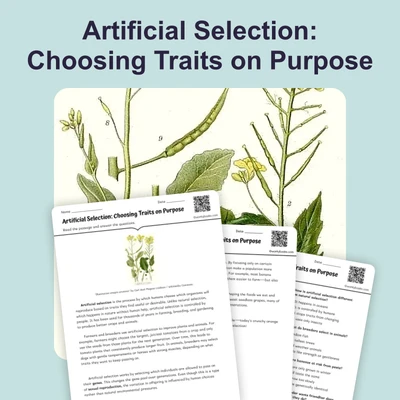
Reading Passage · MS-LS3-1
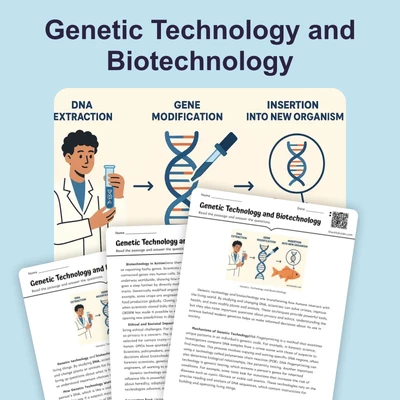
Reading Passage · MS-LS3-1
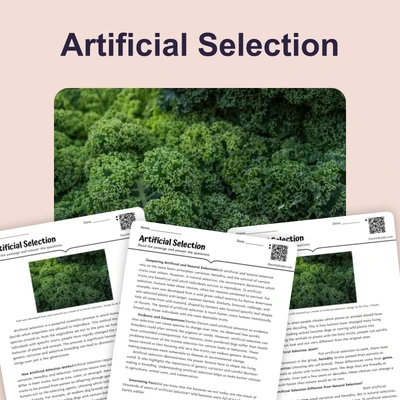
Reading Passage · MS-LS4-5
Reading Passage
Three ways to use Workybooks — pick what fits.
In the earliest grades, students explore where food comes from, the basic needs of plants and animals, and simple farming tools. As they progress through upper elementary, they learn about soil health, crop rotation, pollination, and the role of technology in agriculture. By middle school, students examine genetic modification, selective breeding, and the ethical considerations of biotechnology. Related concepts include photosynthesis, ecosystems, food chains, and sustainable farming practices. These resources scaffold from foundational vocabulary and observation to critical thinking about real-world agricultural challenges, helping students connect science to everyday life.
Teachers can use this hub to differentiate instruction across a mixed-ability classroom. Choose grade-appropriate worksheets and reading passages for whole-group lessons, then assign leveled games and graphic organizers for small groups or literacy centers. Printable resources work well for independent practice, homework, or intervention, while digital activities suit review and assessment. The no-prep, teacher-authored materials allow you to quickly pull resources for any instructional setting, from introducing concepts to reteaching or enriching advanced learners.
These resources align with grade-level Common Core standards for reading informational text and writing, as well as Next Generation Science Standards for life science and earth science across grades K-8.
Yes, many of our Agriculture and Biotechnology worksheets are printable. You can download and print them for classroom use. Some resources are free; most require a paid membership.
Absolutely. Our Agriculture and Biotechnology worksheets for kids are designed for grades K-8, with age-appropriate content and activities that build foundational knowledge and critical thinking skills.
Topics include where food comes from, plant and animal needs, soil, pollination, farming techniques, selective breeding, genetic modification, and sustainable agriculture. Resources span vocabulary, reading passages, games, and hands-on activities.
Resources are labeled by grade range (K-2, 3-5, 6-8). You can filter by grade and resource type. Many activities include differentiation suggestions, such as scaffolded versions or extension tasks.