Uses Of Algae
Interactive passage with audio narration, comprehension questions, and printable PDF.
By completing this purchase you agree to our Terms of Use and Privacy Policy. Your subscription renews automatically until you cancel. You can cancel anytime from your account settings. All sales are final and non-refundable. Digital content is available for download in your account immediately upon purchase.
What's included
Uses Of Algae preview and details
About this printable Uses Of Algae science reading passage, NGSS-aligned (Grade 6)
Sample passage and quiz from Uses Of Algae
Reading passage and comprehension quiz preview
Uses Of Algae
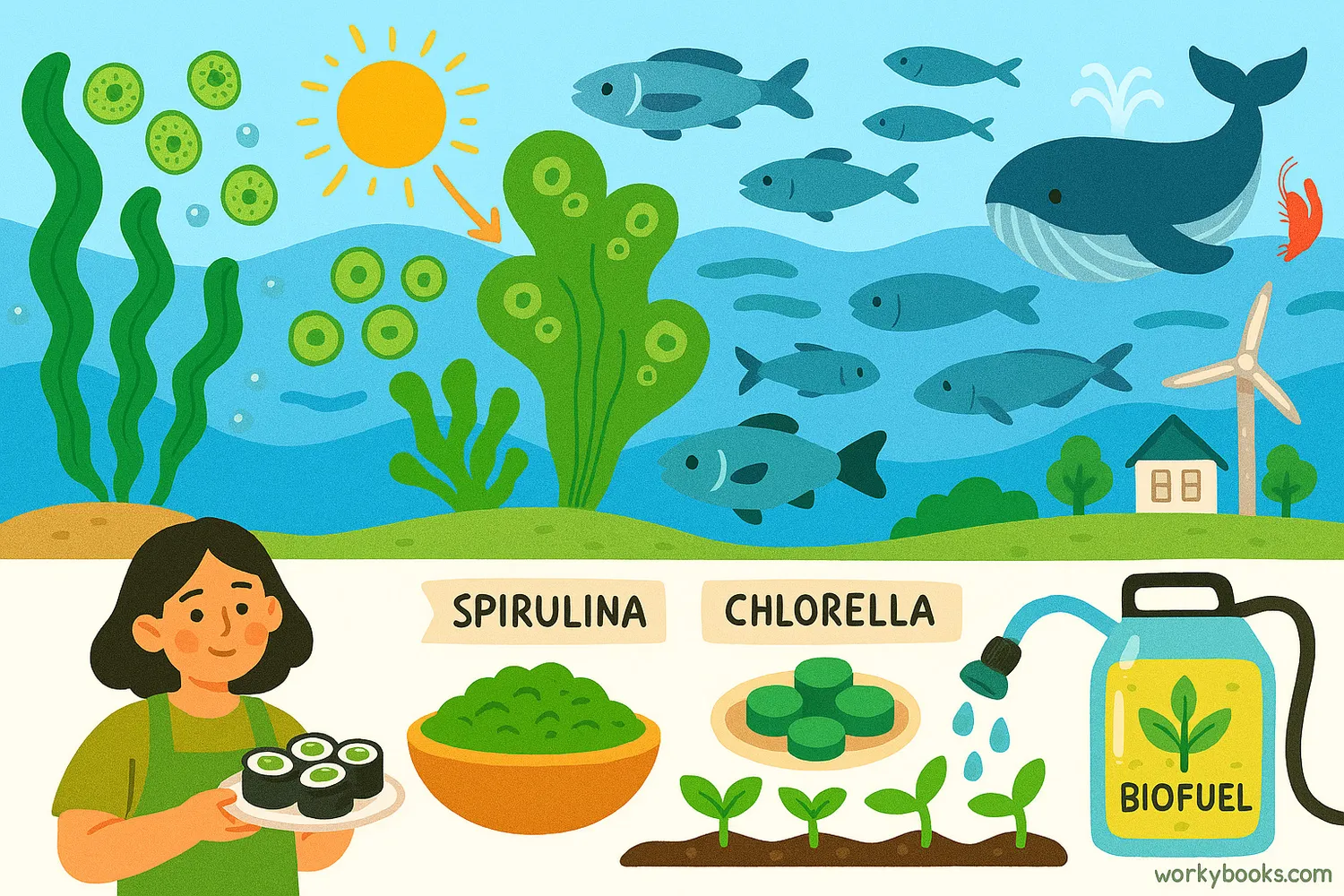
Imagine tiny, ancient organisms that power much of life on Earth. These aren't just green slime; they are algae, a diverse group of living things, ranging from microscopic single cells to large seaweeds. Algae thrive in water, from oceans and lakes to puddles and even damp soil. They are essential to our planet's health and play many surprising roles in human life.
One of the most important jobs of algae is producing oxygen. Like plants, algae perform photosynthesis, a process where they use sunlight, water, and carbon dioxide to create their own food. A major byproduct of this process is oxygen, which is released into the atmosphere. In fact, scientists estimate that algae produce about 50-80% of the oxygen we breathe! This makes them incredibly important for all living things, including us.
Beyond oxygen, algae are a vital source of energy and matter in ecosystems. They form the base of many aquatic food webs. Tiny creatures called zooplankton eat microscopic algae, and then larger animals, like fish and whales, eat the zooplankton. Without algae, these food chains would collapse, impacting countless marine species.
Algae also have numerous uses for humans. Some types are a rich source of nutrients and are eaten as food. For example, seaweed is a popular ingredient in many Asian cuisines. Microalgae like spirulina and chlorella are sold as health supplements, packed with vitamins, minerals, and proteins. Farmers even use algae as a natural fertilizer to help plants grow.
The future of algae is even more exciting. Scientists are exploring algae as a source of biofuels – clean, renewable energy that can replace fossil fuels. Certain algae produce oils that can be converted into biodiesel or jet fuel. Growing algae for fuel requires less land than traditional crops and can even be done using wastewater, making it a sustainable option. From the air we breathe to the food we eat and the energy we might use in the future, algae are truly tiny titans with a massive impact.
Interesting Fact: There's a type of algae called 'snow algae' that can grow in freezing temperatures and give snow a reddish-pink color, sometimes called 'watermelon snow'!
Comprehension quiz (10 questions)
1. What percentage of oxygen do algae produce?
2. What process do algae use to make food?
3. Algae are important for human systems. True or False?
4. Which of these is a benefit of using algae for biofuels?
5. Why are algae considered the base of many aquatic food webs?
6. How do algae contribute to a healthier planet?
7. Which of these is NOT a direct human use of algae mentioned?
8. If algae disappeared, what would likely happen to aquatic food chains?
9. The word "ecosystems" in the passage refers to:
10. Growing algae for biofuel is considered sustainable because:
Perfect for the way you teach
- Build comprehension skills
- Auto-graded quiz
- Differentiated reading
- Read together at home
- Improve fluency
- Quiet reading time
- Reading curriculum support
- Independent practice
- Track Lexile growth