Artificial Selection
Interactive passage with audio narration, comprehension questions, and printable PDF.
By completing this purchase you agree to our Terms of Use and Privacy Policy. Your subscription renews automatically until you cancel. You can cancel anytime from your account settings. All sales are final and non-refundable. Digital content is available for download in your account immediately upon purchase.
What's included
Artificial Selection preview and details
About this printable Artificial Selection science reading passage, NGSS-aligned (Grades 5-8)
Sample passage and quiz from Artificial Selection
Reading passage and comprehension quiz preview
Artificial Selection: Choosing Traits on Purpose
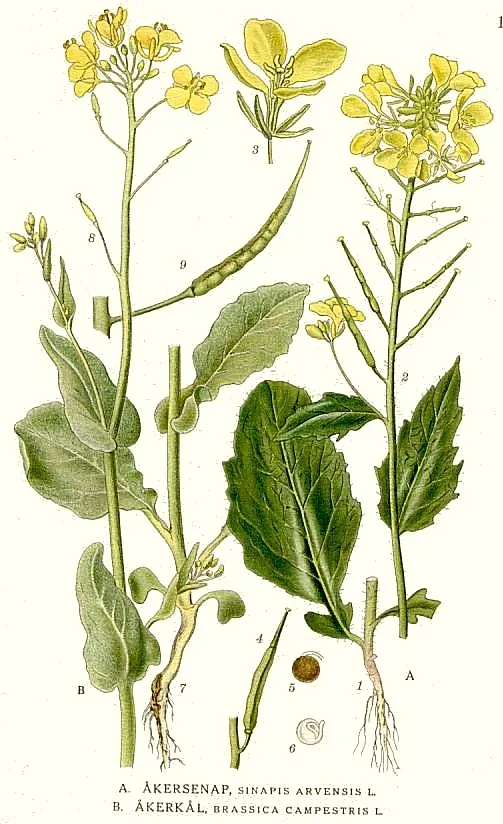
"Illustration sinapis arvensis" by Carl Axel Magnus Lindman / Wikimedia Commons.
Artificial selection is the process by which humans choose which organisms will reproduce based on traits they find useful or desirable. Unlike natural selection, which happens in nature without human help, artificial selection is controlled by people. It has been used for thousands of years in farming, breeding, and gardening to produce better crops and animals.
Farmers and breeders use artificial selection to improve plants and animals. For example, farmers might choose the largest, juiciest tomatoes from a crop and only use the seeds from those plants for the next generation. Over time, this leads to tomato plants that consistently produce larger fruit. In animals, breeders may select dogs with gentle temperaments or horses with strong muscles, depending on what traits they want to keep passing on.
Artificial selection works by selecting which individuals are allowed to pass on their genes. This changes the gene pool over generations. Even though this is a type of sexual reproduction, the variation in offspring is influenced by human choices rather than natural environmental pressures.
There are some downsides to artificial selection. By focusing only on certain traits, humans may reduce genetic diversity, which can make a population more vulnerable to disease or changes in the environment. For example, most banana plants grown today are genetically identical, making them easier to farm—but also easier for pests and diseases to attack.
Still, artificial selection has played a huge role in shaping the foods we eat and the animals we live with today. From fluffy poodles to sweet seedless grapes, many of the traits we enjoy came from careful selection over generations.
Fun Fact: Wild carrots used to be small, bitter, and purple—today’s crunchy orange carrots are the result of hundreds of years of artificial selection!
Comprehension quiz (8 questions)
1. What is artificial selection?
2. How is artificial selection different from natural selection?
3. What is one example of artificial selection in farming?
4. What do breeders select in animals?
5. What risk comes with artificial selection?
6. Why are bananas at risk from pests?
7. What is the main idea of the passage?
8. If a breeder wants friendlier dogs, what should they do?
Perfect for the way you teach
- Build comprehension skills
- Auto-graded quiz
- Differentiated reading
- Read together at home
- Improve fluency
- Quiet reading time
- Reading curriculum support
- Independent practice
- Track Lexile growth