

External Structures of Plants
A bundle of 8 resources — buy once and get every item to download and assign, individually or all together.
By completing this purchase you agree to our Terms of Use and Privacy Policy. Your subscription renews automatically until you cancel. You can cancel anytime from your account settings. All sales are final and non-refundable. Digital content is available for download in your account immediately upon purchase.
Items included in this bundle
8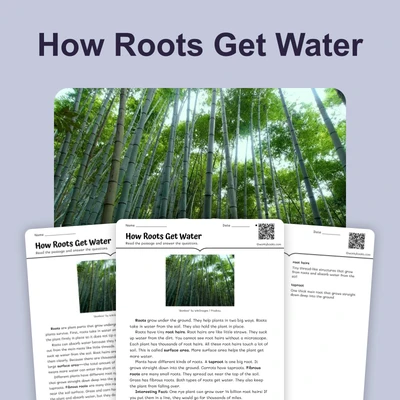
About this bundle
This comprehensive STEM Resource is expertly designed to help students master the essential functions of plant parts and how they ensure survival, perfectly aligned with NGSS standards (specifically 4-LS1-1). Use this engaging material to clarify how roots, stems, leaves, flowers, and seeds work together to help plants grow and thrive in their diverse environments.
About this Resource: The material provides a clear, conceptual framework using accessible language and helpful analogies—like comparing roots to "straws and tent stakes" or bark to a "suit of armor"—to make complex biological processes easy to understand. This resource covers everything from the "food factories" in leaves to the various ways seeds travel to find new homes.
The topics included in this resource are:
- How Roots Get Water
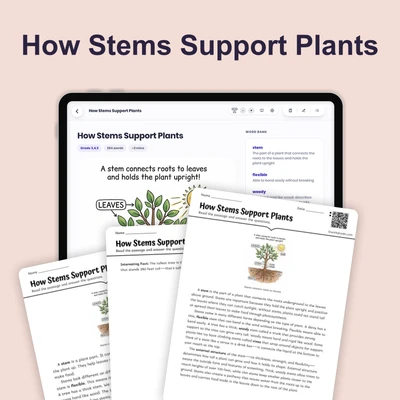
- How Stems Support Plants
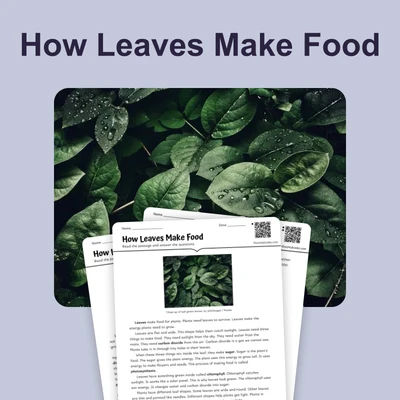
- How Leaves Make Food
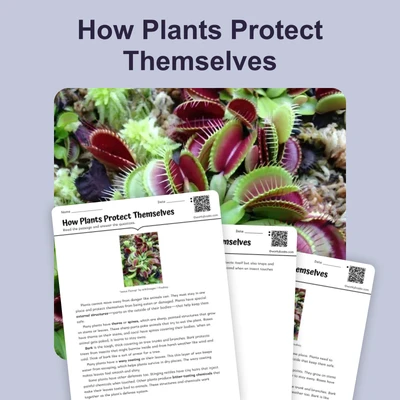
- How Plants Protect Themselves
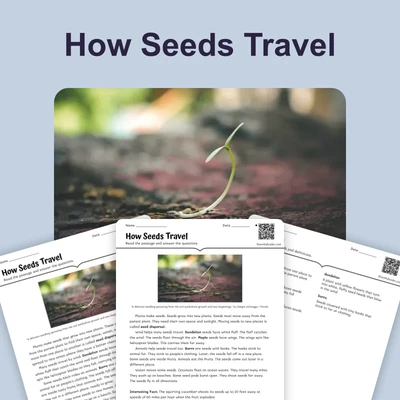
- How Seeds Travel
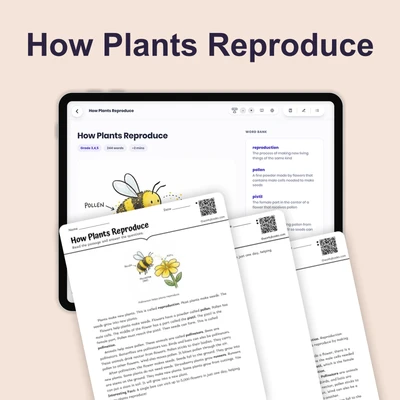
- How Plants Reproduce
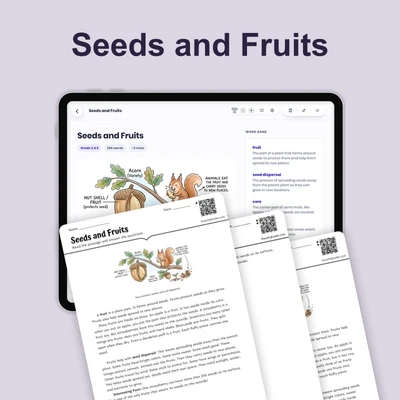
- Seeds and Fruits
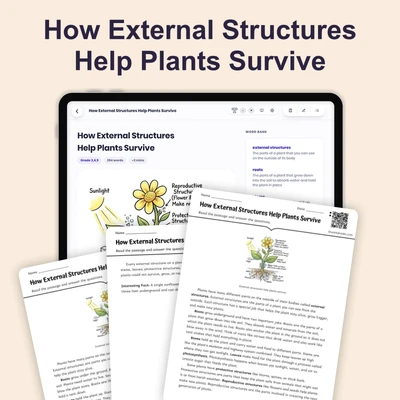
- How External Structures Help Plants Survive
This Phygital — Print and Interactive Version — gives you more options in your classroom. Available as both a print-and-go worksheet and an interactive digital lesson, it ensures a smooth and engaging learning experience.
What's Included:
- Reading Passages: Detailed, illustrated passages covering 8 key botanical topics. Each topic includes two leveled versions (Simplified and Detailed) to support differentiated instruction and is available in both English and Spanish.
- Glossary: Dedicated sections for each unit defining core scientific vocabulary such as Photosynthesis, Chlorophyll, Taproot, Pollination, and Seed Dispersal.
- Quiz: Multiple-choice assessments for every topic to evaluate student comprehension of reading passages and scientific concepts.
- Graphic Organizers: Targeted activities to help students compare root systems, classify stem types, and map the input-process-output of photosynthesis.
- Writing Activity: Open-ended comprehension and analytical questions that challenge students to explain biological relationships and apply their knowledge in their own words.
- Answer Key: Complete and suggested answers for all quizzes, writing prompts, and organizers, making grading simple and saving you valuable time.
Learning Objectives:
Students will be able to:
- Identify the primary functions of external plant structures, including roots, stems, leaves, and reproductive parts.
- Differentiate between taproot and fibrous root systems and explain how root hairs increase surface area for water absorption.
- Explain the process of photosynthesis, identifying the critical roles of sunlight, water, carbon dioxide, and chlorophyll in making plant food.
- Analyze various plant defense mechanisms, such as thorns, spines, bark, and waxy coatings, and describe how they aid survival.
- Categorize different methods of seed dispersal, including travel by wind, water, animals, and explosive pods.
- Describe the process of pollination and identify the roles of various pollinators like bees, birds, and wind in plant reproduction.
Perfect for the way you teach
- Assign in one click
- Track progress per student
- Auto-graded results
- Practice at home
- Print or do on-screen
- Build skill mastery
- Standards-aligned
- Self-paced
- Ready-to-use today