How Leaves Make Food
Interactive passage with audio narration, comprehension questions, and printable PDF.
What's included
Part of this bundle

How Leaves Make Food preview and details
About this printable How Leaves Make Food science reading passage, NGSS-aligned (Grades 3-6)
Sample passage and quiz from How Leaves Make Food
Reading passage and comprehension quiz preview
How Leaves Make Food
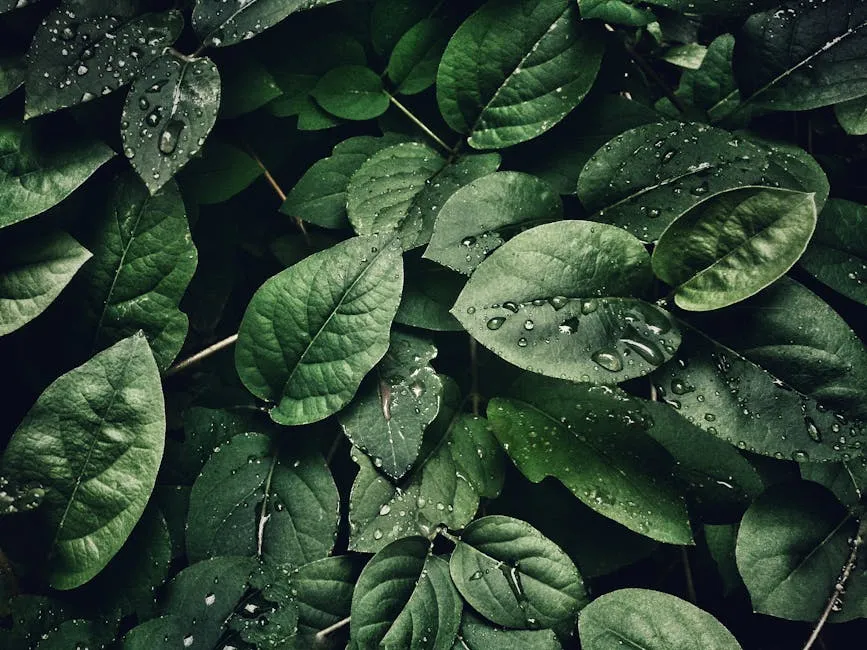
"Close-up of lush green leaves. by WikiImages / Pexels.
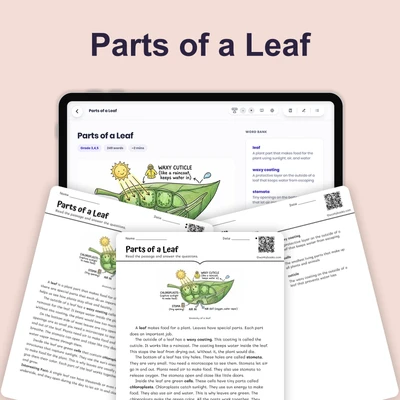
Leaves are the food-making factories of plants. Without leaves, most plants could not survive because they would have no way to produce the energy they need to grow.
Leaves are flat and broad to capture as much sunlight as possible. They use three ingredients to make food: sunlight from the sky, water from the roots, and carbon dioxide from the air around us. Carbon dioxide is an invisible gas that plants take in through tiny holes in their leaves. When these three ingredients combine inside the leaf, they produce sugar, which is the plant's food. This sugar gives the plant energy to grow taller, make flowers, and produce seeds. This food-making process is called photosynthesis.
Inside leaves is a special green substance called chlorophyll. Chlorophyll captures sunlight like a solar panel captures energy from the sun. This is why most leaves look green. The chlorophyll uses the sun's energy to turn water and carbon dioxide into sugar.
Different plants have different leaf shapes. Some leaves are wide and round, while others are thin and pointed like needles. These different shapes help plants capture light in their specific environments. For example, plants in shady forests often have very large leaves to catch as much light as possible.
Interesting Fact: A single large tree can have thousands of leaves that together make enough food to support the entire tree. One oak tree can have over 200,000 leaves working as tiny food factories!
Comprehension quiz (8 questions)
1. What are leaves for plants?
2. What three ingredients do leaves need?
3. What makes leaves look green?
4. Why are leaves flat and broad?
5. What does sugar give the plant?
6. Why do forest plants have large leaves?
7. Leaves make food only during nighttime.
8. What is photosynthesis?
Perfect for the way you teach
- Build comprehension skills
- Auto-graded quiz
- Differentiated reading
- Read together at home
- Improve fluency
- Quiet reading time
- Reading curriculum support
- Independent practice
- Track Lexile growth