How External Structures Help Plants Survive
Interactive passage with audio narration, comprehension questions, and printable PDF.
By completing this purchase you agree to our Terms of Use and Privacy Policy. Your subscription renews automatically until you cancel. You can cancel anytime from your account settings. All sales are final and non-refundable. Digital content is available for download in your account immediately upon purchase.
What's included
Part of this bundle

How External Structures Help Plants Survive preview and details
About this printable How External Structures Help Plants Survive science reading passage, NGSS-aligned (Grades 3-5)
Sample passage and quiz from How External Structures Help Plants Survive
Reading passage and comprehension quiz preview
How External Structures Help Plants Survive
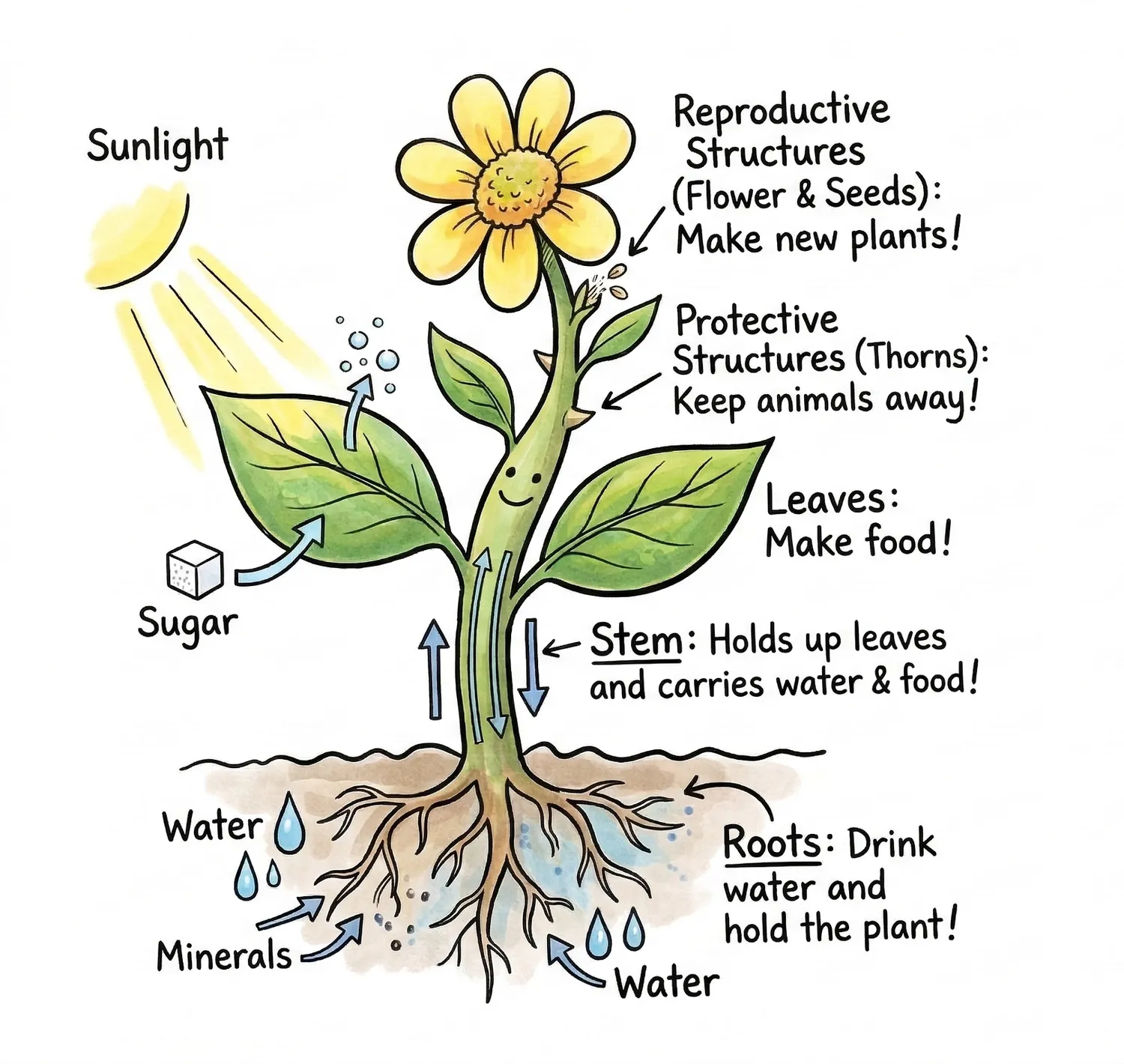
Plants have many different parts on the outside of their bodies called external structures. External structures are the parts of a plant you can see from the outside. Each structure has a special job that helps the plant stay alive, grow bigger, and make new plants.
Roots grow underground and have two important jobs. Roots are the parts of a plant that grow down into the soil. They absorb water and minerals from the soil, which the plant needs to live. Roots also anchor the plant in the ground so it does not blow away in the wind. Think of roots like straws that drink water and also work like tent stakes that hold everything in place.
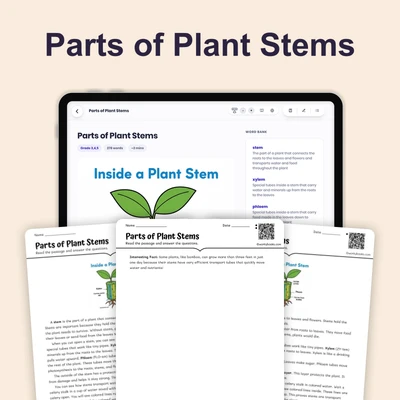
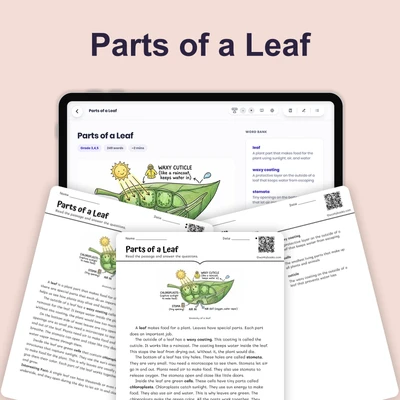
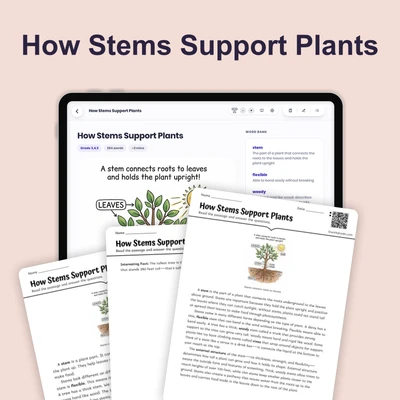
Stems hold up the plant and carry water and food to different parts. Stems are like the plant's skeleton and highway system combined. They keep leaves up high where they can get sunlight. Leaves make food for the plant through a process called photosynthesis. Photosynthesis happens when leaves use sunlight, water, and air to create sugar that feeds the plant.
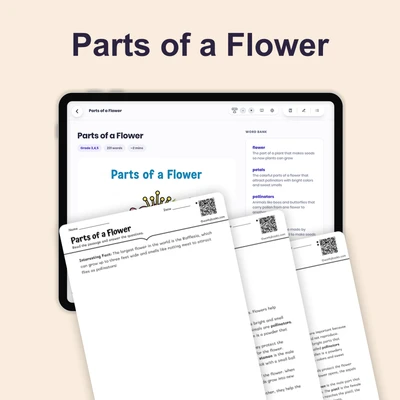
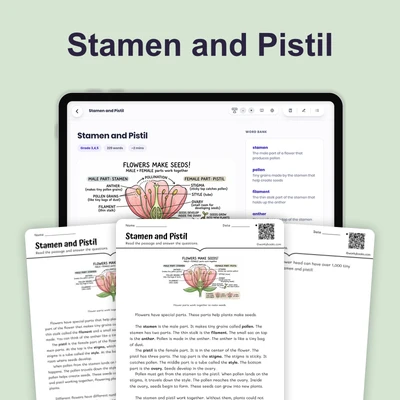
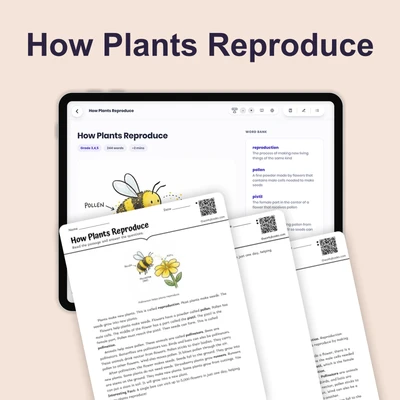
Some plants have protective structures like thorns, spines, or thick bark. Protective structures are parts that keep the plant safe from animals that might eat it or from harsh weather. Reproductive structures like flowers and seeds help plants make new plants. Reproductive structures are the parts involved in creating the next generation of plants.
Every external structure on a plant serves a specific purpose. Without roots, stems, leaves, protective structures, and reproductive structures working together, plants could not survive, grow, or reproduce.
Interesting Fact: A single sunflower plant can have roots that spread out more than three feet underground and can drink up to three gallons of water every day!
Comprehension quiz (8 questions)
1. What do roots absorb from soil?
2. What process do leaves use?
3. What do stems carry to plants?
4. Why do plants need protective structures?
5. How do reproductive structures help plants?
6. What would happen without roots?
7. All plant structures work together for survival.
8. What are external structures?
Perfect for the way you teach
- Build comprehension skills
- Auto-graded quiz
- Differentiated reading
- Read together at home
- Improve fluency
- Quiet reading time
- Reading curriculum support
- Independent practice
- Track Lexile growth