This learning resource is available in interactive and printable formats. The interactive worksheet can be played online and assigned to students. The Printable PDF version can be downloaded and printed for completion by hand.
This engaging science reading passage, 'How Plant Parts Help Plants Survive,' is designed for Grade 4-5 students and aligns with NGSS standards. It explores how different plant parts, such as roots, stems, leaves, flowers, fruits, and seeds, help plants live and grow. The passage uses clear language and real-world examples to explain key scientific concepts and vocabulary, making it easy for students to understand. A glossary of important terms is included, as well as a Spanish translation of the passage for bilingual learners. Students can test their understanding with a multiple-choice quiz and practice their writing skills with thought-provoking questions. This resource also includes integrated audio support, making it accessible for all learners. It's perfect for classroom use, homework, or science centers, and helps students connect science learning to the world around them.
Plants are living things that need certain parts to survive and grow. Each part of a plant has a special job that helps the plant live in its environment. The main parts of a plant are the roots, stem, leaves, flowers, fruits, and seeds.
The roots of a plant grow underground. Roots hold the plant in place and take in water and nutrients from the soil. Some roots, like carrots, also store food for the plant to use later.
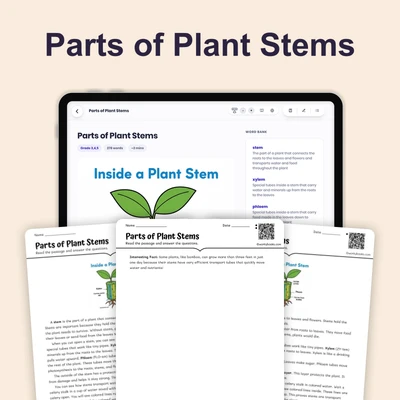
The stem is like the plant’s backbone. It supports the plant and helps it stand upright. The stem moves water, food, and nutrients between the roots and other parts of the plant. For example, in a sunflower, the tall stem keeps the flower facing the sun.
Leaves are the plant parts that make food. They use sunlight, air, and water to make a kind of sugar in a process called photosynthesis. This gives the plant the energy it needs to grow. The shape and size of leaves can help plants survive in different places. For example, cactus leaves are small spines that help keep water inside.
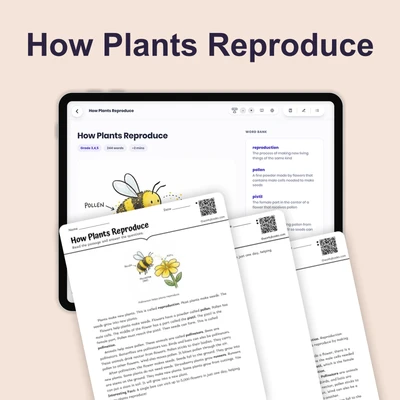
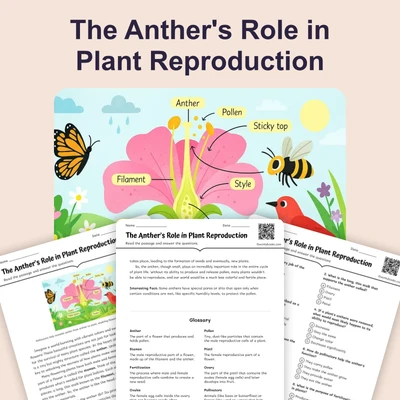
Flowers help plants make new plants. They attract insects like bees and butterflies, which move pollen from one flower to another. This process is called pollination. After pollination, flowers can turn into fruits.
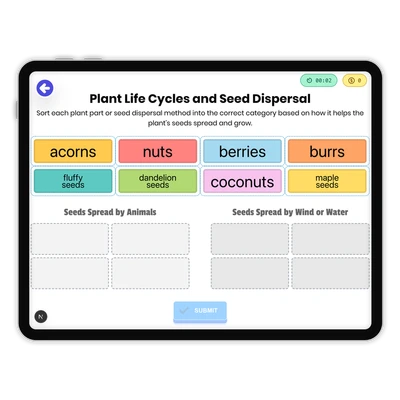
Fruits protect the seeds inside. When animals eat the fruit, they help spread the seeds to new places. Seeds grow into new plants when they land in the right spot.
Each plant part works together to help the plant stay healthy and make more plants. This is why plants can survive in many different environments, from deserts to rainforests.
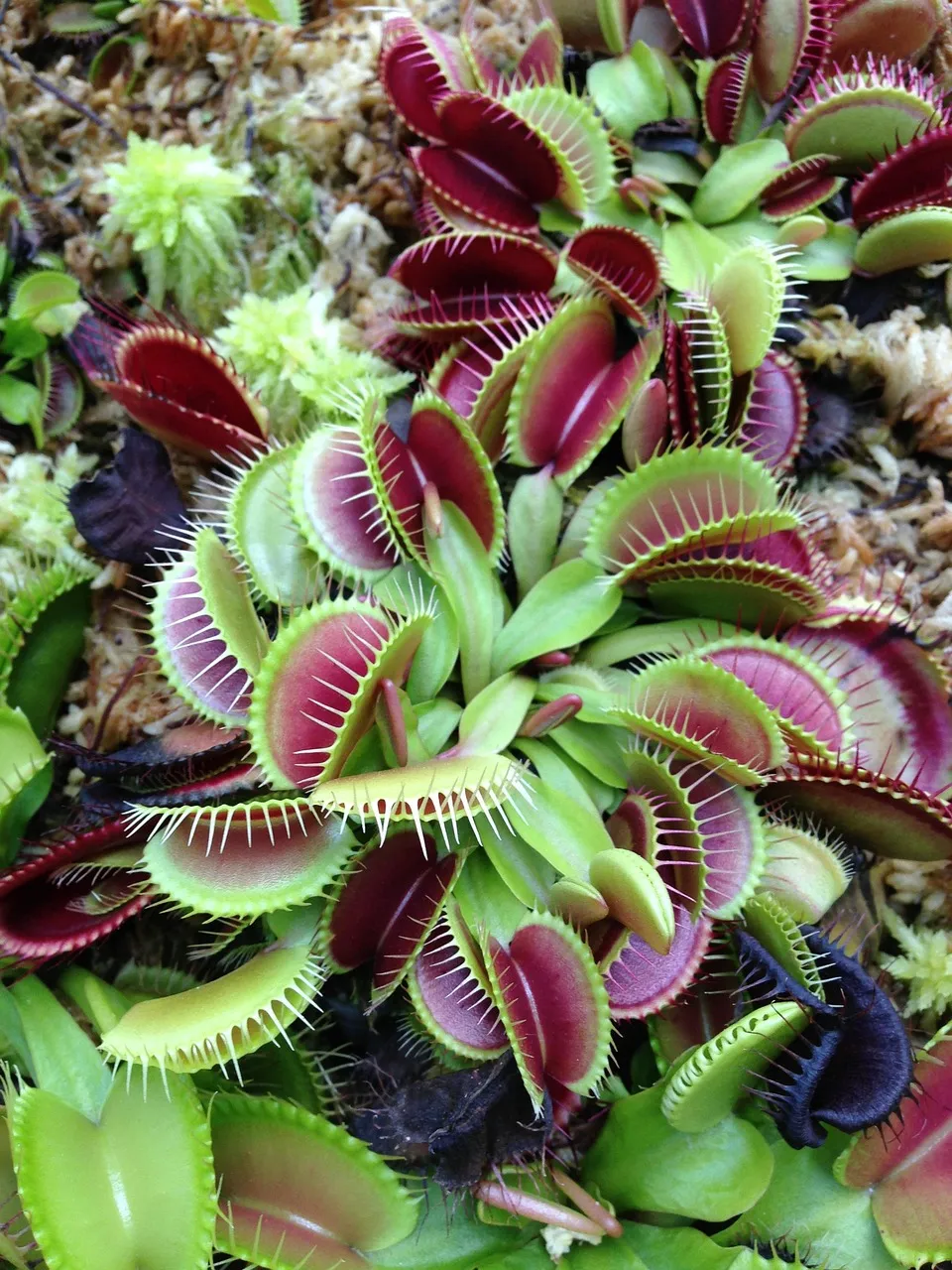
Interesting Fact: Some plants, like the Venus flytrap, have special leaves that can trap insects for food!
What do roots do for a plant?
Hold plant, take in waterMake food using sunlightAttract insectsCarry pollen between flowers
What is the job of leaves?
Make food by photosynthesisProtect seedsSupport the plantAttract animals
What part attracts insects for pollination?
RootsFlowersSeedsFruits
How do fruits help seeds?
They protect and spread seedsThey make food for plantThey absorb sunlightThey hold water
What would happen if a plant had no leaves?
It couldn't make foodIt would make more seedsIt would grow fasterIt would have more roots
A cactus has spines instead of leaves because:
It keeps water insideIt attracts beesIt helps stem growIt makes seeds stronger
Plants use photosynthesis to make food. True or false?
TrueFalse
What does 'pollination' mean?
Moving pollen between flowersMaking food from sunlightRoots taking in waterSeeds growing into plants
Perfect For:
👩🏫 Teachers
• Reading comprehension practice
• Auto-graded assessments
• Literacy skill development
👨👩👧👦 Parents
• Reading practice at home
• Comprehension improvement
• Educational reading time
🏠 Homeschoolers
• Reading curriculum support
• Independent reading practice
• Progress monitoring
Reading Features:
📖
Reading Passage
Engaging fiction or nonfiction text
❓
Comprehension Quiz
Auto-graded questions
📊
Instant Feedback
Immediate results and scoring
📄
Printable Version
Download for offline reading
🔊
Read Aloud
Voice-over with word highlighting
Reviews & Ratings
No reviews yet. Be the first to share your experience!
Related Content
The Nature of Life Science
This passage, aligned with NGSS MS-LS1-1, introduces students in grades 6-8 to the foundational concepts of life science...
MS-LS1-1
Science Vocabulary
This worksheet on domain-specific words will help students learn some science vocabulary. Students will be asked to matc...
L.3.6L.3.4.A
The Science of Hibernation
This educational module, featuring an audio-integrated reading passage titled 'The Science of Hibernation,' is designed ...
Simple Machines Science Report
This science writing task requires students to clearly explain how three simple machines work using precise domain-speci...
W.5.4
Adaptation
This engaging middle school science passage explores adaptation, focusing on how inherited traits enable organisms to su...
MS-LS4-4MS-LS4-6
Desert Rain Frog Behavioral Adaptations
Dive into the fascinating world of the Desert Rain Frog and discover its incredible unique adaptations for survival in a...
Animal Adaptations Word Sort
This engaging word sort activity helps students understand the difference between physical and behavioral adaptations in...
Herbivore Adaptations
This engaging reading passage, integrated with audio, delves into the fascinating world of herbivore adaptations. Studen...
Nocturnal Adaptations of the Strange Aye-Aye
This engaging reading passage, integrated with audio, takes grade 5 students on a journey to discover the fascinating no...
Ocean Animal Adaptations
Students will read a passage that provides information about various adaptations that marine animals have developed to t...
W.4.9.B
Early Life Forms and Their Adaptations
This educational passage focuses on early life forms and their basic adaptations, supporting NGSS standard 3-LS4-2 for e...
RI.3.3RI.4.3RI.5.33-LS4-2
Binturong Adaptations
This engaging, audio-integrated reading passage, 'Binturong Adaptations,' for Grade 6 students delves into the fascinati...
Barnacle Biology and Adaptations
Dive into the intriguing world of barnacles with this engaging Grade 6 reading passage. Students will learn about these ...
Whale Blubber: Function and Adaptation
This engaging, audio-integrated reading passage, 'Whale Blubber Function and Adaptation,' introduces young learners to t...
Amur Leopard Adaptations
This engaging, audio-integrated reading passage, 'Amur Leopard Adaptations,' is designed for Grade 6 science students. I...
Mountain Animal Adaptations
This reading comprehension worksheet focuses on the topic of animal adaptations for survival in mountainous environments...
W.4.9.B
Climate Zone Adaptations Word Sort
This word sort activity examines how plants and animals adapt to different climate conditions. Students sort 12 differen...
Plant Adaptations for Survival
This NGSS-aligned word sort activity, suitable for kindergarten, focuses on plant survival adaptations, helping students...
K-LS1-1
The Pumpkin Life Cycle
This informational worksheet explores the pumpkin lifecycle, guiding students through procedural steps in a scientific t...
RI.2.3RI.2.10
What Is Earth Science?
This engaging middle school science passage introduces students to the field of Earth science, aligning with NGSS standa...