This learning resource is available in interactive and printable formats. The interactive worksheet can be played online and assigned to students. The Printable PDF version can be downloaded and printed for completion by hand.
This engaging Grade 4-5 science passage explains how seeds travel to new places, covering the processes of seed dispersal by wind, water, and animals. Students will learn key science vocabulary, discover real-world examples like dandelions and coconuts, and explore the importance of seed movement for plant survival. The resource includes a glossary of important terms, a Spanish translation of the passage, a multiple-choice quiz, and writing prompts that encourage students to make connections between science and their daily lives. This passage aligns with NGSS standards and is designed for effective classroom use. Audio integration supports diverse learners, making science accessible and engaging for all students.
CONTENT PREVIEW
Expand content preview
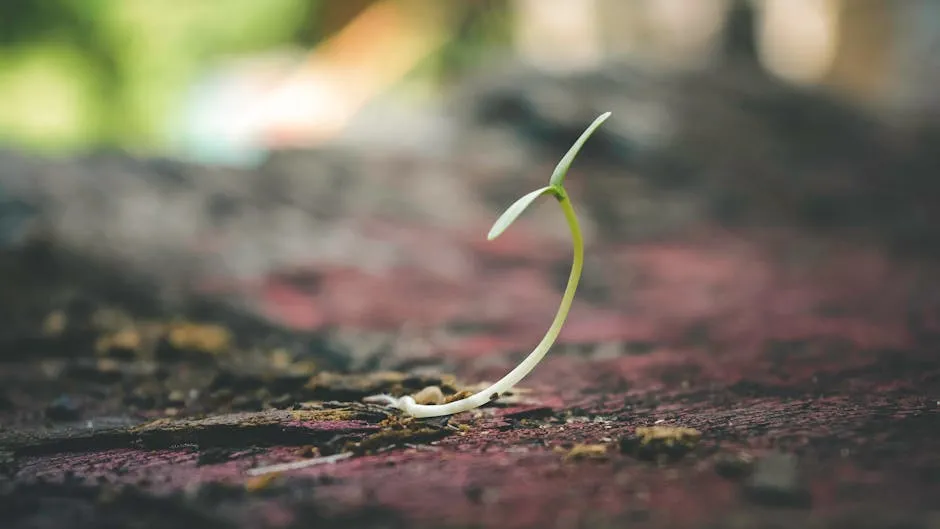
"A delicate seedling sprouting from the soil symbolizes growth and new beginnings." by Gelgas Airlangga / Pexels.
Plants make seeds that grow into new plants. These seeds need to move away from the parent plant to find their own space, water, and sunlight. The way seeds move from one place to another is called seed dispersal. Seed dispersal helps plants spread to new areas where they have a better chance to grow.
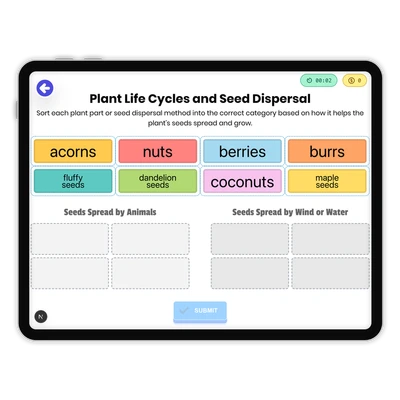
Many seeds travel by wind. Dandelion seeds have tiny parachutes made of soft, white fluff that catch the wind and float through the air. Maple seeds have wings that spin like helicopter blades as they fall, carrying them far from the tree.
Some seeds hitch rides on animals. Burrs are seeds with tiny hooks that grab onto animal fur or people's clothing. The seeds fall off later in a new location. Other seeds are inside tasty fruits that animals eat. The seeds pass through the animal's body and come out in a different place, ready to grow.
Water carries some seeds to new homes. Coconuts can float on ocean waves for many miles before washing up on a beach. Some seed pods burst open when they dry out, shooting seeds in all directions like tiny cannons.
Interesting Fact: The squirting cucumber shoots its seeds up to 20 feet away at speeds of 60 miles per hour when the fruit explodes!
What is seed dispersal?
How seeds grow into plantsHow seeds move to new placesHow plants make seedsHow animals eat seeds
What helps dandelion seeds float in air?
Tiny wings that spinHooks that grab furWhite fluffy parachutesHard outer shells
How do burrs travel to new places?
They float on waterThey stick to animal furThey spin through the airThey explode from pods
Why do seeds need to move away?
To hide from animalsTo find their own space and sunlightTo stay close to parent plantTo grow faster than other seeds
What happens when animals eat fruits with seeds?
The seeds are destroyed completelyThe seeds grow inside the animalThe seeds pass through and come outThe seeds stick to the fur
Maple seeds spin like helicopter blades.
TrueFalse
Which seed can float on ocean waves?
Dandelion seedsMaple seedsCoconutsBurrs
What does dispersal mean in this passage?
Growing into a new plantSpreading to different placesSticking to animal furFloating on water
Perfect For:
👩🏫 Teachers
• Reading comprehension practice
• Auto-graded assessments
• Literacy skill development
👨👩👧👦 Parents
• Reading practice at home
• Comprehension improvement
• Educational reading time
🏠 Homeschoolers
• Reading curriculum support
• Independent reading practice
• Progress monitoring
Reading Features:
📖
Reading Passage
Engaging fiction or nonfiction text
❓
Comprehension Quiz
Auto-graded questions
📊
Instant Feedback
Immediate results and scoring
📄
Printable Version
Download for offline reading
🔊
Read Aloud
Voice-over with word highlighting
Reviews & Ratings
No reviews yet. Be the first to share your experience!
Related Content
The Nature of Life Science
This passage, aligned with NGSS MS-LS1-1, introduces students in grades 6-8 to the foundational concepts of life science...
MS-LS1-1
Science Vocabulary
This worksheet on domain-specific words will help students learn some science vocabulary. Students will be asked to matc...
L.3.6L.3.4.A
The Science of Hibernation
This educational module, featuring an audio-integrated reading passage titled 'The Science of Hibernation,' is designed ...
Adaptation
This engaging middle school science passage explores adaptation, focusing on how inherited traits enable organisms to su...
MS-LS4-4MS-LS4-6
Simple Machines Science Report
This science writing task requires students to clearly explain how three simple machines work using precise domain-speci...
W.5.4
Desert Rain Frog Behavioral Adaptations
Dive into the fascinating world of the Desert Rain Frog and discover its incredible unique adaptations for survival in a...
Animal Adaptations Word Sort
This engaging word sort activity helps students understand the difference between physical and behavioral adaptations in...
Ocean Animal Adaptations
Students will read a passage that provides information about various adaptations that marine animals have developed to t...
W.4.9.B
Herbivore Adaptations
This engaging reading passage, integrated with audio, delves into the fascinating world of herbivore adaptations. Studen...
Nocturnal Adaptations of the Strange Aye-Aye
This engaging reading passage, integrated with audio, takes grade 5 students on a journey to discover the fascinating no...
Early Life Forms and Their Adaptations
This educational passage focuses on early life forms and their basic adaptations, supporting NGSS standard 3-LS4-2 for e...
RI.3.3RI.4.3RI.5.33-LS4-2
Binturong Adaptations
This engaging, audio-integrated reading passage, 'Binturong Adaptations,' for Grade 6 students delves into the fascinati...
Barnacle Biology and Adaptations
Dive into the intriguing world of barnacles with this engaging Grade 6 reading passage. Students will learn about these ...
Whale Blubber: Function and Adaptation
This engaging, audio-integrated reading passage, 'Whale Blubber Function and Adaptation,' introduces young learners to t...
Mountain Animal Adaptations
This reading comprehension worksheet focuses on the topic of animal adaptations for survival in mountainous environments...
W.4.9.B
Amur Leopard Adaptations
This engaging, audio-integrated reading passage, 'Amur Leopard Adaptations,' is designed for Grade 6 science students. I...
Climate Zone Adaptations Word Sort
This word sort activity examines how plants and animals adapt to different climate conditions. Students sort 12 differen...
Plant Adaptations for Survival
This NGSS-aligned word sort activity, suitable for kindergarten, focuses on plant survival adaptations, helping students...
K-LS1-1
The Pumpkin Life Cycle
This informational worksheet explores the pumpkin lifecycle, guiding students through procedural steps in a scientific t...
RI.2.3RI.2.10
What Is Earth Science?
This engaging middle school science passage introduces students to the field of Earth science, aligning with NGSS standa...