This learning resource is available in interactive and printable formats. The interactive worksheet can be played online and assigned to students. The Printable PDF version can be downloaded and printed for completion by hand.
This engaging 350-word science passage introduces elementary students to core samples and how scientists use them to study Earth's underground rock layers. Aligned with NGSS standard 4-ESS1-1, the passage explains the drilling process and how core samples reveal information about our planet's history without requiring massive excavation. Students learn through relatable analogies, including comparing core samples to pushing a straw through a layer cake. The passage includes bolded key vocabulary terms with immediate definitions, making complex geological concepts accessible to grade 4-5 readers. Audio-integrated features support diverse learners. Activities include comprehension questions testing both recall and application, writing prompts connecting science to real-world scenarios, and graphic organizers helping students visualize the core sampling process. A differentiated version ensures all students can access this important earth science content. The materials include Spanish translations and a comprehensive glossary of geological terms, supporting multilingual learners and building scientific vocabulary essential for understanding Earth's structure and history.
CONTENT PREVIEW
Expand content preview
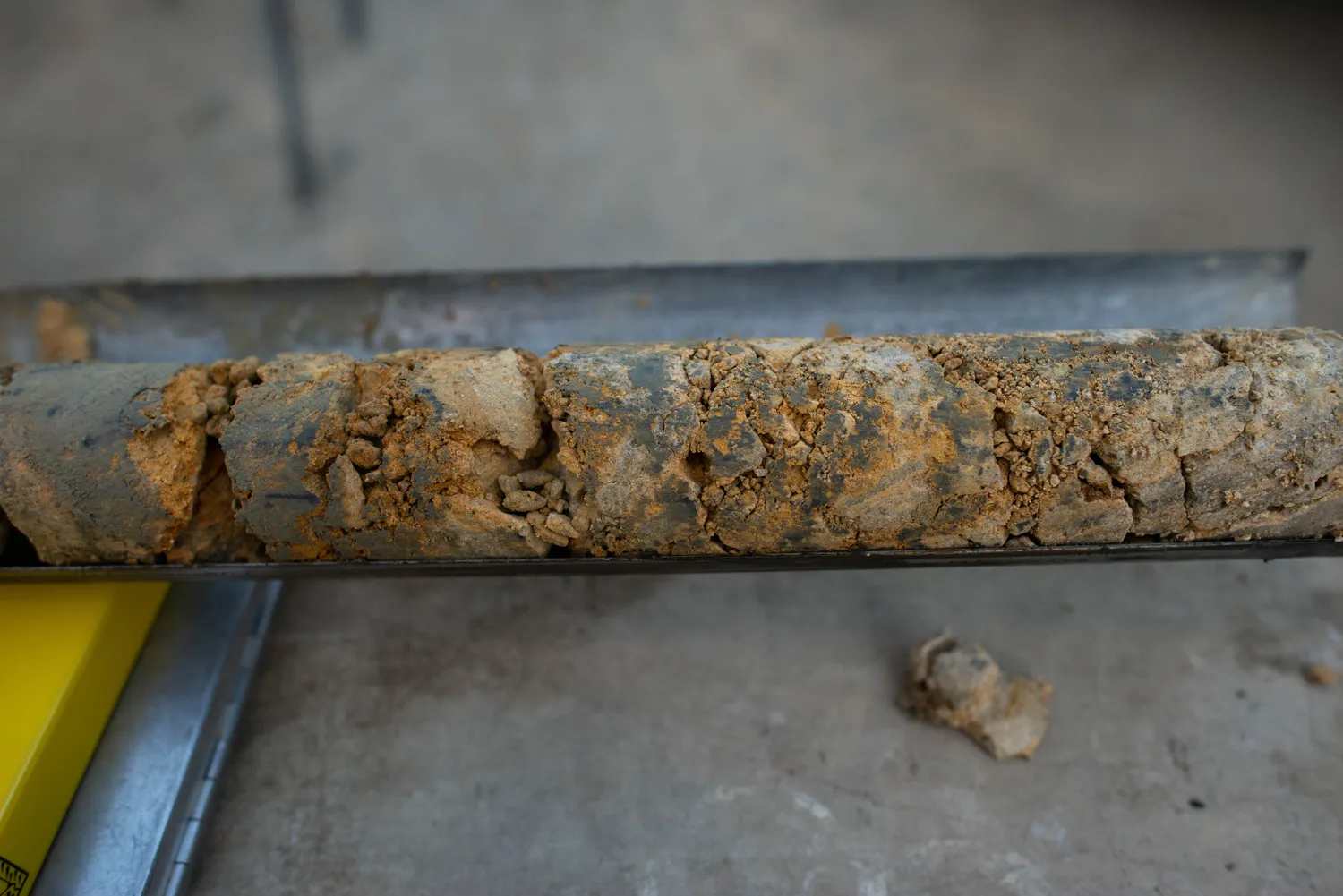
Drilling occurred at Pretty Rocks in 2018. Core samples from the drilling indicate how much ice underlies this part of the Denali Park Road. This early sample, pulled from closer to the surface, contained no ice, by Mary Lewandowski / Wikimedia Commons
Scientists who study Earth often need to know what lies deep underground. To learn about the rock layers beneath our feet, they use a tool called a core sample. A core sample is a long, narrow tube of rock that scientists pull up from deep underground. This special tool lets them see all the different layers of rock without digging a massive hole that would cost too much money and take too much time.
Getting a core sample starts with drilling. Drilling means using a powerful machine to bore a narrow hole deep into the ground. The drill has a special hollow tube attached to it. As the drill spins and cuts through rock, the tube fills up with layers of rock and soil. Think of pushing a drinking straw down through a layer cake. When you pull the straw back out, you can see all the different cake layers and frosting inside the straw. A core sample works exactly the same way!
The rock tube that comes out of the ground shows scientists many things. Each layer in the core sample tells a story about Earth's past. The layers are bands of different types of rock stacked on top of each other. Layers form over millions of years as sand, mud, and other materials settle and harden into rock. Scientists can see different colors and textures in each layer. Some layers might have fossils. Others might show where ancient rivers once flowed or where volcanoes erupted long ago.
Reading core samples requires careful study. Scientists measure each layer's thickness and test what minerals it contains. The deepest layers are the oldest because they formed first. Younger layers sit on top of older ones. By studying the order of layers, scientists learn about climate changes, ancient oceans, and even asteroid impacts that happened millions of years ago. This information helps them understand how Earth has changed over time.
Core samples have many real-world uses. Oil companies drill core samples to find petroleum deep underground. Construction companies use them to make sure the ground is safe for building. Climate scientists drill ice core samples in Antarctica to study Earth's temperature history going back hundreds of thousands of years. Even space scientists practice taking core samples because future astronauts might drill into the Moon or Mars to study those worlds!
Interesting Fact: The deepest core sample ever drilled went down 7.5 miles into Earth's crust in Russia, and it took scientists over 20 years to drill it!
What is a core sample?
A big hole dug in the groundA long tube of rock from undergroundA type of drilling machineA fossil found in rocks
How do scientists get core samples?
By digging with shovelsBy collecting rocks from mountainsBy drilling into the groundBy studying surface rocks
Which rock layers are the oldest?
The top layersThe middle layersThe deepest layersAll layers are the same age
Why is a core sample like a straw?
Both are used for drinkingBoth show layers when pulled outBoth are made of plasticBoth are very long and thin
How do core samples help oil companies?
They find petroleum deep undergroundThey build better drilling machinesThey study ancient fossilsThey measure Earth's temperature
What can scientists learn from ice cores?
Where to find oilHow to build on iceEarth's temperature historyWhere volcanoes erupted
Core samples let scientists study underground without digging holes.
TrueFalse
What does drilling mean?
Digging with handsBoring a hole with a machineCollecting rock samplesStudying fossils
Perfect For:
👩🏫 Teachers
• Reading comprehension practice
• Auto-graded assessments
• Literacy skill development
👨👩👧👦 Parents
• Reading practice at home
• Comprehension improvement
• Educational reading time
🏠 Homeschoolers
• Reading curriculum support
• Independent reading practice
• Progress monitoring
Reading Features:
📖
Reading Passage
Engaging fiction or nonfiction text
❓
Comprehension Quiz
Auto-graded questions
📊
Instant Feedback
Immediate results and scoring
📄
Printable Version
Download for offline reading
🔊
Read Aloud
Voice-over with word highlighting
Reviews & Ratings
No reviews yet. Be the first to share your experience!
Related Content
Plant Fossil
This engaging 350-word science reading passage for grades 4-5 explores how plant fossils provide clues about Earth's anc...
NGSS 4-ESS1-1
Fossil Patterns
This engaging science reading passage explores how scientists use fossil patterns to understand Earth's history, perfect...