Fossil Patterns in Rocks
Interactive passage with audio narration, comprehension questions, and printable PDF.
By completing this purchase you agree to our Terms of Use and Privacy Policy. Your subscription renews automatically until you cancel. You can cancel anytime from your account settings. All sales are final and non-refundable. Digital content is available for download in your account immediately upon purchase.
What's included
Fossil Patterns in Rocks preview and details
About this printable Fossil Patterns in Rocks science reading passage, NGSS-aligned (Grades 3-5)
Sample passage and quiz from Fossil Patterns in Rocks
Reading passage and comprehension quiz preview
Fossil Patterns in Rocks
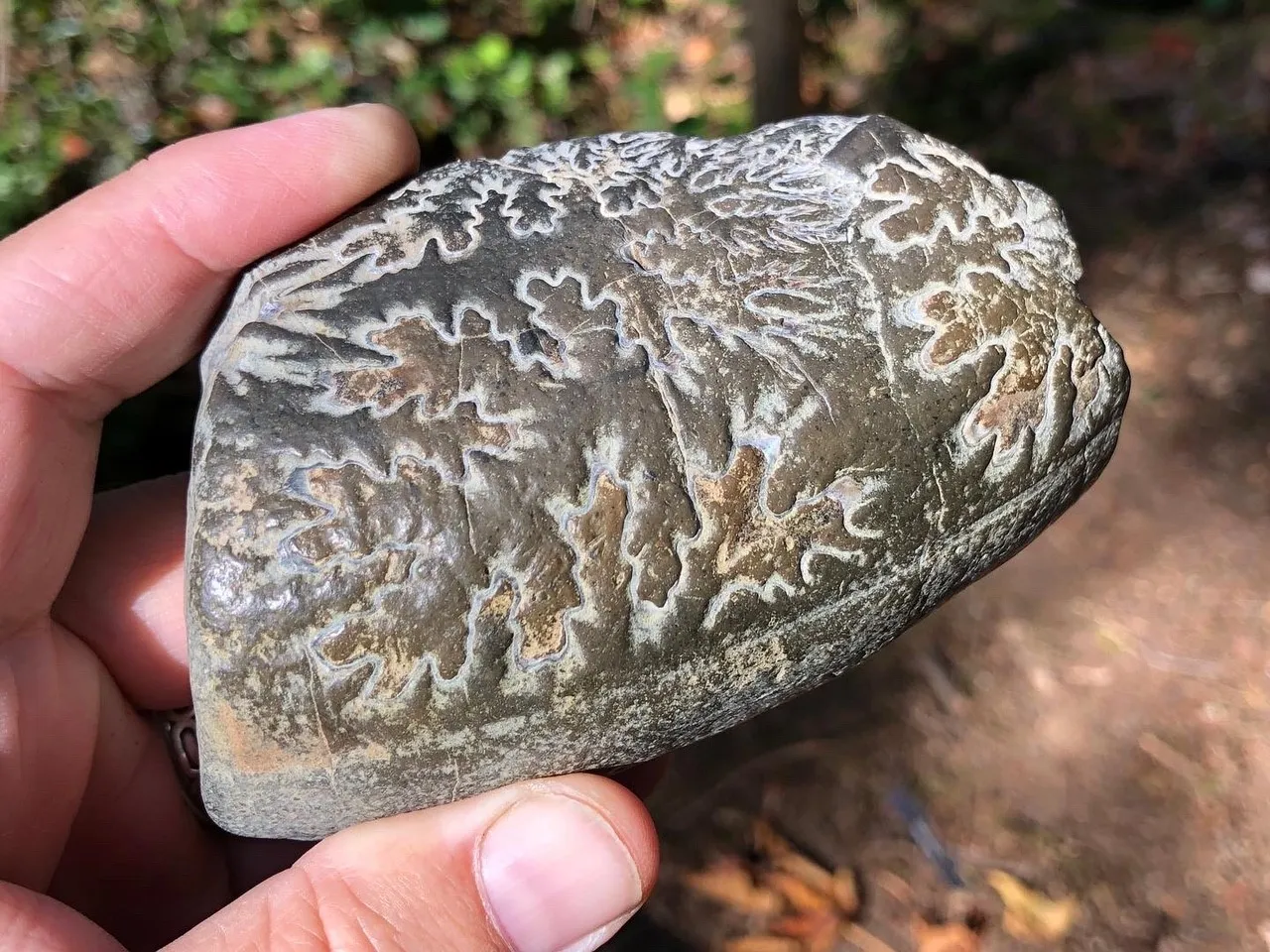
Ammonite Fossil Found at Campbell Bay, Mayne Island by MarcStevenBC / Wikimedia Commons
Fossils are the remains or traces of living things from long ago that are preserved in rocks. Scientists study fossils to learn about Earth's history and the plants and animals that lived millions of years ago.
When scientists examine fossils across many rock layers, which are like stacked sheets of rock formed over time, they discover important patterns. Certain types of fossils always appear in certain layers. For example, dinosaur fossils are found in older, deeper layers, but never in the newest layers at the top. This tells scientists that dinosaurs lived long ago but are no longer alive today.
Some fossils disappear from the rock record completely. When a type of fossil stops appearing in higher layers, it means that organism became extinct, or died out completely. New types of fossils appear in higher, younger layers, showing that new organisms developed over time. Think of rock layers like pages in a history book—each layer tells the story of a different time period.
Scientists have found the same fossils in rock layers on different continents, which are Earth's large land masses. When identical fossils appear in rocks on continents that are now separated by oceans, it suggests those continents were once connected. Patterns in fossils help scientists piece together Earth's history like a giant puzzle, showing how life and land have changed over millions of years.
Interesting Fact: Scientists found fossils of a reptile called Mesosaurus in both South America and Africa, which helped prove these continents were once joined together!
Comprehension quiz (8 questions)
1. What are fossils?
2. Where are dinosaur fossils found?
3. What does extinct mean?
4. Why do scientists study fossil patterns?
5. What does it mean when the same fossil appears on different continents?
6. New fossils in higher rock layers show what?
7. Rock layers are stacked like pages in a history book.
8. What are continents?
Perfect for the way you teach
- Build comprehension skills
- Auto-graded quiz
- Differentiated reading
- Read together at home
- Improve fluency
- Quiet reading time
- Reading curriculum support
- Independent practice
- Track Lexile growth