Types of Fossils
Interactive passage with audio narration, comprehension questions, and printable PDF.
By completing this purchase you agree to our Terms of Use and Privacy Policy. Your subscription renews automatically until you cancel. You can cancel anytime from your account settings. All sales are final and non-refundable. Digital content is available for download in your account immediately upon purchase.
What's included
Types of Fossils preview and details
About this printable Types of Fossils science reading passage, NGSS-aligned (Grades 3-5)
Sample passage and quiz from Types of Fossils
Reading passage and comprehension quiz preview
Types of Fossils
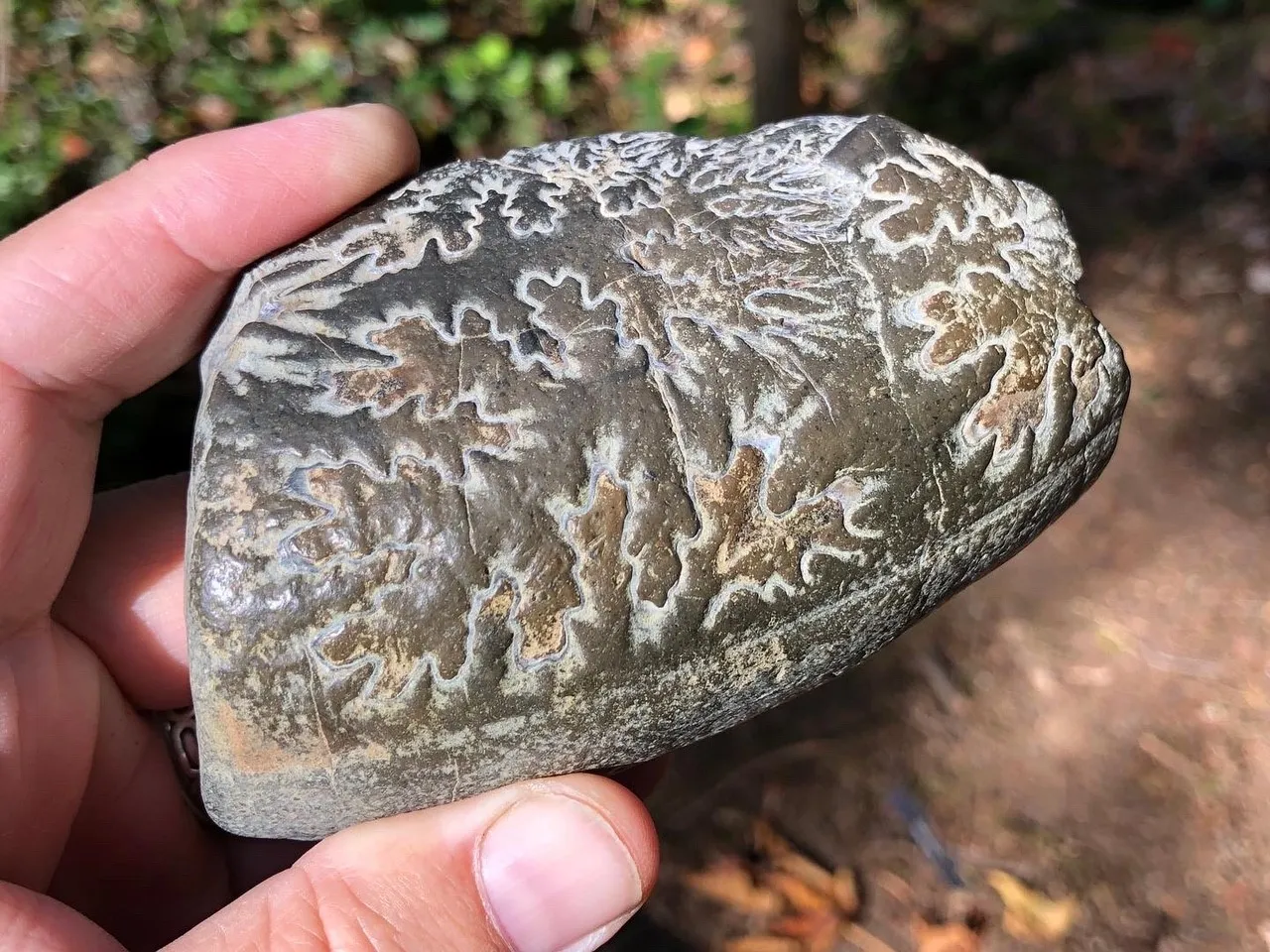
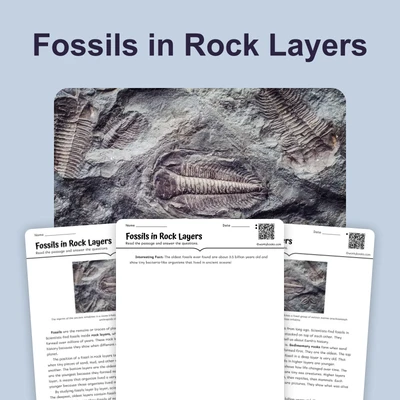
"Ammonite Fossil Found on Mayne Island" by MarcStevenBC / Wikimedia Commons.
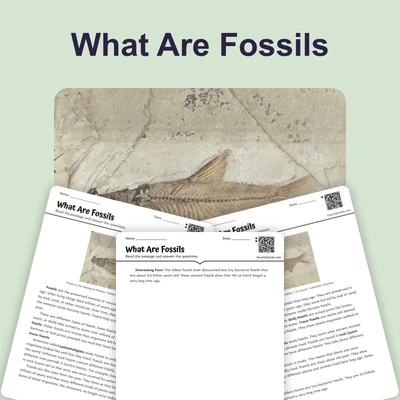
Fossils are the preserved remains or traces of organisms that lived long ago. Scientists study fossils to learn about plants and animals from Earth's past. Understanding different types of fossils helps scientists piece together what life was like millions of years ago.
There are four main types of fossils. Body fossils are the preserved remains of actual body parts. These include bones, teeth, and shells that turned to stone over millions of years. When a dinosaur died, its bones might become body fossils that scientists can study today.
Mold fossils form when an organism leaves an impression in mud or sand that hardens into rock. Think of pressing your hand into wet cement—the handprint that remains is like a mold fossil. The organism itself is gone, but its shape stays behind.
Cast fossils form when a mold fossil fills with minerals that harden. The minerals create a rock copy of the original organism, like pouring plaster into a mold to make a statue. Cast fossils show the outside shape of ancient organisms.
Trace fossils are different because they are not body parts at all. These fossils show evidence of an organism's activity. Footprints, burrows, and even fossilized droppings are trace fossils. They tell scientists how ancient organisms moved, ate, and lived.
Each type of fossil provides different clues. Body fossils show what organisms looked like. Mold and cast fossils preserve shapes. Trace fossils reveal behaviors. Together, these fossils help scientists understand Earth's history.
Interesting Fact: The largest dinosaur footprint ever found is 5.7 feet long! This trace fossil came from a giant plant-eating dinosaur that lived about 150 million years ago.
Comprehension quiz (8 questions)
1. What are fossils?
2. Which fossil type includes bones and teeth?
3. How do mold fossils form?
4. Why would a paleontologist study trace fossils?
5. What happens when minerals fill a mold?
6. Which is an example of trace fossil?
7. Trace fossils are actual body parts.
8. What does 'preserved' mean in this passage?
Perfect for the way you teach
- Build comprehension skills
- Auto-graded quiz
- Differentiated reading
- Read together at home
- Improve fluency
- Quiet reading time
- Reading curriculum support
- Independent practice
- Track Lexile growth