This learning resource is available in interactive and printable formats. The interactive worksheet can be played online and assigned to students. The Printable PDF version can be downloaded and printed for completion by hand.
This engaging 350-word science reading passage for grades 4-5 explores how plant fossils provide clues about Earth's ancient climates and environments. Students learn how scientists use fossilized plants like tropical ferns found in cold regions to understand that those areas were once warm and wet. The passage connects plant fossils to weather reports from millions of years ago, making complex paleontological concepts accessible to elementary learners. Aligned with NGSS standard 4-ESS1-1, this audio-integrated educational resource includes vocabulary support with bolded key terms, real-world applications, and an interesting fact about Antarctica's fossil forests. The passage uses concrete analogies and age-appropriate language at a 600-750 Lexile level. Students engage with multiple-choice comprehension questions, writing activities, and graphic organizers that reinforce scientific understanding of how fossils help us reconstruct Earth's history. This comprehensive educational material supports differentiated instruction with simplified versions and Spanish translations, making earth science concepts about climate change and fossil evidence accessible to all learners.
CONTENT PREVIEW
Expand content preview
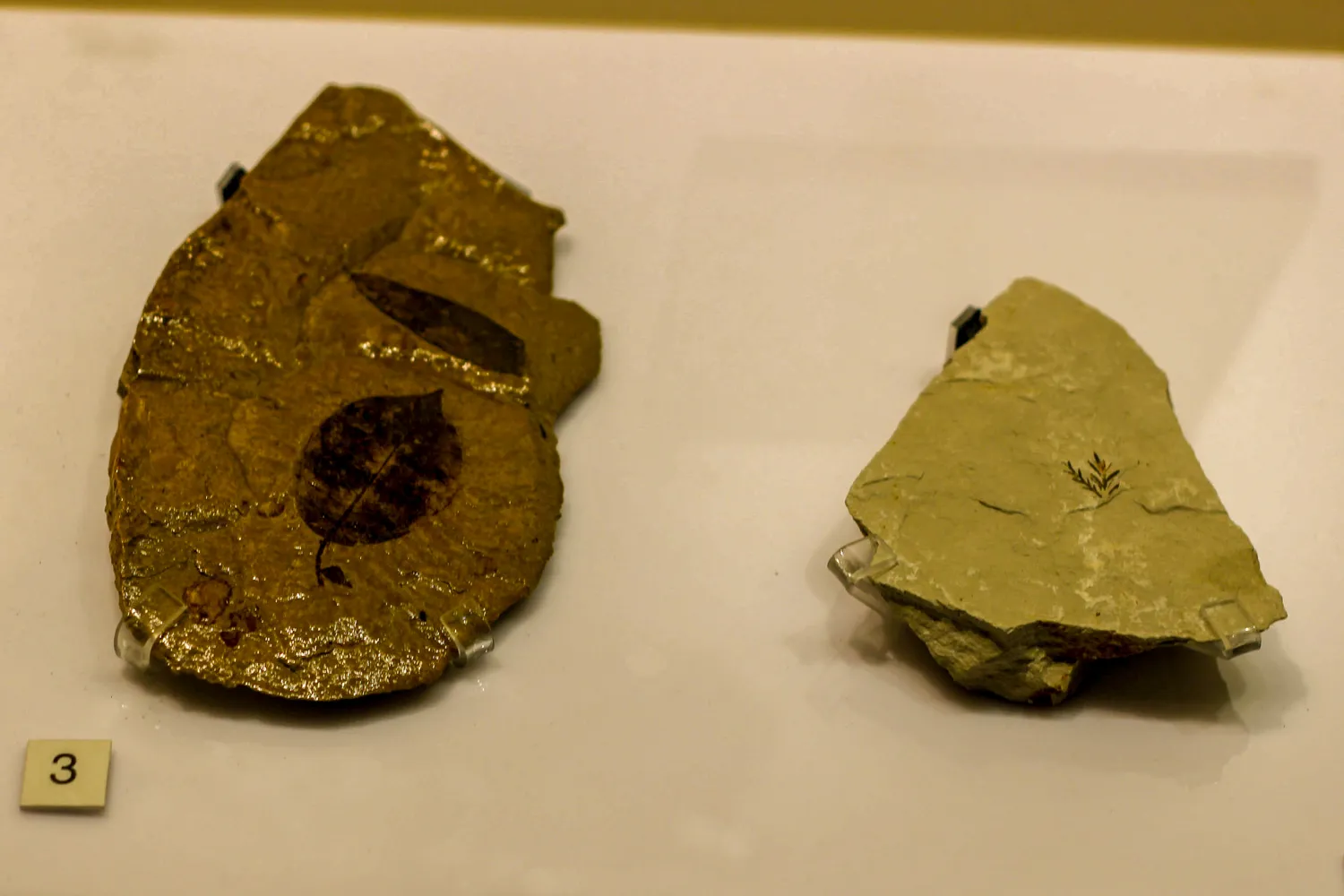
Fossilized leaves of multiple plant species. Akhisar Museum, Türkiye. by Pragdon / Wikimedia Commons
Scientists have found an amazing way to learn about Earth's past. Plant fossils are the remains of ancient plants preserved in rock. These fossils work like weather reports from millions of years ago. They tell us what the climate, or typical weather patterns, were like in different places long before humans existed.
When scientists find plant fossils, they can figure out what the environment was like when those plants were alive. Different plants need different conditions to grow. Tropical plants, which are plants that grow in hot, wet places, can only survive in warm climates with lots of rain. Ferns are leafy green plants that love warm, moist environments. If scientists find fern fossils in a place that is cold and dry today, they know that area must have been warm and wet millions of years ago. It's like finding a winter coat in your closet and knowing it must have been cold when you bought it.
The story gets even more interesting when scientists find tropical plant fossils in surprising places. Imagine finding fossils of plants that grow in rainforests buried in rocks in Antarctica, one of the coldest places on Earth! This discovery tells scientists that Antarctica wasn't always frozen. Millions of years ago, it had a warm climate with forests and plenty of rainfall. The environment, or all the living and non-living things in an area, was completely different back then.
Scientists study these fossil clues carefully. They look at the shape of leaves, the size of plants, and the types of seeds preserved in rocks. Each detail helps them understand the ancient world better. When they find many different tropical plants together, they know that area had a rainforest. When they find plants with small, thick leaves, they know the area might have been drier.
Today, scientists use plant fossils to understand how Earth's climate has changed over time. This information helps them predict how climates might change in the future. Museums display plant fossils so everyone can see these ancient treasures. Paleontologists, scientists who study fossils, continue to make new discoveries that teach us about our planet's history.
Interesting Fact: Scientists have found fossils of tropical forests in Antarctica that are over 250 million years old, proving this icy continent was once covered in lush, green plants!
What are plant fossils?
Living plants in gardensAncient plant remains in rockSeeds that farmers plantModern tropical plants
What do ferns need to grow?
Cold and dry conditionsWarm and moist environmentsIce and snowDesert heat
Where have scientists found tropical plant fossils?
In modern rainforestsIn hot desertsIn AntarcticaIn the ocean
Why do tropical fern fossils in cold places matter?
They show the area was once warmThey prove plants can survive anywhereThey mean nothing importantThey show the area was always cold
How do scientists use plant fossils today?
To grow new plantsTo predict future climate changesTo make medicineTo build houses
What does leaf shape tell scientists?
The color of the plantHow tall people wereWhat the ancient environment was likeWhat animals ate the plants
Plant fossils are like weather reports from the past.
TrueFalse
What does the word 'climate' mean?
A single rainy dayTypical weather patterns over timeThe temperature right nowA type of plant
Perfect For:
👩🏫 Teachers
• Reading comprehension practice
• Auto-graded assessments
• Literacy skill development
👨👩👧👦 Parents
• Reading practice at home
• Comprehension improvement
• Educational reading time
🏠 Homeschoolers
• Reading curriculum support
• Independent reading practice
• Progress monitoring
Reading Features:
📖
Reading Passage
Engaging fiction or nonfiction text
❓
Comprehension Quiz
Auto-graded questions
📊
Instant Feedback
Immediate results and scoring
📄
Printable Version
Download for offline reading
🔊
Read Aloud
Voice-over with word highlighting
Reviews & Ratings
No reviews yet. Be the first to share your experience!
Related Content
Core Samples
This engaging 350-word science passage introduces elementary students to core samples and how scientists use them to stu...
NGSS 4-ESS1-1
Fossil Patterns
This engaging science reading passage explores how scientists use fossil patterns to understand Earth's history, perfect...