What Do Paleontologists Do — Reading Comprehension
Rate this|
1
Premium Resource
Present
Present in classroom. No work saved
Assign
Classroom with student accounts, Track progress
Quick Play
No student accounts, assign with a link
Grades
3
4
5
Standards
NGSS 4-ESS1-1
PRINT+DIGITAL RESOURCE
This learning resource is available in interactive and printable formats. The interactive worksheet can be played online and assigned to students. The Printable PDF version can be downloaded and printed for completion by hand.
This engaging 250-word reading passage introduces fourth-grade students to the work of paleontologists and how they study fossils to understand life from the past. Aligned with NGSS standard 4-ESS1-1, the passage explains how paleontologists search for fossils in rock layers, use special tools to carefully excavate them, and bring specimens to labs for detailed study. Students learn how these scientists piece together fossil bones like puzzles to reconstruct ancient organisms and compare fossils from different rock layers to understand how life changed over time. The passage also describes how paleontologists study surrounding rocks to learn about ancient environments. This audio-integrated resource includes a simplified differentiated version for struggling readers, Spanish translations of both versions, a comprehensive glossary of key terms like paleontologist, fossils, and rock layers, multiple-choice comprehension questions testing recall and application, writing activities requiring explanation and analysis, and graphic organizers including a sequence/process table and vocabulary context table. Perfect for introducing earth science concepts and scientific careers to elementary students.
CONTENT PREVIEW
Expand content preview
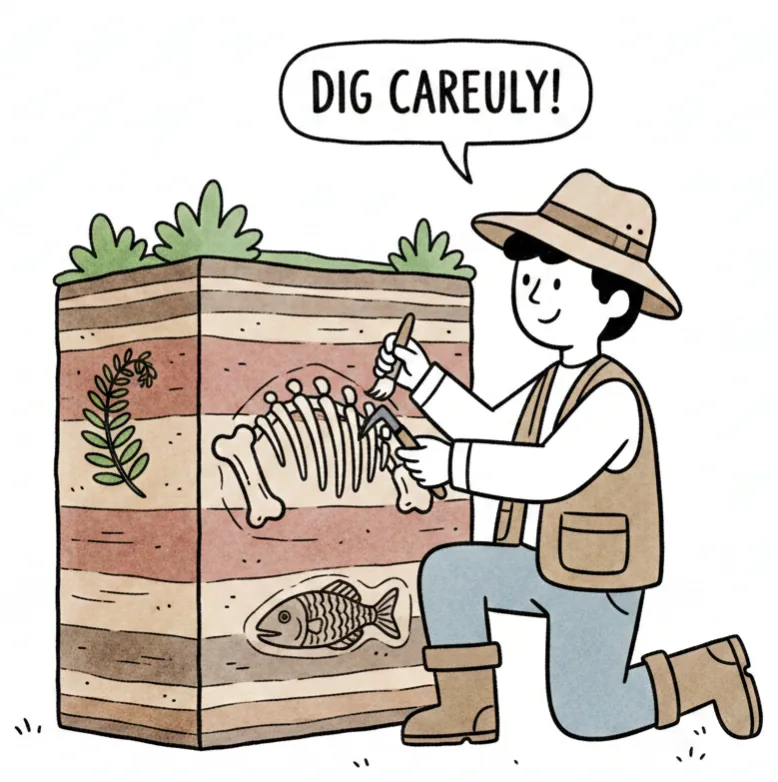
Paleontologists use special tools to find fossils in rock layers.
Paleontologists are scientists who study fossils—the remains or traces of organisms that lived long ago. These scientists help us understand what life was like millions of years ago. They search for fossils in rock layers, which are different levels of rock stacked on top of each other like the layers of a cake.
When paleontologists find fossils, they use special tools like small brushes and picks to carefully dig them out. This is important because fossils can break easily. After they remove the fossils, they bring them to labs where they can study them more closely. Paleontologists often piece together fossil bones like a puzzle to figure out what an animal looked like when it was alive.
Paleontologists also compare fossils from different rock layers. Older rock layers are usually found deeper underground, while younger layers are closer to the surface. By studying fossils in these different layers, scientists can see how life changed over time. They also examine the rocks around the fossils to learn about the environment where the organism lived. For example, if they find ocean animal fossils in rocks far from the sea, they know that area was once covered by water.
Interesting Fact: The largest dinosaur fossil ever found was a Patagotitan mayorum in Argentina. This dinosaur was as long as three school buses and weighed as much as 10 elephants!
What do paleontologists study?
Weather patternsFossils from long agoModern animalsPlant growth
Where are older rock layers usually found?
On mountain topsNear the surfaceDeeper undergroundIn the ocean
What tools do paleontologists use to dig?
Shovels and rakesSmall brushes and picksHammers and sawsMagnets and nets
Why do paleontologists study rocks around fossils?
To find goldTo build museumsTo learn about ancient environmentsTo make jewelry
How do paleontologists figure out animal appearance?
They guess randomlyThey ask other scientistsThey piece bones together like puzzlesThey use computers only
What can ocean fossils far inland tell?
Animals traveled farWater once covered the areaThe climate was coldMountains were taller
Fossils can break easily during excavation.
TrueFalse
What are rock layers?
Different colors of paintLevels of rock stacked togetherTypes of mineralsUnderground rivers
Perfect For:
👩🏫 Teachers
• Reading comprehension practice
• Auto-graded assessments
• Literacy skill development
👨👩👧👦 Parents
• Reading practice at home
• Comprehension improvement
• Educational reading time
🏠 Homeschoolers
• Reading curriculum support
• Independent reading practice
• Progress monitoring
Reading Features:
📖
Reading Passage
Engaging fiction or nonfiction text
❓
Comprehension Quiz
Auto-graded questions
📊
Instant Feedback
Immediate results and scoring
📄
Printable Version
Download for offline reading
🔊
Read Aloud
Voice-over with word highlighting
Reviews & Ratings
No reviews yet. Be the first to share your experience!
Related Content
Core Samples
This engaging 350-word science passage introduces elementary students to core samples and how scientists use them to stu...
NGSS 4-ESS1-1
Plant Fossil
This engaging 350-word science reading passage for grades 4-5 explores how plant fossils provide clues about Earth's anc...
NGSS 4-ESS1-1
Fossil Patterns
This engaging science reading passage explores how scientists use fossil patterns to understand Earth's history, perfect...
NGSS 4-ESS1-1
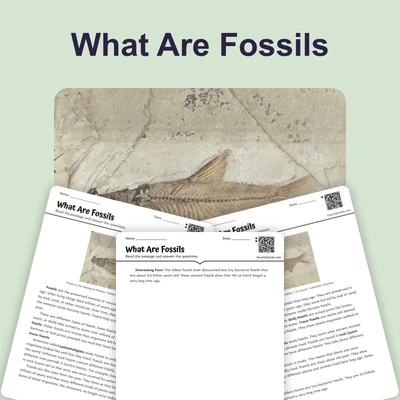
What Are Fossils
This engaging 250-word reading passage introduces fourth-grade students to the concept of fossils as preserved remains o...
NGSS 4-ESS1-1
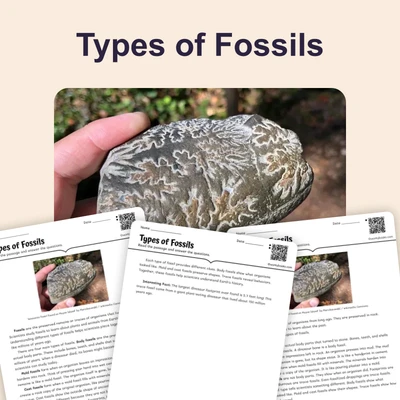
Types of Fossils
This engaging 250-word reading passage introduces fourth-grade students to the four main types of fossils and how each f...
NGSS 4-ESS1-1ESS1.C
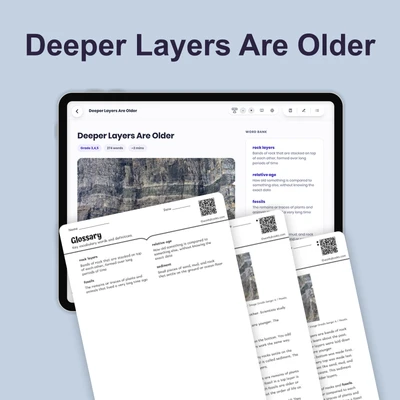
Deeper Layers Are Older
This engaging 250-word reading passage introduces fourth-grade students to the fundamental geological principle that dee...
NGSS 4-ESS1-1ESS1.C
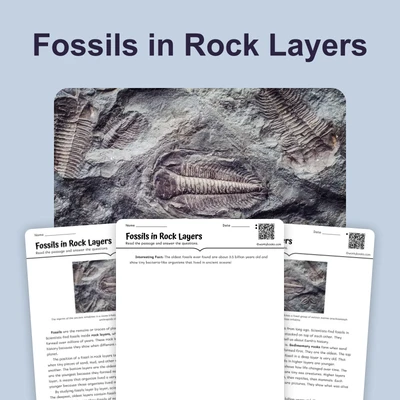
Fossils in Rock Layers
This 250-word reading passage introduces fourth-grade students to the concept of fossils in rock layers, aligned with NG...