This learning resource is available in interactive and printable formats. The interactive worksheet can be played online and assigned to students. The Printable PDF version can be downloaded and printed for completion by hand.
This engaging 250-word reading passage introduces fourth-grade students to the concept of fossils as preserved remains or traces of ancient organisms. Aligned with NGSS standard 4-ESS1-1, the passage explains how fossils form in rock layers and what they reveal about life millions of years ago. Students learn that fossils can include bones, teeth, shells, leaf imprints, and even footprints. The passage emphasizes how paleontologists use fossils as evidence to understand what ancient organisms looked like, where they lived, and what their environments were like. Written at a Grade 4 reading level, the content uses accessible language and familiar examples to build foundational understanding. The passage includes bolded vocabulary terms with immediate definitions and concludes with an interesting fact about fossil preservation. Audio integration supports diverse learners by providing text-to-speech functionality. Supplementary activities include multiple-choice comprehension questions, writing prompts, and graphic organizers that reinforce key concepts about fossils and ancient environments. This resource helps students develop scientific thinking skills while exploring earth science concepts essential for elementary science education.
CONTENT PREVIEW
Expand content preview
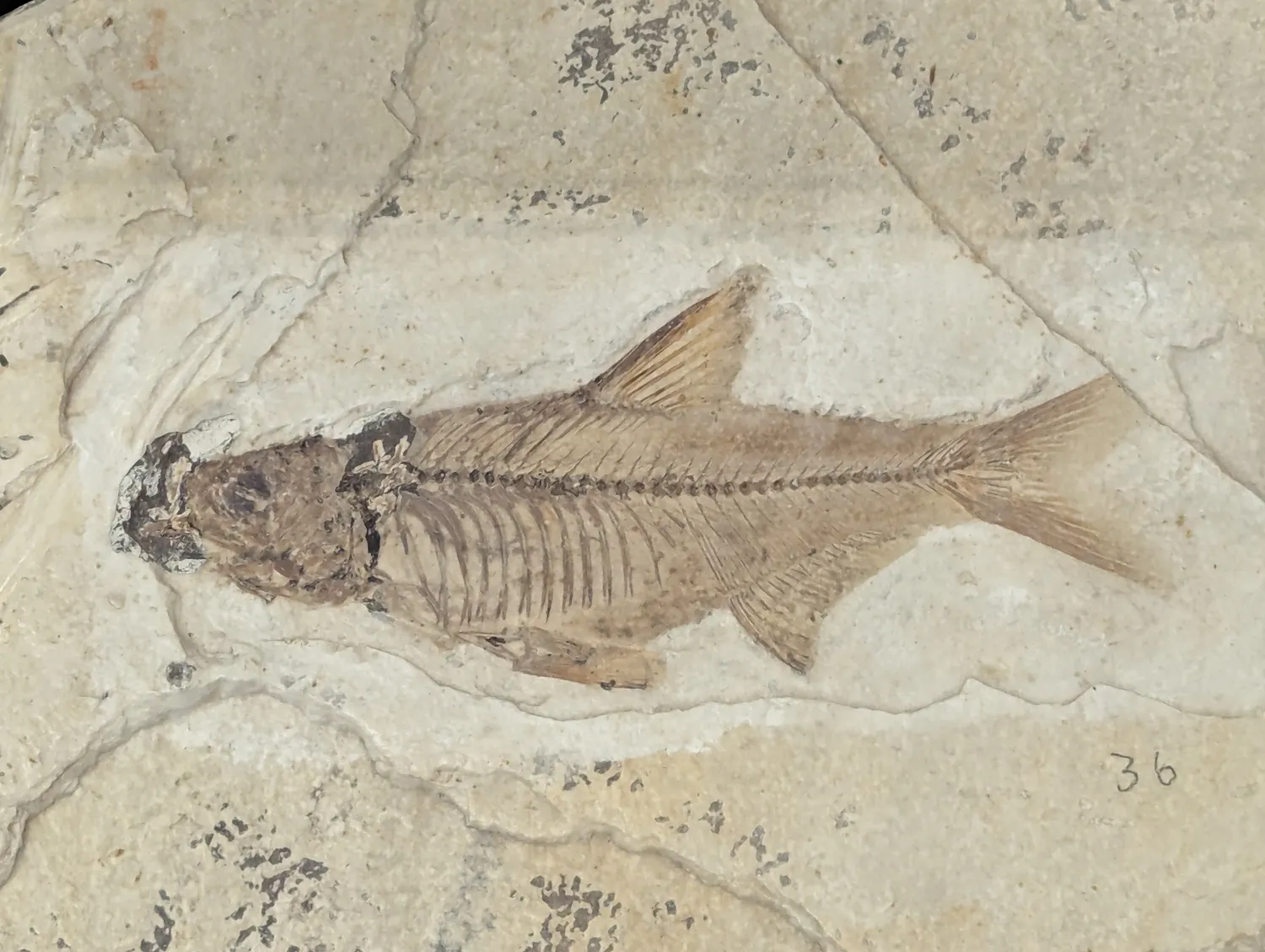
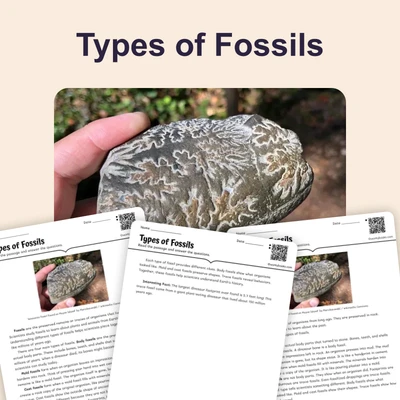
"Fossils at the Geological Museum, Tsukuba 7" by Syced / Wikimedia Commons.
Fossils are the preserved remains or traces of plants and animals that lived long ago. When living things died millions of years ago, some of them were buried quickly by mud, sand, or other materials. Over time, these materials hardened into rock, and the remains inside became fossils. Fossils help scientists learn about life from the past.
There are different types of fossils. Some fossils are actual body parts like bones, teeth, or shells that turned to stone over millions of years. These are called body fossils. Other fossils are traces that organisms left behind, such as footprints, burrows, or leaf prints pressed into mud that later became rock. These are called trace fossils.
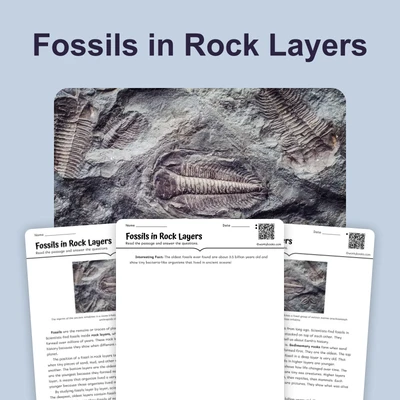
Scientists called paleontologists study fossils to understand what ancient organisms looked like and how they lived. Fossils are found in rock layers all around the world. Different rock layers contain different fossils, which tells scientists about different time periods in Earth's history. For example, fossils of ocean animals found in rock layers tell us that area was once covered by water, even if it is now dry land.
Fossils act like clues from the past. They show us that Earth has changed over millions of years and that many different kinds of plants and animals have lived here. Some of these organisms, like dinosaurs, no longer exist today.
Interesting Fact: The oldest fossils ever discovered are tiny bacteria fossils that are about 3.5 billion years old! These ancient fossils show that life on Earth began a very long time ago.
What are fossils?
Rocks that are very colorfulPreserved remains of ancient organismsNew plants growing todayTools used by scientists
What are body fossils made from?
Footprints in mudBones, teeth, or shellsWater and airLiving animals
What do paleontologists study?
Weather patternsModern animals onlyFossils from ancient organismsOcean currents
Why do fossils appear in rock?
Animals put them thereMud and sand hardened over timeScientists create themRain washes them into rocks
What can ocean fossils tell scientists?
An area was once underwaterDinosaurs lived thereThe weather was coldPlants grew very tall
How do fossils help us understand Earth?
They show Earth never changesThey prove all animals still existThey show Earth changed over timeThey tell us about the future
Fossils can only be bones and teeth.
TrueFalse
What does 'preserved' mean in the passage?
Destroyed completelyKept safe over long timeMade into new rocksHidden from scientists
Perfect For:
👩🏫 Teachers
• Reading comprehension practice
• Auto-graded assessments
• Literacy skill development
👨👩👧👦 Parents
• Reading practice at home
• Comprehension improvement
• Educational reading time
🏠 Homeschoolers
• Reading curriculum support
• Independent reading practice
• Progress monitoring
Reading Features:
📖
Reading Passage
Engaging fiction or nonfiction text
❓
Comprehension Quiz
Auto-graded questions
📊
Instant Feedback
Immediate results and scoring
📄
Printable Version
Download for offline reading
🔊
Read Aloud
Voice-over with word highlighting
Reviews & Ratings
No reviews yet. Be the first to share your experience!
Related Content
Core Samples
This engaging 350-word science passage introduces elementary students to core samples and how scientists use them to stu...
NGSS 4-ESS1-1
Plant Fossil
This engaging 350-word science reading passage for grades 4-5 explores how plant fossils provide clues about Earth's anc...
NGSS 4-ESS1-1
Fossil Patterns
This engaging science reading passage explores how scientists use fossil patterns to understand Earth's history, perfect...
NGSS 4-ESS1-1
Types of Fossils
This engaging 250-word reading passage introduces fourth-grade students to the four main types of fossils and how each f...
NGSS 4-ESS1-1ESS1.C
What Do Paleontologists Do
This engaging 250-word reading passage introduces fourth-grade students to the work of paleontologists and how they stud...
NGSS 4-ESS1-1
Deeper Layers Are Older
This engaging 250-word reading passage introduces fourth-grade students to the fundamental geological principle that dee...
NGSS 4-ESS1-1ESS1.C
Fossils in Rock Layers
This 250-word reading passage introduces fourth-grade students to the concept of fossils in rock layers, aligned with NG...