This learning resource is available in interactive and printable formats. The interactive worksheet can be played online and assigned to students. The Printable PDF version can be downloaded and printed for completion by hand.
This engaging 250-word reading passage introduces fourth-grade students to the fundamental geological principle that deeper rock layers are older than layers above them. Aligned with NGSS standard 4-ESS1-1 (ESS1.C: The History of Planet Earth), the passage uses the familiar analogy of stacking pancakes to help students understand how rock layers form over time. Students learn how scientists determine the relative age of fossils and rocks by examining their position in rock layers, building foundational knowledge for understanding Earth's history. The passage explains key vocabulary terms including rock layers, fossils, and relative age in age-appropriate language. This audio-integrated resource includes a simplified differentiated version for struggling readers, complete Spanish translations of both passages, an engaging multiple-choice quiz testing recall and comprehension, three writing prompts requiring application of concepts, and two graphic organizers (Sequence/Process Table and Vocabulary in Context Table) to reinforce learning. Perfect for introducing earth science concepts, this standards-aligned passage provides scaffolded support for diverse learners while maintaining scientific accuracy. Teachers can use this resource for whole-class instruction, small group work, or independent reading to help students understand how geologists use rock layers to study Earth's past.
CONTENT PREVIEW
Expand content preview
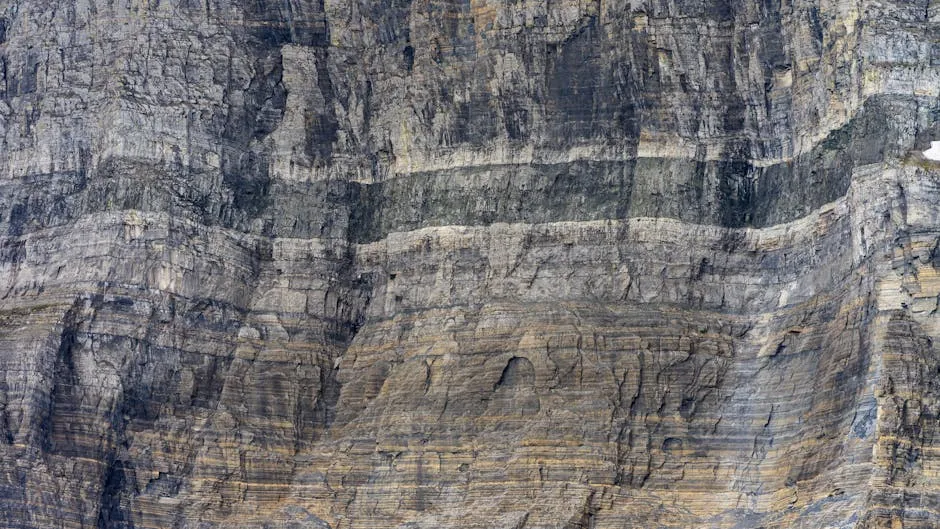
"Close-up view of a rocky cliff showing intricate natural patterns and formations." Image Credit Sergei A / Pexels.
Rock layers are like pages in Earth's history book. Rock layers are bands of rock stacked on top of each other. Scientists study these layers to learn about the past. The key principle is simple: in undisturbed rock layers, deeper layers were laid down first and are older. The layers on top were added later and are younger.
Think of stacking pancakes on a plate. The pancake on the bottom was made first. Each new pancake you add goes on top. The pancake on the very top was made last. Rock layers form the same way. Over millions of years, sediment like sand, mud, and tiny pieces of rock settle on the ground or at the bottom of oceans. This sediment slowly hardens into rock. New layers keep forming on top of older layers.
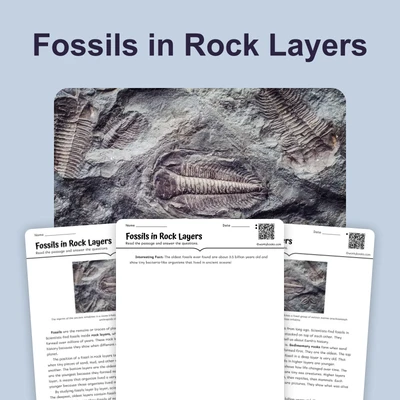
This principle helps scientists determine the relative age of rocks and fossils. Relative age means which rocks or fossils are older or younger compared to each other, without knowing exact dates. Fossils are the remains or traces of plants and animals that lived long ago. If a fossil is found in a deep layer, it lived before a fossil found in a layer above it. By studying which layer a fossil is in, scientists can figure out the order in which different living things existed on Earth.
Interesting Fact: The oldest rocks ever found on Earth are about 4 billion years old! They were discovered in Canada and help scientists understand what our planet was like when it was very young.
What are rock layers?
Bands of rock stacked togetherTypes of mountainsUnderground riversPieces of broken glass
In undisturbed rock layers, which is older?
The top layerThe middle layerThe bottom layerAll layers are same age
What are fossils?
Types of rocksRemains of ancient plants and animalsLayers of sandModern day shells
A fossil in a deep layer lived when?
After fossils in top layersAt same time as all fossilsBefore fossils in top layersYesterday
How do new rock layers form?
Rain creates them instantlySediment settles and hardens over timePeople build themThey fall from the sky
What does relative age tell us?
The exact date something formedWhich rocks are older or youngerHow heavy a rock isWhat color a fossil is
Rock layers form like stacking pancakes.
TrueFalse
What is sediment?
A type of fossilSmall pieces of sand and mudA layer of iceA kind of plant
Perfect For:
👩🏫 Teachers
• Reading comprehension practice
• Auto-graded assessments
• Literacy skill development
👨👩👧👦 Parents
• Reading practice at home
• Comprehension improvement
• Educational reading time
🏠 Homeschoolers
• Reading curriculum support
• Independent reading practice
• Progress monitoring
Reading Features:
📖
Reading Passage
Engaging fiction or nonfiction text
❓
Comprehension Quiz
Auto-graded questions
📊
Instant Feedback
Immediate results and scoring
📄
Printable Version
Download for offline reading
🔊
Read Aloud
Voice-over with word highlighting
Reviews & Ratings
No reviews yet. Be the first to share your experience!
Related Content
Understanding the Movement of Tectonic Plates
W.4.94-ESS1-1ESS1.C
Types of Volcanoes
W.4.94-ESS1-1ESS1.C
Types of Fossils
This engaging 250-word reading passage introduces fourth-grade students to the four main types of fossils and how each f...
NGSS 4-ESS1-1ESS1.C
Fossils in Rock Layers
This 250-word reading passage introduces fourth-grade students to the concept of fossils in rock layers, aligned with NG...
NGSS 4-ESS1-1ESS1.C
Core Samples
This engaging 350-word science passage introduces elementary students to core samples and how scientists use them to stu...
NGSS 4-ESS1-1
Plant Fossil
This engaging 350-word science reading passage for grades 4-5 explores how plant fossils provide clues about Earth's anc...
NGSS 4-ESS1-1
Fossil Patterns
This engaging science reading passage explores how scientists use fossil patterns to understand Earth's history, perfect...
NGSS 4-ESS1-1
What Are Fossils
This engaging 250-word reading passage introduces fourth-grade students to the concept of fossils as preserved remains o...
NGSS 4-ESS1-1
What Do Paleontologists Do
This engaging 250-word reading passage introduces fourth-grade students to the work of paleontologists and how they stud...