Do Penguins Have Knees?
Interactive passage with audio narration, comprehension questions, and printable PDF.
By completing this purchase you agree to our Terms of Use and Privacy Policy. Your subscription renews automatically until you cancel. You can cancel anytime from your account settings. All sales are final and non-refundable. Digital content is available for download in your account immediately upon purchase.
What's included
Do Penguins Have Knees? preview and details
About this printable Do Penguins Have Knees? science reading passage, NGSS-aligned (Grades 3-8)
Sample passage and quiz from Do Penguins Have Knees?
Reading passage and comprehension quiz preview
Do Penguins Have Knees?
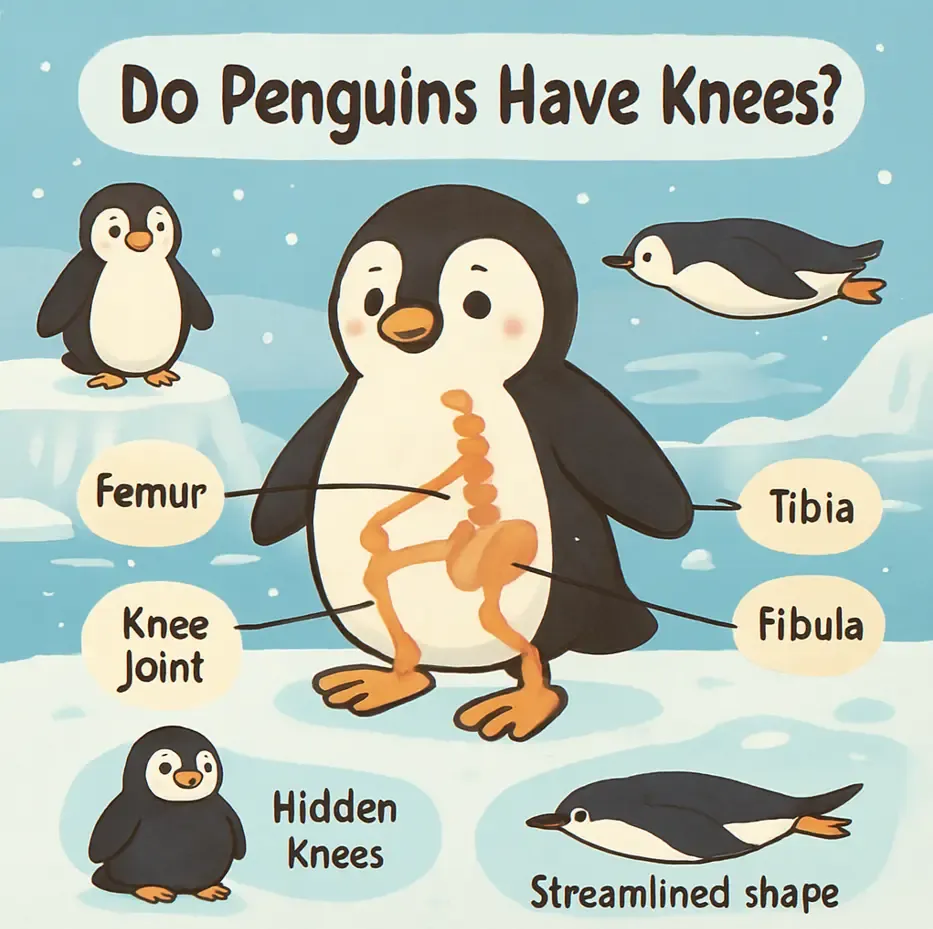
If you've ever watched a penguin waddle across the ice, you might have wondered: do they even have knees? Their short, stubby-looking legs certainly don't seem to bend in the middle like ours! This is a common question, and the answer might surprise you: Yes, penguins do have knees!
While you can't easily spot them from the outside, a penguin's legs are structured much like other birds, and even somewhat similar to human legs, with a femur (thigh bone), a knee joint (complete with a kneecap!), and lower leg bones (tibia and fibula). The reason we don't see their knees is a clever adaptation for their unique lifestyle.
Most of a penguin's upper leg bones, including the knee joint, are tucked up inside their body and covered by their dense feathers and blubber. This gives them a streamlined, torpedo-like shape that is incredibly efficient for "flying" through the water, where they spend most of their lives. Keeping their legs partly inside their bodies also helps them conserve body heat in their cold climate habitats.
When on land, penguins stand very upright, and their legs are positioned far back on their bodies. This posture, combined with their knees being permanently bent in a kind of squat, contributes to their characteristic
gait. While it might look a bit clumsy on land, this leg structure is perfectly designed for their true element: the water, where they are agile and powerful swimmers, using their webbed feet as rudders. So, the next time you see a penguin, remember, they've got knees, they're just well-hidden for a very good reason!
Comprehension quiz (8 questions)
1. Do penguins have knees?
2. Where are a penguin's knees hidden?
3. What covers a penguin's upper leg?
4. What shape does the hidden leg structure help create for swimming?
5. What posture do penguins have on land?
6. What does their leg structure help them do in water?
7. What is the main idea of this passage?
8. What other benefit does keeping legs tucked in provide in cold climates?
Perfect for the way you teach
- Build comprehension skills
- Auto-graded quiz
- Differentiated reading
- Read together at home
- Improve fluency
- Quiet reading time
- Reading curriculum support
- Independent practice
- Track Lexile growth