This learning resource is available in interactive and printable formats. The interactive worksheet can be played online and assigned to students. The Printable PDF version can be downloaded and printed for completion by hand.
This comprehensive passage on mammal migration, designed for grades 6-8 and aligned with NGSS standards MS-LS2-2 and MS-LS1-4, delves into the underlying mechanisms and significance of migratory behavior in mammals. Students will learn why mammals migrate, how environmental cues and internal mechanisms interact, and how migration supports ecosystem balance. The passage presents multiple examples, such as caribou and whales, and connects migration to broader ecological and evolutionary principles. Activities include reading comprehension, vocabulary, writing prompts, and graphic organizers to reinforce understanding. Both standard and differentiated versions are available, each with a Spanish translation and audio integration. This resource supports scientific literacy, critical thinking, and cross-linguistic learning, making it ideal for diverse classrooms seeking to deepen students’ understanding of animal adaptations and environmental interactions.
CONTENT PREVIEW
Expand content preview
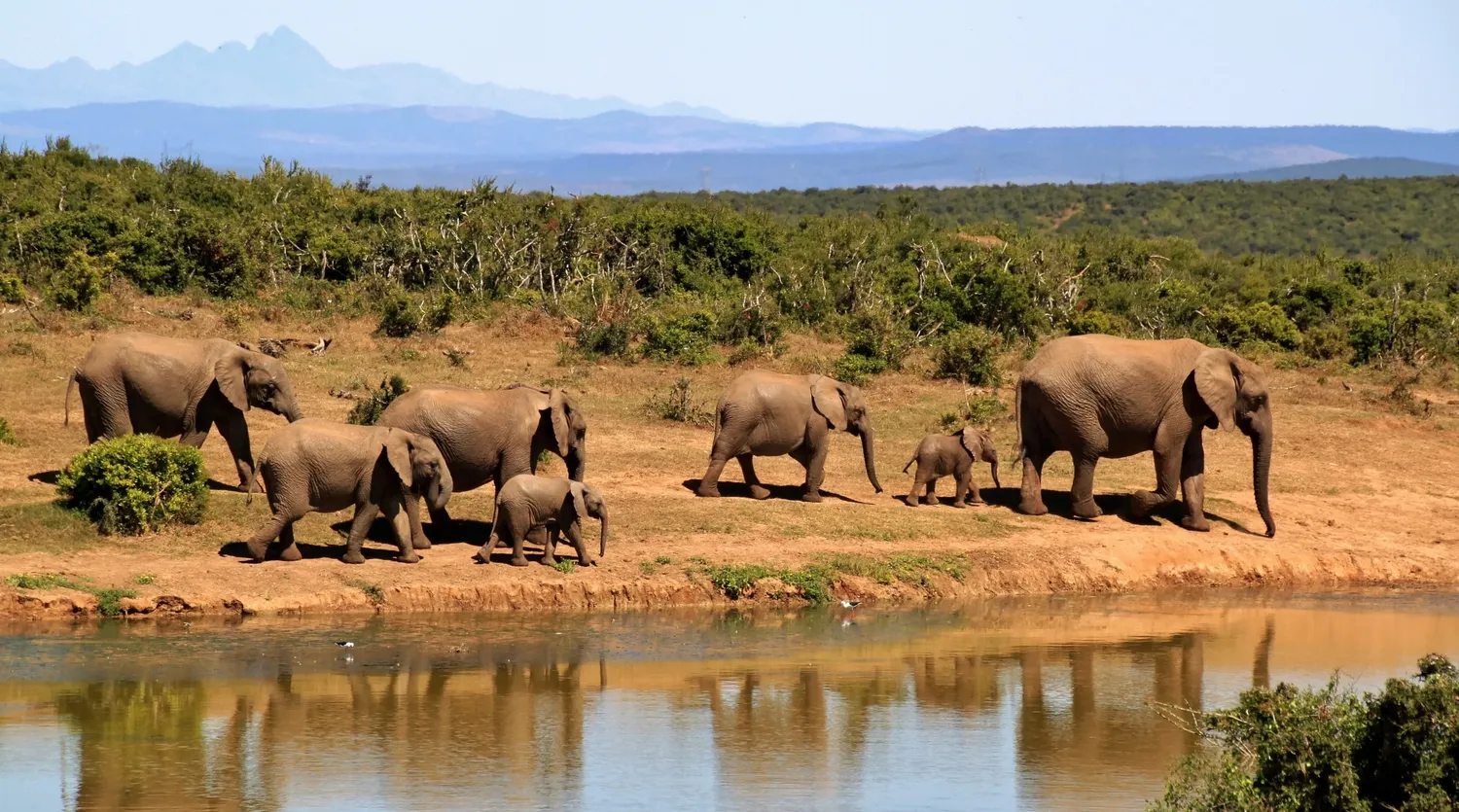
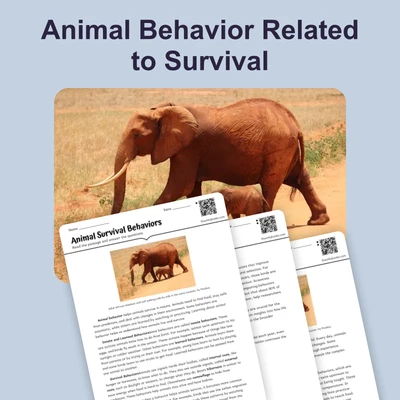
African elephants, migrate shorter distances to follow seasonal rainfall and vegetation growth. Image by cocoparisienne / Wikimedia Commons (CC0).
Mammal migration is a widespread phenomenon that plays a vital role in ecosystems. Each year, millions of mammals travel vast distances, sometimes crossing entire continents or oceans. This movement is not random; it is a complex behavior shaped by environmental changes, food availability, and the need to reproduce. Scientists study migration to understand how mammals adapt to their environments and maintain healthy populations.
Mechanisms of Migration Mammals migrate for several interconnected reasons. Most migrations are driven by the need to find sufficient resources such as food and water. For example, as seasons change, available plants or prey may decrease in one area but increase in another. Some mammals, like caribou in North America, migrate over 1,000 kilometers annually to reach calving grounds where food is abundant and predators are fewer. These journeys are often guided by environmental cues like temperature, daylight length, and even the Earth’s magnetic field—a phenomenon known as magnetoreception. Internal biological clocks, called circadian rhythms, also help mammals know when to start migrating. Researchers track these movements using GPS collars, which provide quantitative data about migration speeds, distances, and timing.
Variations and Consequences Mammal migration varies greatly among species and regions. Some, like gray whales, travel nearly 20,000 kilometers round-trip between feeding and breeding grounds, making them among the longest migrators in the animal kingdom. Others, such as African elephants, migrate shorter distances to follow seasonal rainfall and vegetation growth. These migrations create ripple effects throughout ecosystems. As mammals travel, they disperse seeds, fertilize soils, and shape predator-prey relationships. For instance, when wildebeest migrate across the Serengeti, they influence grass growth and provide food for predators like lions and hyenas. However, migration can be disrupted by barriers like roads or fences, leading to population declines and reduced ecosystem health.
Human Impact and Scientific Significance Understanding mammal migration is essential for conservation and environmental planning. Human activities—such as urban development, habitat fragmentation, and climate change—alter traditional migratory routes. Scientists use long-term data to analyze how these changes affect migration patterns. Conservation groups sometimes build wildlife corridors or remove barriers to help mammals migrate safely. Migration is also an example of adaptation, demonstrating how species evolve to survive in changing environments. Studying migration helps scientists predict ecosystem changes and develop strategies for sustainable coexistence between humans and wildlife.
Mammal migration illustrates how individual behaviors can shape entire ecosystems. By understanding the causes, mechanisms, and consequences of migration, we can better protect both the animals and the environments they depend on.
Interesting Fact: Some mammals, like bats, use both magnetoreception and echolocation to navigate during migration, allowing them to travel long distances even at night!
What is the main reason mammals migrate?
To find resources like food and waterTo avoid hot weatherTo escape from other mammalsTo build new habitats
Which mammal migrates nearly 20,000 kilometers round-trip?
CaribouGray whaleAfrican elephantLion
What is magnetoreception?
A sense that helps animals detect sound wavesA sense that lets animals see in the darkA sense that allows animals to detect the Earth's magnetic fieldA sense that helps animals smell food
How do scientists track mammal migration today?
By following them on footBy using GPS collarsBy watching from airplanesBy listening to animal sounds
Which of the following is an example of a consequence of disrupted migration?
Population declines and reduced ecosystem healthMore food for all speciesFaster animal growthIncreased rainfall
What does the word 'adaptation' mean as used in the passage?
A device for tracking animalsA change in a species or individual that helps it surviveA type of foodA migration route
Infer why building wildlife corridors can help migrating mammals.
They provide safe paths, reducing barriers and helping animals reach necessary habitatsThey increase predator numbersThey make animals move fasterThey stop animals from eating plants
How does mammal migration affect ecosystems?
It has no effect on other speciesIt disrupts plant growth onlyIt helps disperse seeds, fertilize soil, and shape predator-prey relationshipsIt reduces rainfall
True or False: All mammals migrate the same distance every year.
TrueFalse
True or False: Scientists can predict changes in ecosystems by studying mammal migration.
TrueFalse
Perfect For:
👩🏫 Teachers
• Reading comprehension practice
• Auto-graded assessments
• Literacy skill development
👨👩👧👦 Parents
• Reading practice at home
• Comprehension improvement
• Educational reading time
🏠 Homeschoolers
• Reading curriculum support
• Independent reading practice
• Progress monitoring
Reading Features:
📖
Reading Passage
Engaging fiction or nonfiction text
❓
Comprehension Quiz
Auto-graded questions
📊
Instant Feedback
Immediate results and scoring
📄
Printable Version
Download for offline reading
🔊
Read Aloud
Voice-over with word highlighting
Reviews & Ratings
No reviews yet. Be the first to share your experience!
Related Content
Venus Flytrap Facts
This passage explains where Venus flytraps live in North Carolina bogs, how their snap traps work, and their unique way ...
MS-LS1-4RI.6.3RI.7.3RI.8.8
Pitcher Plants: Reproduction Facts
This passage describes tropical and North American pitcher plants, their liquid-filled traps, and how they get nutrients...
MS-LS1-4RI.6.3RI.7.3RI.8.8
What Is the Floor of an Aquatic Biome Called?
This NGSS-aligned science reading passage explains the benthic zone, which is the floor of an aquatic biome such as ocea...
MS-LS1-4
Echidna Puggle
This interactive science reading passage, titled "Echidna Life: From Egg to Puggle," delves into the fascinating reprodu...
MS-LS1-4
Do Penguins Have Knees?
This interactive science reading passage, titled "Do Penguins Have Knees? The Hidden Truth!", answers a common and intri...
MS-LS2-2
Seed Dispersal
This middle school science passage examines the fascinating process of seed dispersal and the diverse strategies plants ...
MS-LS1-4
Cell Division: Mitosis
This comprehensive science passage for middle school students explores the key concept of mitosis, the division of the n...
MS-LS1-4
Desert Birds
This informational passage for grades 6-8 examines how desert birds survive and thrive in some of the harshest environme...
MS-LS2-1MS-LS2-2MS-LS1-4
Predation
This comprehensive middle school science passage explores the concept of predation, a key ecological interaction where o...
MS-LS2-2
Ecological Interactions: Symbiosis
This comprehensive reading passage introduces middle school students to the concept of symbiosis, focusing on the close,...
MS-LS2-2
Asexual vs Sexual Reproduction
This NGSS-aligned passage for grades 6-8 explores sexual and asexual reproduction, comparing their underlying mechanisms...
MS-LS1-4MS-LS3-2
Reproductive System
This passage provides a comprehensive overview of the human reproductive system for middle school students, aligning wit...
MS-LS1-3MS-LS1-4
Fertilization and Early Development
This passage explores the scientific process of fertilization and early human development, aligning with NGSS standards ...
MS-LS1-4MS-LS3-2
Cytokinesis and Cell Growth
This middle school science reading passage explores the essential biological process of cytokinesis, the division of a c...
MS-LS1-4
Plant Reproduction
This comprehensive passage for grades 6-8 explores the fascinating world of plant reproduction, aligning with NGSS stand...
MS-LS1-4MS-LS3-2
How Animals Navigate
This engaging science passage for grades 6-8 examines the fascinating world of navigation strategies. Aligned with NGSS ...
MS-LS1-4MS-ESS3-3MS-ETS1-1
Growth and Development of Organisms
This middle school science passage, aligned with NGSS standards MS-LS1-4 and MS-LS1-5, provides an in-depth look at the ...
MS-LS1-4MS-LS1-5
What Is a Tropical Savanna?
This NGSS-aligned science passage for grades 6-8 explores the rich animal diversity of the savanna ecosystem. Students w...
MS-LS2-1MS-LS2-2MS-LS2-4MS-LS1-4
Predators and Scavengers of Savanna
This comprehensive science passage introduces middle school students to the vital roles of predators and scavengers in e...