This learning resource is available in interactive and printable formats. The interactive worksheet can be played online and assigned to students. The Printable PDF version can be downloaded and printed for completion by hand.
This informational passage for grades 6-8 examines how desert birds survive and thrive in some of the harshest environments on Earth. Aligning with NGSS middle school life science standards, the text explores the mechanisms behind desert bird adaptations, including water conservation, thermoregulation, and behavioral strategies. Real-world examples such as the roadrunner, cactus wren, and sandgrouse illustrate these concepts. Students will gain an understanding of cause-and-effect relationships in desert ecosystems, the role of birds in environmental balance, and the scientific principles of adaptation and survival. The passage includes a glossary, differentiated and Spanish versions, comprehension activities, writing prompts, and graphic organizers to support diverse learners. Audio integration is available for accessibility. This resource helps students analyze systems and interactions within environments, applying scientific thinking to real-world scenarios.
CONTENT PREVIEW
Expand content preview
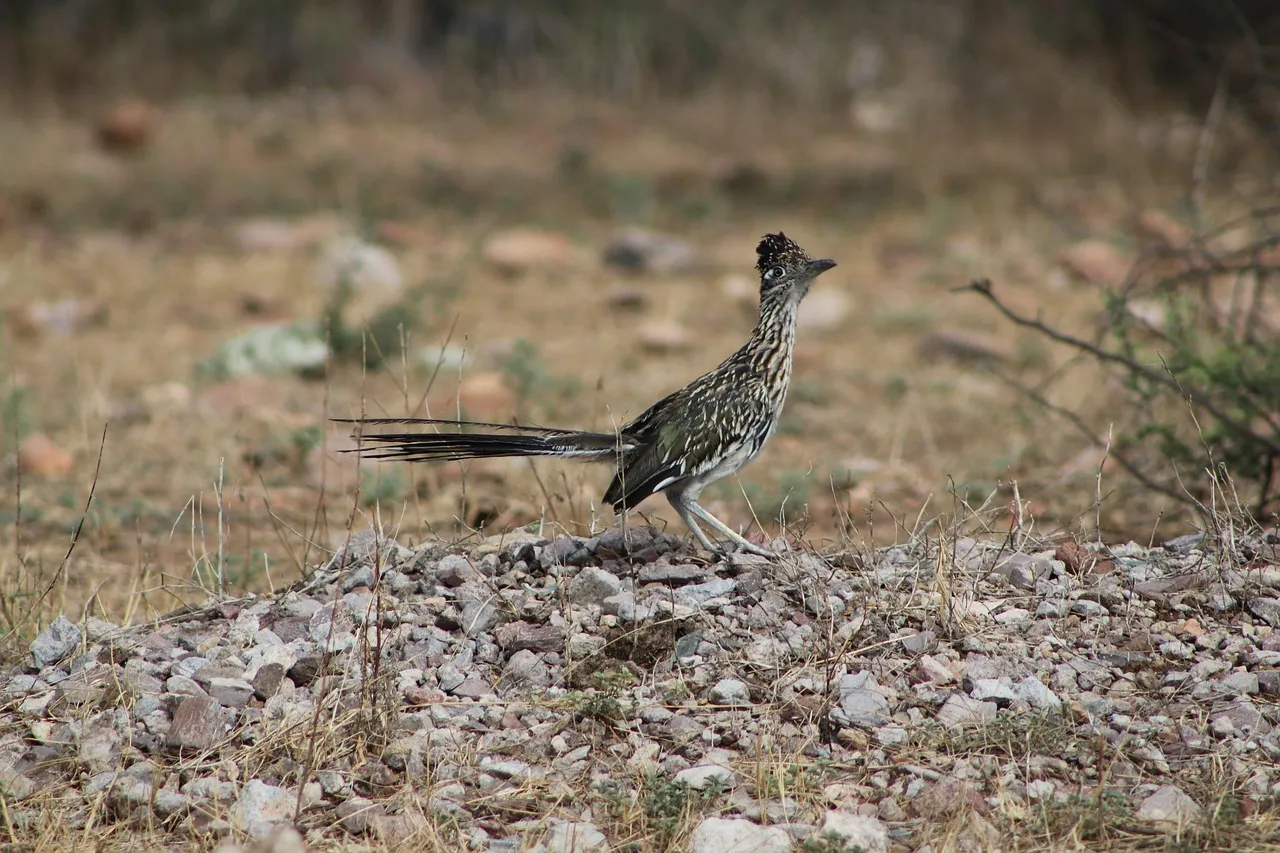
Many species, such as the roadrunner, use behavioral adaptations like being active during cooler morning hours and seeking shade in the hottest parts of the day. Image by wonderlandwoo / Pixabay.
Deserts are some of the most extreme environments on Earth, with temperatures that can exceed 40°C (104°F) during the day and drop sharply at night. In these harsh conditions, birds have developed remarkable ways to survive and thrive. The study of desert birds helps scientists understand adaptation, energy flow, and the delicate balance of ecosystems. This passage explores how and why desert birds are able to live in such difficult places, using scientific research and real-world examples.
Mechanisms of Survival: Adaptations to Heat and Dryness
Desert birds must cope with intense heat and limited water resources. Many species, such as the roadrunner, use behavioral adaptations like being active during cooler morning hours and seeking shade in the hottest parts of the day. To conserve water, most desert birds obtain almost all their moisture from the food they eat, including insects, seeds, and small reptiles. Their kidneys are highly efficient, producing concentrated uric acid instead of watery urine, which greatly reduces water loss. Some, like the sandgrouse, have specially structured belly feathers that absorb and carry water from distant sources back to their chicks. These mechanisms illustrate how physiological and behavioral adaptations work together for survival.
Interactions in Desert Ecosystems
Desert birds play crucial roles in their ecosystems. The cactus wren, for example, builds nests inside thorny cacti, which provides protection from predators and harsh weather. This also helps spread cactus seeds, supporting plant regeneration. Roadrunners are opportunistic predators that help control populations of insects, snakes, and rodents. Scientists have observed that when bird populations decline, the ecosystem can become unbalanced, leading to overpopulation of pests and less plant diversity. Data from Sonoran Desert studies show that bird diversity is linked to healthier, more resilient habitats. These relationships demonstrate cause-and-effect chains in which birds influence both the living and nonliving components of their environment.
Challenges and Human Impact
Despite their adaptations, desert birds face increasing threats from climate change and human activity. Rising temperatures and decreased rainfall can reduce food and water supplies, while habitat destruction from urban expansion limits nesting sites. Conservation research shows that protecting native plants and water sources helps maintain bird diversity and ecosystem stability. By studying the responses of desert birds to these challenges, scientists gain insight into the resilience and vulnerability of desert systems, which can inform conservation strategies worldwide.
Desert birds demonstrate the principles of adaptation, energy flow, and interdependence that are central to life science. Their survival strategies highlight the importance of understanding ecological systems and the impact of environmental changes on all living things.
Interesting Fact: The sandgrouse can carry up to 20 milliliters of water in its belly feathers—enough to provide a whole day’s drink for its chicks!
What is the main reason desert birds can survive in extreme environments?
They have special adaptations that help them get water and stay cool.They only live in places with lots of rain.They eat only plants.They fly away from the desert in summer.
Which bird uses belly feathers to transport water to its chicks?
Cactus wrenRoadrunnerSandgrouseOwl
Which of the following is NOT a challenge faced by desert birds?
Climate changeHabitat destructionAbundant water supplyRising temperatures
What does the roadrunner do to avoid the hottest part of the day?
It flies to another desert.It hides in the shade and is active in the morning.It swims in rivers.It sleeps all day.
What does the word 'adaptations' most closely mean in the passage?
Special traits or behaviors that help survival.Places where birds nest.Desert plants.Types of food.
What is uric acid, as used in the passage?
A type of food birds eat.A concentrated waste product that saves water.A desert plant.A bird predator.
Why do scientists study desert birds?
To learn about adaptation and ecosystem balance.To find new bird species to keep as pets.To study only their feathers.To watch them fly long distances.
What might happen if bird populations in the desert decrease?
There will be fewer plant species and more pests.Desert birds will eat more food.The desert will get more rain.Other animals will move out.
Desert birds get most of their water from food. (True/False)
TrueFalse
The cactus wren helps spread cactus seeds in the desert. (True/False)
TrueFalse
Perfect For:
👩🏫 Teachers
• Reading comprehension practice
• Auto-graded assessments
• Literacy skill development
👨👩👧👦 Parents
• Reading practice at home
• Comprehension improvement
• Educational reading time
🏠 Homeschoolers
• Reading curriculum support
• Independent reading practice
• Progress monitoring
Reading Features:
📖
Reading Passage
Engaging fiction or nonfiction text
❓
Comprehension Quiz
Auto-graded questions
📊
Instant Feedback
Immediate results and scoring
📄
Printable Version
Download for offline reading
🔊
Read Aloud
Voice-over with word highlighting
Reviews & Ratings
No reviews yet. Be the first to share your experience!
Related Content
Venus Flytrap Facts
This passage explains where Venus flytraps live in North Carolina bogs, how their snap traps work, and their unique way ...
MS-LS1-4RI.6.3RI.7.3RI.8.8
Pitcher Plants: Reproduction Facts
This passage describes tropical and North American pitcher plants, their liquid-filled traps, and how they get nutrients...
MS-LS1-4RI.6.3RI.7.3RI.8.8
What Is the Floor of an Aquatic Biome Called?
This NGSS-aligned science reading passage explains the benthic zone, which is the floor of an aquatic biome such as ocea...
MS-LS1-4
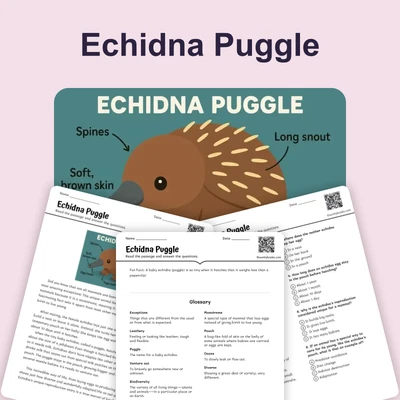
Echidna Puggle
This interactive science reading passage, titled "Echidna Life: From Egg to Puggle," delves into the fascinating reprodu...
MS-LS1-4
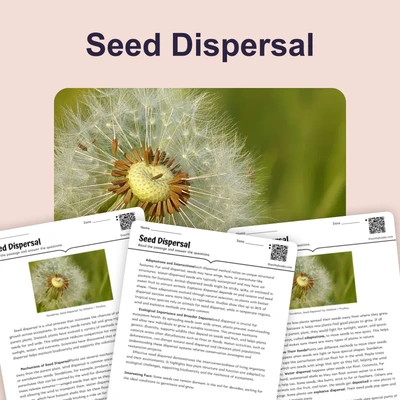
Seed Dispersal
This middle school science passage examines the fascinating process of seed dispersal and the diverse strategies plants ...
MS-LS1-4
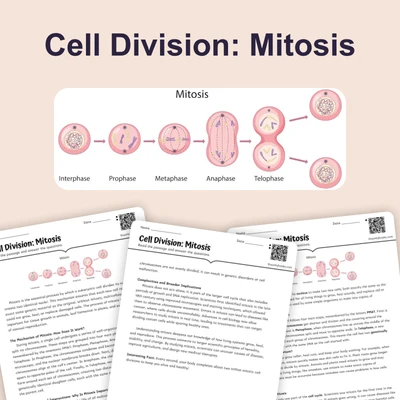
Cell Division: Mitosis
This comprehensive science passage for middle school students explores the key concept of mitosis, the division of the n...
MS-LS1-4
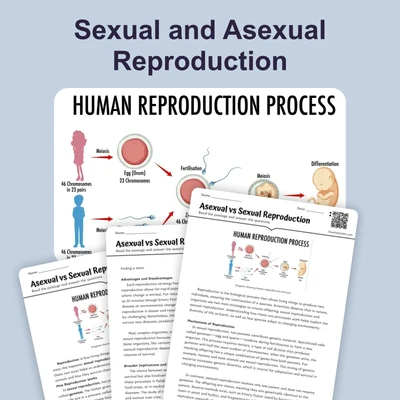
Asexual vs Sexual Reproduction
This NGSS-aligned passage for grades 6-8 explores sexual and asexual reproduction, comparing their underlying mechanisms...
MS-LS1-4MS-LS3-2
Reproductive System
This passage provides a comprehensive overview of the human reproductive system for middle school students, aligning wit...
MS-LS1-3MS-LS1-4
Fertilization and Early Development
This passage explores the scientific process of fertilization and early human development, aligning with NGSS standards ...
MS-LS1-4MS-LS3-2
Cytokinesis and Cell Growth
This middle school science reading passage explores the essential biological process of cytokinesis, the division of a c...
MS-LS1-4
Plant Reproduction
This comprehensive passage for grades 6-8 explores the fascinating world of plant reproduction, aligning with NGSS stand...
MS-LS1-4MS-LS3-2
Mammal Migration
This comprehensive passage on mammal migration, designed for grades 6-8 and aligned with NGSS standards MS-LS2-2 and MS-...
MS-LS2-2MS-LS1-4
How Animals Navigate
This engaging science passage for grades 6-8 examines the fascinating world of navigation strategies. Aligned with NGSS ...
MS-LS1-4MS-ESS3-3MS-ETS1-1
Growth and Development of Organisms
This middle school science passage, aligned with NGSS standards MS-LS1-4 and MS-LS1-5, provides an in-depth look at the ...
MS-LS1-4MS-LS1-5
What Is a Tropical Savanna?
This NGSS-aligned science passage for grades 6-8 explores the rich animal diversity of the savanna ecosystem. Students w...
MS-LS2-1MS-LS2-2MS-LS2-4MS-LS1-4
The Cell Cycle
This middle school science reading passage introduces the cell cycle as the life of a cell from formation to division. A...
MS-LS1-4
Animal Survival Behaviors
This passage, aligned with NGSS standards MS-LS1-4 and MS-LS1-5, explores the complex and fascinating world of animal be...
MS-LS1-4MS-LS1-5
Reproductive Success
This middle school science passage explores the essential concepts of reproductive success and adaptation in plants and ...
MS-LS1-4MS-LS4-4
The Leafy Sea Dragon: Nature's Living Seaweed
This NGSS-aligned passage explores how leafy sea dragons (Phycodurus eques) demonstrate key life science concepts for mi...