What Is a Tropical Savanna?
Interactive passage with audio narration, comprehension questions, and printable PDF.
By completing this purchase you agree to our Terms of Use and Privacy Policy. Your subscription renews automatically until you cancel. You can cancel anytime from your account settings. All sales are final and non-refundable. Digital content is available for download in your account immediately upon purchase.
What's included
What Is a Tropical Savanna? preview and details
About this printable What Is a Tropical Savanna? science reading passage, NGSS-aligned (Grades 5-8)
Sample passage and quiz from What Is a Tropical Savanna?
Reading passage and comprehension quiz preview
Savanna Animal Diversity
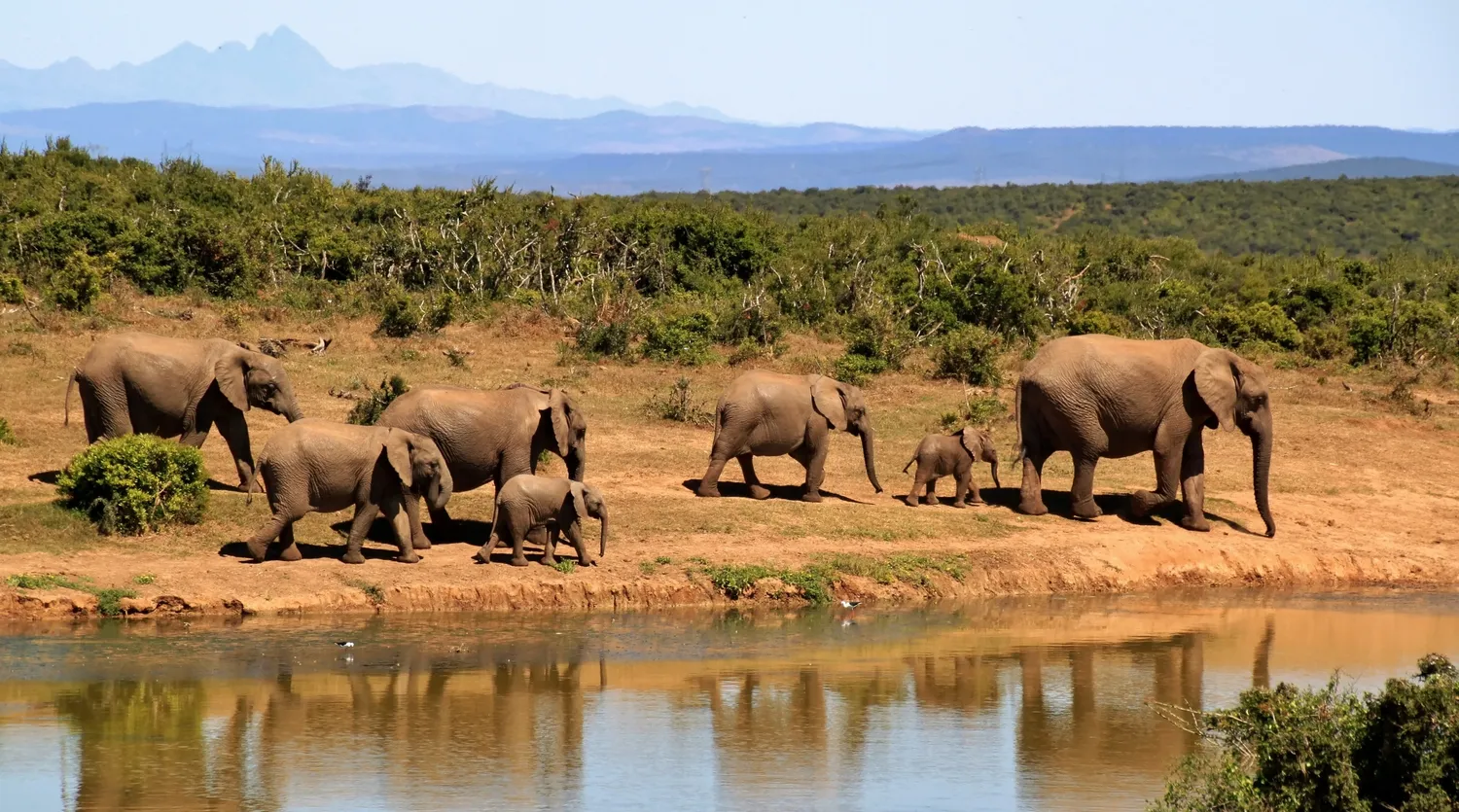
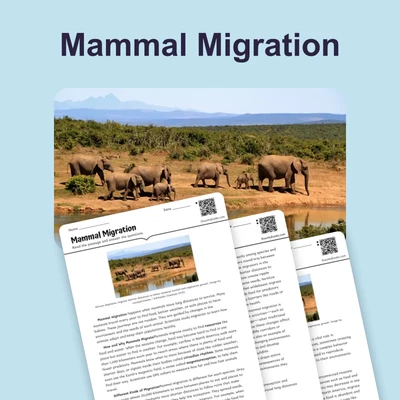
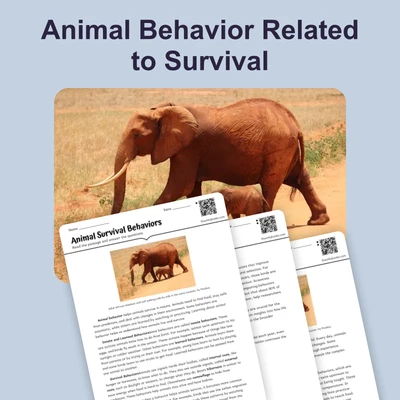
Elephant Herd Of African Bush Elephants. Image by cocoparisienne / Wikimedia Commons (CC0).
Animal diversity in the savanna is a result of complex interactions among climate, resources, and species. The savanna, a grassland ecosystem found in regions like Africa, South America, and Australia, is characterized by seasonal rainfall and scattered trees. These environmental factors create unique challenges and opportunities for animals living there. Scientists study these systems to understand the mechanisms that allow such a wide range of species to survive together.
Adaptations and Food Web Dynamics
Adaptations are specialized traits that help organisms survive in their environments. In the savanna, herbivores such as zebras and antelopes have teeth and digestive systems designed for eating tough grasses. Carnivores like lions and cheetahs have sharp teeth and claws for hunting prey. Omnivores, including baboons, eat both plants and animals, allowing them to exploit a variety of food sources. The food web in the savanna is highly interconnected. For example, termites break down dead plant material, returning nutrients to the soil, which supports grass growth. In turn, grazers feed on the grass, and predators hunt the grazers. This cycling of energy and matter is essential for ecosystem stability.
Competition and Niche Differentiation
Animals in the savanna compete for limited resources such as water, food, and shelter. To reduce direct competition, many species occupy different niches. A niche is the specific role an organism plays in its environment. For instance, giraffes feed on high leaves, while zebras eat grass closer to the ground. This resource partitioning allows multiple species to coexist. Studies have shown that during dry seasons, competition intensifies, leading animals to migrate or adjust their diets. Scientists use tools like GPS collars and field observations to track these behaviors and understand how animal populations are affected by environmental changes.
Environmental Challenges and Human Impact
The savanna faces challenges such as drought, wildfires, and human activities like agriculture and poaching. These factors can disrupt animal populations and the balance of the food web. For example, overgrazing by livestock reduces grass cover, affecting herbivores and, consequently, their predators. Conservation efforts focus on protecting habitats and maintaining biodiversity to ensure ecosystem resilience. The study of savanna animal diversity helps scientists predict how ecosystems might respond to climate change and guides strategies for sustainable management.
Understanding savanna animal diversity illustrates core scientific principles like energy flow, adaptation, and the interconnectedness of life. Protecting these ecosystems is crucial for preserving global biodiversity and maintaining ecological balance.
Interesting Fact:
Termite mounds in the African savanna can reach heights of over 3 meters (about 10 feet) and play a vital role in nutrient cycling and soil aeration.
Comprehension quiz (10 questions)
1. What is one main reason the savanna has so many different animal species?
2. What is a niche?
3. During dry seasons, what often happens to competition among savanna animals?
4. Why is resource partitioning important in the savanna?
5. What does the word 'adaptation' mean as used in the passage?
6. What is the main function of termite mounds in the savanna?
7. Which of the following best describes a food web?
8. How do scientists study animal behavior in the savanna?
9. True or False: Overgrazing by livestock can disrupt the savanna food web.
10. True or False: All animals in the savanna eat the same food.
Perfect for the way you teach
- Build comprehension skills
- Auto-graded quiz
- Differentiated reading
- Read together at home
- Improve fluency
- Quiet reading time
- Reading curriculum support
- Independent practice
- Track Lexile growth