Predation
Interactive passage with audio narration, comprehension questions, and printable PDF.
By completing this purchase you agree to our Terms of Use and Privacy Policy. Your subscription renews automatically until you cancel. You can cancel anytime from your account settings. All sales are final and non-refundable. Digital content is available for download in your account immediately upon purchase.
What's included
Predation preview and details
About this printable Predation science reading passage, NGSS-aligned (Grades 5-8)
Sample passage and quiz from Predation
Reading passage and comprehension quiz preview
Predation
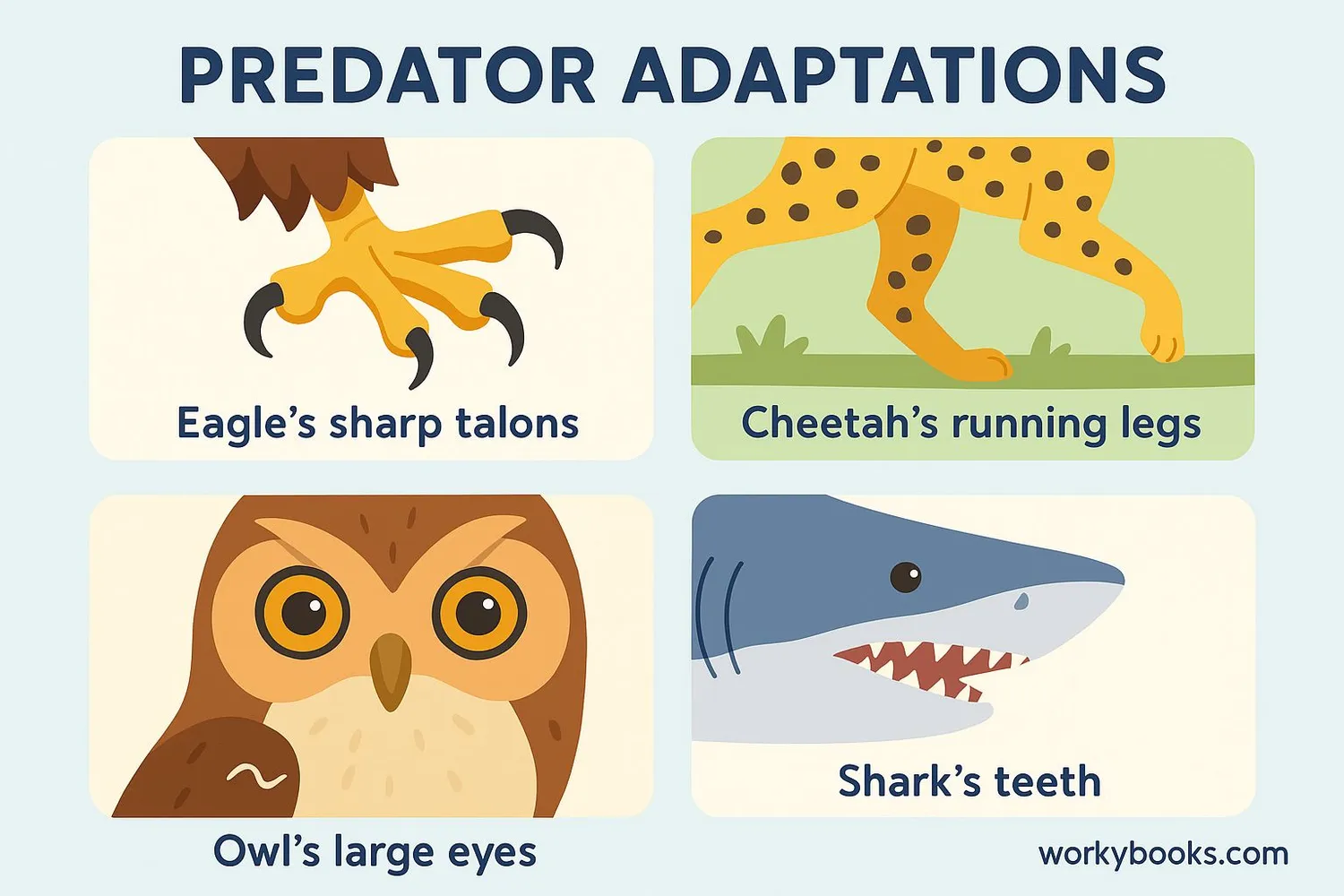
Predation is a driving force in ecosystems, shaping both the behaviors and populations of organisms. In predation, one organism—the predator—captures and consumes another organism called the prey. This process is essential for maintaining balance within food webs and influences the evolution of countless species.
Mechanisms of Predation and Adaptations
Predators have evolved a variety of adaptations to help them catch prey. For example, cheetahs rely on extreme speed, reaching up to 112 km/h (70 mph) when chasing gazelles. Other predators, like wolves, use pack hunting strategies to outmaneuver larger prey. Features such as sharp claws, venom, and camouflage also improve a predator’s chances. Camouflage allows predators, such as praying mantises, to blend into their environment and ambush unsuspecting prey. On the other side, prey species have developed their own defenses. Warning coloration signals danger, as seen in the bright colors of poison dart frogs. Some prey mimic the appearance of more dangerous organisms, a strategy known as mimicry. Speed, defensive chemicals, and camouflage all help prey survive encounters with predators.
Population Cycles and Ecosystem Effects
The relationship between predators and prey can cause their population sizes to rise and fall in repeating patterns, called population cycles. A classic example involves the Canada lynx and the snowshoe hare. When hare populations increase, lynx have more food, so their numbers also rise. As lynx numbers grow, they eat more hares, causing the hare population to drop. With less food available, lynx numbers then decline, allowing the cycle to repeat. These cycles can be measured—hare and lynx populations in Canada have shown regular peaks and valleys approximately every ten years for over a century. These interactions demonstrate how predation shapes entire communities.
Keystone Predators and Ecosystem Balance
Some predators are so crucial that they are called keystone species. Keystone predators, like sea otters, have effects that ripple through the food web. Sea otters eat sea urchins, which would otherwise overgraze kelp forests. When otters are removed, sea urchin populations explode, destroying kelp ecosystems and affecting countless other species. Wolves in Yellowstone National Park are another example. Their presence controls elk populations, which in turn allows vegetation and other animal populations to thrive. Removing keystone predators can cause dramatic changes, or even collapse, in ecosystems.
Understanding predation is fundamental to ecology and conservation. Predation not only shapes the evolution of species but also regulates populations and maintains ecosystem health. Scientists study these interactions using observations, experiments, and population data, providing evidence for the importance of predator-prey relationships in nature.
Interesting Fact:
Some plants use mimicry, too—certain orchids look and smell like female insects to attract pollinators, showing that predation and mimicry are not limited to animals!
Comprehension quiz (10 questions)
1. What is predation?
2. Which is an example of a predator adaptation?
3. What happens to lynx populations when hare numbers decrease?
4. What is the main role of keystone predators like sea otters?
5. What does camouflage help a predator do?
6. What is mimicry?
7. If wolves are removed from Yellowstone, what is a likely effect?
8. Why do prey animals often have warning coloration?
9. Predator-prey population cycles can be observed in nature. (True/False)
10. Keystone species have little effect on their ecosystems. (True/False)
Perfect for the way you teach
- Build comprehension skills
- Auto-graded quiz
- Differentiated reading
- Read together at home
- Improve fluency
- Quiet reading time
- Reading curriculum support
- Independent practice
- Track Lexile growth