Symbiosis
Interactive passage with audio narration, comprehension questions, and printable PDF.
By completing this purchase you agree to our Terms of Use and Privacy Policy. Your subscription renews automatically until you cancel. You can cancel anytime from your account settings. All sales are final and non-refundable. Digital content is available for download in your account immediately upon purchase.
What's included
Symbiosis preview and details
About this printable Symbiosis science reading passage, NGSS-aligned (Grades 5-8)
Sample passage and quiz from Symbiosis
Reading passage and comprehension quiz preview
Symbiosis
every ecosystem, species interact in ways that shape their survival and the health of their environment. One of the most important types of interactions is symbiosis. This term describes a close, long-term relationship between two different species. Symbiotic relationships can have major effects on population sizes, resource availability, and even how species evolve over time. Understanding symbiosis helps scientists explain the balance and complexity found in natural systems.
Types of Symbiosis: Mutualism, Commensalism, and Parasitism
Symbiosis can be classified into several types, each with different outcomes for the species involved. In mutualism, both partners benefit. For example, bees collect nectar from flowers for food, while flowers rely on bees to transfer pollen, enabling them to reproduce. Another example is the relationship between clownfish and sea anemones: the clownfish gains protection from predators, while the anemone receives cleaning and nutrients. A less familiar mutualism involves mycorrhizal fungi and plant roots, where fungi help plants absorb minerals and the plant provides sugars in return.
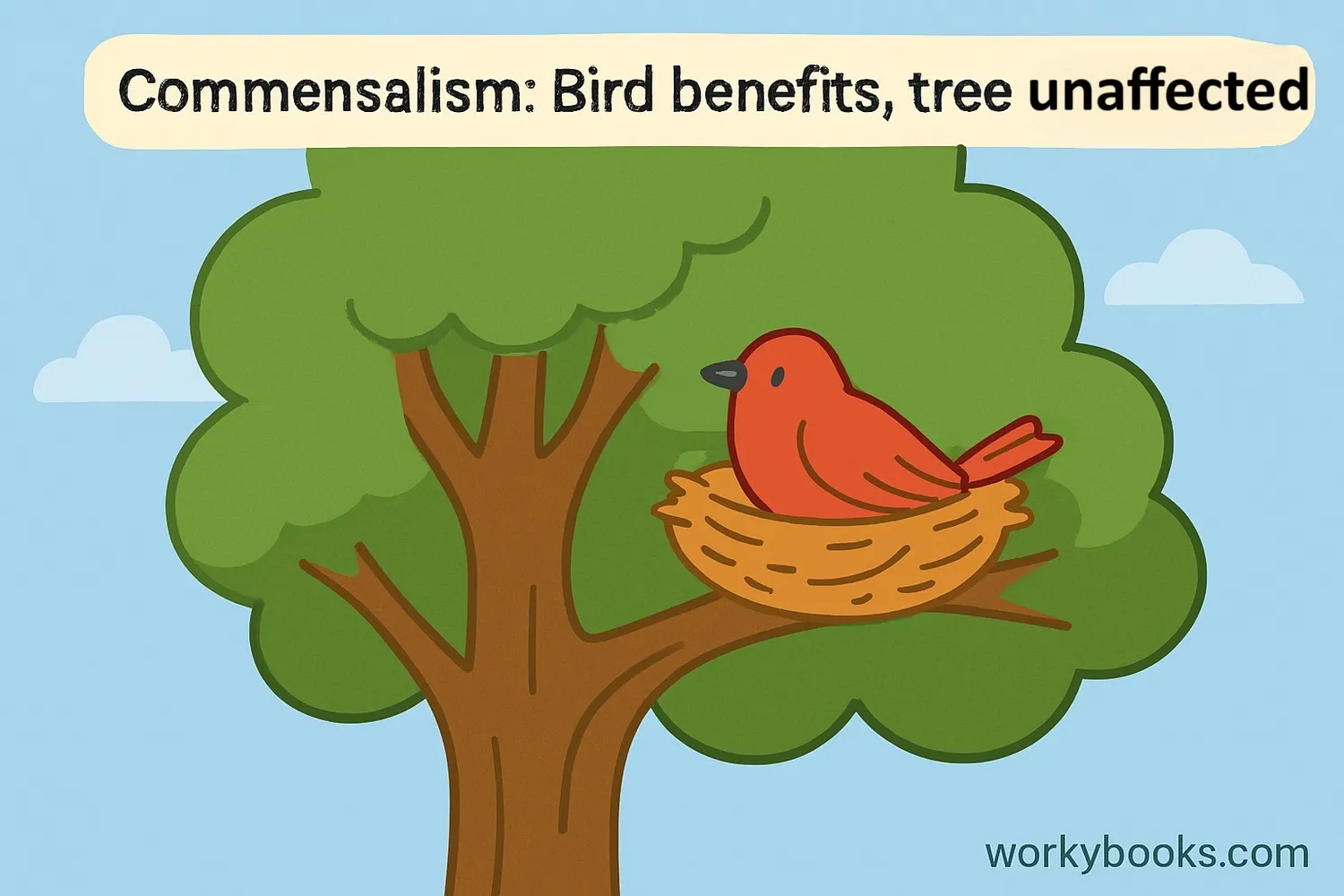
In commensalism, one species benefits while the other is neither harmed nor helped. Barnacles attaching to whales is a classic case: barnacles gain a mobile home and access to food-rich waters, but whales are generally unaffected. Birds nesting in trees also demonstrate commensalism, as the tree provides safety for the birds without any significant impact on itself.
By contrast, parasitism occurs when one organism, called the parasite, benefits by harming its host. For instance, ticks feed on the blood of mammals, sometimes transmitting diseases. Tapeworms live inside the intestines of animals, absorbing nutrients and weakening the host. Even some plants, like mistletoe, act as parasites by drawing water and nutrients from the trees they live on.
Mechanisms and Impacts: How Symbiosis Shapes Ecosystems
Symbiotic relationships can drive changes in population dynamics and resource flow. In mutualism, both species may increase in number due to shared benefits, which can raise overall productivity in an ecosystem. For example, research shows that in some forests, mycorrhizal associations can boost tree growth by over 20%. In parasitism, heavy infestations can reduce host populations, sometimes causing disease outbreaks that affect entire food webs. Scientists gather data through field observations, experiments, and tracking population trends to study these effects. These interactions are essential for ecosystem stability and resilience, especially as environmental conditions change.
Coevolution and the Complexity of Symbiotic Relationships
Symbiotic species often coevolve, meaning they adapt in response to each other. For example, flowers may evolve special shapes or colors to attract certain pollinators, while pollinators evolve features to access the nectar more easily. Sometimes, the boundaries between types of symbiosis are not clear-cut, and relationships can shift with changing conditions. Scientists use genetic analysis and long-term ecological studies to better understand these dynamics.
Symbiosis demonstrates the interconnectedness of life in ecosystems. These relationships highlight how species depend on each other for survival, and how small changes can ripple through entire communities. By studying symbiosis, scientists gain insight into the delicate balance that sustains life on Earth.
Interesting Fact: Some ants and acacia trees have such a strong mutualistic relationship that the trees provide shelter and food for the ants, while the ants defend the tree against herbivores and competing plants!
Comprehension quiz (10 questions)
1. What is symbiosis?
2. Which type of symbiosis benefits both species?
3. What is an example of commensalism?
4. What does the parasite gain in parasitism?
5. In the passage, what does the word 'coevolve' mean?
6. What is a host in a symbiotic relationship?
7. Why might mutualism increase productivity in an ecosystem?
8. If a bird builds a nest in a tree without harming the tree, what type of symbiosis is this?
9. True or False: Parasitism always helps both species equally.
10. True or False: Mycorrhizal fungi help plants absorb minerals while receiving sugars in return.
Perfect for the way you teach
- Build comprehension skills
- Auto-graded quiz
- Differentiated reading
- Read together at home
- Improve fluency
- Quiet reading time
- Reading curriculum support
- Independent practice
- Track Lexile growth