The Constitution and Bill of Rights — Reading Comprehension
Rate this
Premium Resource
Present
Present in classroom. No work saved
Assign
Classroom with student accounts, Track progress
Quick Play
No student accounts, assign with a link
Grades
3
4
5
Standards
D2.CIV.2.3-5
D2.CIV.12.3-5
RI.4.1
RI.4.3
RI.4.4
PRINT+DIGITAL RESOURCE
This learning resource is available in interactive and printable formats. The interactive worksheet can be played online and assigned to students. The Printable PDF version can be downloaded and printed for completion by hand.
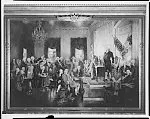
This passage explores the creation of the United States Constitution and the Bill of Rights. Students will learn about the problems faced by the new country after the American Revolution, the key figures who helped write the Constitution, and the important rights protected by the Bill of Rights. The passage is written for young readers, using clear language and short sentences, and highlights themes of unity, bravery, and problem-solving. Aligned with the C3 Framework history standards and Common Core ELA standards, this resource includes a reading comprehension quiz, glossary, writing activities, and a timeline of key events. It also features a public domain historical image, read aloud audio, and a full Spanish translation, making it perfect for students learning about American government and their rights as citizens.
CONTENT PREVIEW
Expand content preview
Scene at signing of the Constitution of the United States Source: Library of Congress - Christy, Howard Chandler
The Constitution is the main rulebook for the United States government. After the American Revolution, the new country needed a plan for how to be run. In 1787, leaders from many states met in Philadelphia. These leaders are called the Founding Fathers. They wanted to make a strong but fair government.
The Founding Fathers wrote the Constitution at the Constitutional Convention. The Constitution explains how the government works. It sets up three branches: the Legislative branch (Congress), the Executive branch (the President), and the Judicial branch (the courts). This system makes sure no one part of government has too much power.
Some people worried the Constitution did not protect their rights. To solve this, the Founding Fathers added a list of amendments, or changes. The first ten amendments are called the Bill of Rights. The Bill of Rights protects important freedoms. These include freedom of speech, freedom of religion, and the right to a fair trial.
The Constitution and Bill of Rights have been used for over 230 years. When the country faces new problems, leaders can add more amendments. For example, the thirteenth amendment ended slavery. There are now 27 amendments in total. These changes help keep the government fair and equal for all citizens.
The Constitution and Bill of Rights are important because they protect people’s freedoms. They make sure everyone is treated fairly. People in the United States still use these documents today to protect their rights.
Interesting Fact: The U.S. Constitution is the oldest written national constitution still in use in the world today!
What is the Constitution?
A set of rules for governmentA map of the USAA type of moneyA famous speech
Where was the Constitution written?
PhiladelphiaBostonNew YorkChicago
How many branches does the Constitution set up?
ThreeTwoFourOne
Why did some people want amendments?
To protect rightsTo raise taxesTo start a warTo change the flag
What does the Bill of Rights protect?
Freedoms like speechNew laws onlyThe weatherOnly voting
What happens if new problems come up?
More amendments can be addedIgnore the problemsErase the ConstitutionChange the President
The Constitution is still used today.
TrueFalse
What is an amendment?
A change to the ConstitutionA judgeA speechA branch
Perfect For:
👩🏫 Teachers
• Reading comprehension practice
• Auto-graded assessments
• Literacy skill development
👨👩👧👦 Parents
• Reading practice at home
• Comprehension improvement
• Educational reading time
🏠 Homeschoolers
• Reading curriculum support
• Independent reading practice
• Progress monitoring
Reading Features:
📖
Reading Passage
Engaging fiction or nonfiction text
❓
Comprehension Quiz
Auto-graded questions
📊
Instant Feedback
Immediate results and scoring
📄
Printable Version
Download for offline reading
🔊
Read Aloud
Voice-over with word highlighting
Reviews & Ratings
No reviews yet. Be the first to share your experience!
Related Content
California Government Branches
This engaging history reading passage introduces students to the three branches of California government: the Legislativ...
D2.CIV.1.3-5D2.CIV.2.3-5RI.4.3RI.4.4
The Governor’s Job: Leading the State
This reading passage introduces students to the important job of the governor in California. Students will learn how the...
D2.CIV.1.3-5D2.CIV.2.3-5RI.4.3RI.4.4
California Local Government
This engaging U.S. History reading passage introduces students to the roles of city and county governments in California...
D2.CIV.1.3-5D2.CIV.2.3-5RI.4.3RI.4.4
Local Leaders and How They Help Us
This engaging U.S. history passage explores the important roles that local leaders play in communities, with a focus on ...
D2.CIV.1.3-5D2.CIV.2.3-5RI.4.3RI.4.4
California Citizen Participation
This engaging U.S. history reading passage explores the important role citizens play in shaping modern America, focusing...
D2.HIS.5.3-5D2.CIV.2.3-5RI.4.3RI.4.4
Town Meetings: How Colonists Made Decisions
This passage explores the role of town meetings in the New England Colonies and how colonists worked together to make im...
D2.HIS.6.3-5D2.CIV.2.3-5RI.4.3RI.4.4
Snorkeling & Scuba Diving
RI.2.2RI.2.6RI.2.10RF.2.4.A
Polar Bears and Climate
This informational text on polar bears is a great way to practice reading comprehension. Students will read the passage ...
RI.4.1W.4.72-LS4-1RF.4.4
Climate and Water Cycle
W.4.2.ARI.4.4RI.4.1
Earthquakes and Infrastructure
Get this worksheet about the effects of earthquakes on infrastructure. The worksheet includes an informational passage t...
W.4.7RI.4.1ESS3B
The Rubik's Cube
RI.2.2RI.2.6RI.2.10RF.2.4.A
Understanding Climate Action Context Clues
Understanding Climate Action" worksheet, aligned with CCS L.4.4.A and NGSS. This resource introduces key concepts such a...
L.4.4.ARI.4.1RI.4.4
Earthquake and buildings
Download this worksheet on the impact of earthquakes on buildings. The informational text included in this worksheet is ...
RI.4.1ESS3BW.4.7RF.4.4
How Do Scientists Study Past Climates?
Students will analyze how tools like ice cores and tree rings provide scientific evidence about Earth’s historical clima...
RI.4.1RI.4.2RI.4.3.4.RI.4.74-ESS2-2
Earth Day and Types of Pollution
Earth Day is coming! Get ready to learn about pollution and test your knowledge. Click for a free reading passage and qu...
RI.4.1RI.4.2ESS3.CESS3.A
Earth Day and Green Initiatives
Celebrate Earth Day with this fun and educational activity! Students will begin by reading a short passage that explains...
RI.4.1RI.4.2ESS3.CESS3.A
Sunspots and Solar Flares
This quiz is designed to test your understanding of the fascinating phenomena of sunspots and solar flares, as described...
RI.4.1RI.4.4RI.5.1ESS1.A
How might climate change affect animals?
This passage explains to children how climate change impacts animal life. It uses specific examples like polar bears los...
RI.3.1RI.4.14.ESS2.D4-ESS3
What can happen to sea levels because of climate change?
This passage explains to children how climate change leads to rising sea levels. It describes two main causes: melting i...