California Citizen Participation — Reading Comprehension
Rate this
Premium Resource
Present
Present in classroom. No work saved
Assign
Classroom with student accounts, Track progress
Quick Play
No student accounts, assign with a link
Grades
3
4
5
Standards
HSS 4.5.5
RH.6-8.2
PRINT+DIGITAL RESOURCE
This learning resource is available in interactive and printable formats. The interactive worksheet can be played online and assigned to students. The Printable PDF version can be downloaded and printed for completion by hand.
This engaging U.S. History reading passage explores California citizen participation, focusing on how ordinary people help shape their government and communities. Students will learn about voting, attending public meetings, volunteering, and contacting representatives, as well as the importance of civic engagement. Through concrete examples and a cause-and-effect structure, the passage highlights how actions like voting and community involvement strengthen democracy. The resource aligns with HSS 4.5.5 and RH.6-8.2 standards, ensuring students develop both historical understanding and literacy skills. Included are a glossary, differentiated and Spanish versions, comprehension questions, writing prompts, and graphic organizers. Read aloud audio and a Spanish translation are also provided, making this resource accessible for diverse learners and English language development.
CONTENT PREVIEW
Expand content preview
[People carrying picket signs protesting against nuclear power and the Potomac Electric Power Company (PEPCO)] Source: Library of Congress - O'Halloran, Thomas J.
Californians help shape their communities and government every day. This is called citizen participation. By working together, people can solve problems and make their voices heard. This is an important part of living in a democracy.
One major way Californians participate is by voting. During elections, people over 18 can choose leaders and decide on laws. Voting is a powerful tool. When more people vote, everyone’s opinion is better represented. For example, local elections can decide if a new park is built or if schools get more funding. Every vote counts.
Another way citizens get involved is by attending public meetings. Town halls or city council meetings are open to everyone. At these meetings, citizens can ask questions, share ideas, and learn about community issues. When people attend, leaders know what citizens care about. This helps leaders make better choices for everyone.
Californians also reach out to their representatives. These are people elected to speak for the community. Citizens write letters, send emails, or call their representatives. By sharing their thoughts, people help guide decisions about schools, roads, and safety. It shows leaders what is important to the community.
Volunteering is another key way to participate. Many Californians help at food banks, clean up parks, or support local groups. Volunteering makes communities stronger and brings people together. When citizens work side by side, they feel more connected and proud of their community.
All these actions are called civic engagement. Civic engagement means working to make your community better. It can be big or small, but it always matters. When citizens get involved, their voices become part of important decisions. This keeps democracy strong and fair for everyone.
In California, citizen participation has a long history. People from many backgrounds have worked for change. They have helped win rights to vote, build parks, and improve schools. Today, every Californian has the chance to shape the future by getting involved.
Interesting Fact: In 1911, California women won the right to vote almost ten years before women across the United States.
What is citizen participation?
Helping shape community and governmentMoving to a new stateWatching TV at homeGoing on vacation
Who can vote in California elections?
Adults over 18Children under 10Only teachersOnly city leaders
What year did California women win the right to vote?
1911177620001865
Why do people attend public meetings?
To share ideasTo play gamesTo watch moviesTo buy food
How does volunteering help communities?
Makes communities strongerMakes people boredCreates problemsStops voting
What is one effect when more people vote?
More voices are heardLess money for schoolsFewer parks builtNo new laws
Citizen participation is not important. True or false?
TrueFalse
What does civic engagement mean?
Working to improve your communityGoing on a vacationWatching TVMoving to another country
Perfect For:
👩🏫 Teachers
• Reading comprehension practice
• Auto-graded assessments
• Literacy skill development
👨👩👧👦 Parents
• Reading practice at home
• Comprehension improvement
• Educational reading time
🏠 Homeschoolers
• Reading curriculum support
• Independent reading practice
• Progress monitoring
Reading Features:
📖
Reading Passage
Engaging fiction or nonfiction text
❓
Comprehension Quiz
Auto-graded questions
📊
Instant Feedback
Immediate results and scoring
📄
Printable Version
Download for offline reading
🔊
Read Aloud
Voice-over with word highlighting
Reviews & Ratings
No reviews yet. Be the first to share your experience!
Related Content
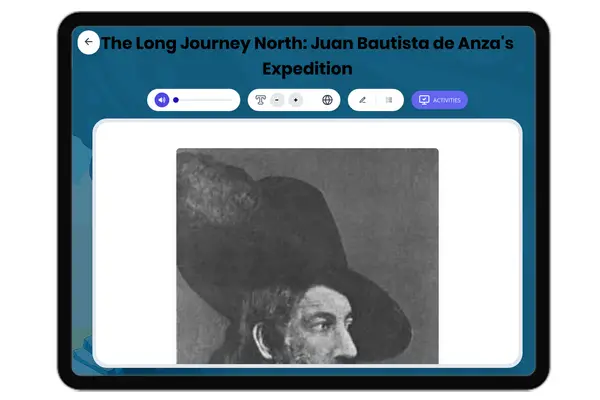
Juan Bautista de Anza's Expedition
This reading passage explores the remarkable journey of Juan Bautista de Anza and his expedition from Mexico to Californ...
HSS 4.2.3RH.6-8.2
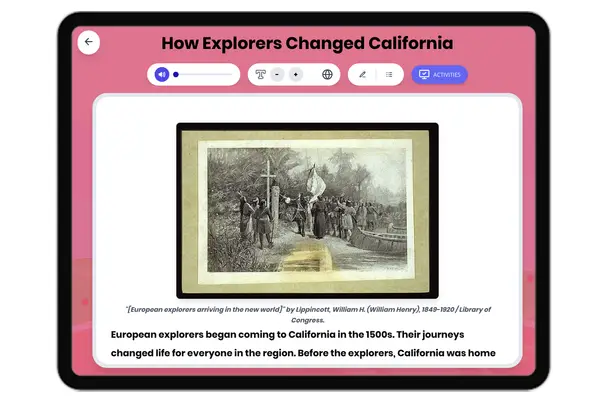
How Explorers Changed California
This engaging U.S. History reading passage explores how explorers from Europe transformed California through the Columbi...
HSS 4.2.2RH.6-8.2
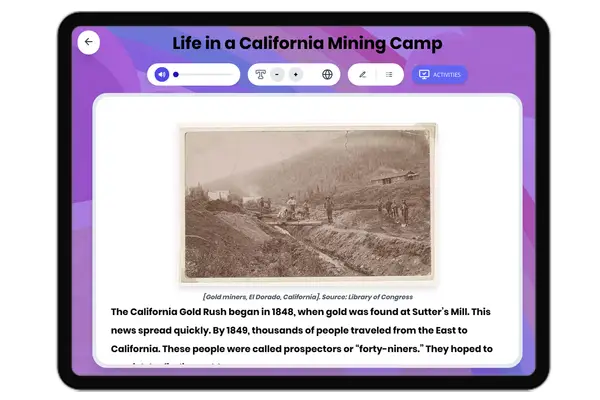
California Mining Camps
This engaging history reading passage explores the world of California mining camps during the Gold Rush, aligning with ...
HSS 4.4.2RH.6-8.2
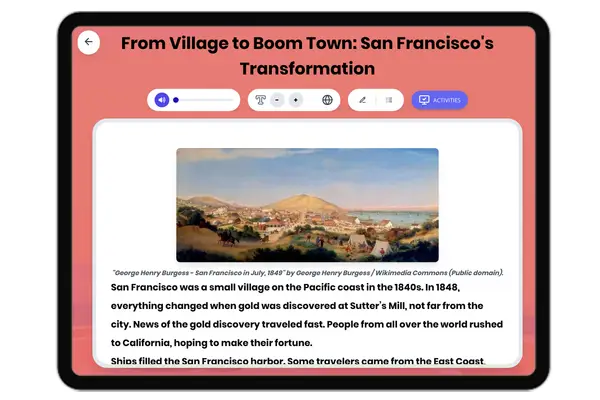
San Francisco Growth
This comprehensive U.S. history passage explores the rapid growth of San Francisco during the California Gold Rush. Stud...
HSS 4.4.3RH.6-8.2
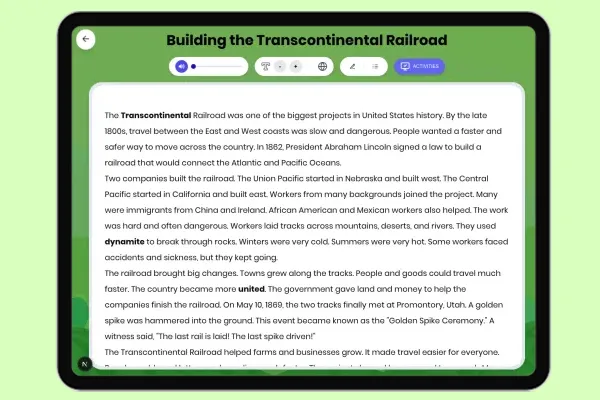
Transcontinental Railroad
This reading passage explores the history and importance of the Transcontinental Railroad, which was completed in 1869. ...
HSS 4.4.1RH.6-8.2
California Agriculture Growth
This passage explores the remarkable growth of California's agriculture during the Progressive Era, focusing on how the ...
HSS 4.4.6RH.6-8.2
California Progressive Era
This engaging reading passage explores the California Progressive Era, a crucial period in U.S. history when reformers l...
HSS 4.5.2RH.6-8.2
Meroë: Capital of Kush
This passage explores the rise and significance of Meroë, once the capital of the Kingdom of Kush in ancient Africa. Loc...
CA HSS 6.2.6RH.6-8.1RH.6-8.2WHST.6-8.2
New Kingdom Egypt
This engaging history reading passage explores the rise of Ancient Egypt during the New Kingdom, when Egypt became a pow...
CA HSS 6.2RH.6-8.2WHST.6-8.2
First Humans
This engaging history reading passage explores the evolution of early humans, tracing the journey from the earliest homi...
CA HSS 6.1RH.6-8.1RH.6-8.2W.6.2
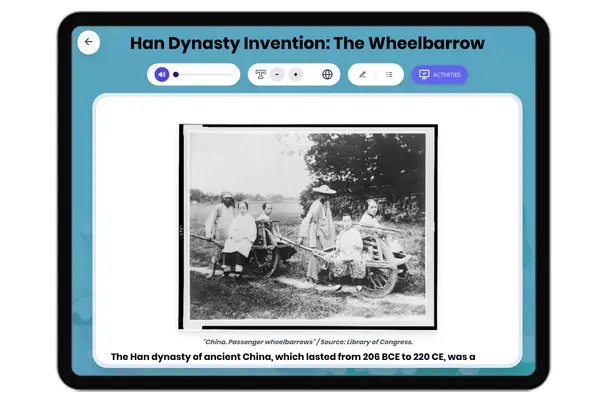
Han Dynasty: Wheelbarrow
This passage explores the invention and historical significance of the wheelbarrow during the Han dynasty in ancient Chi...
CA HSS 6.6CCSS RH.6-8.1RH.6-8.2RH.6-8.4
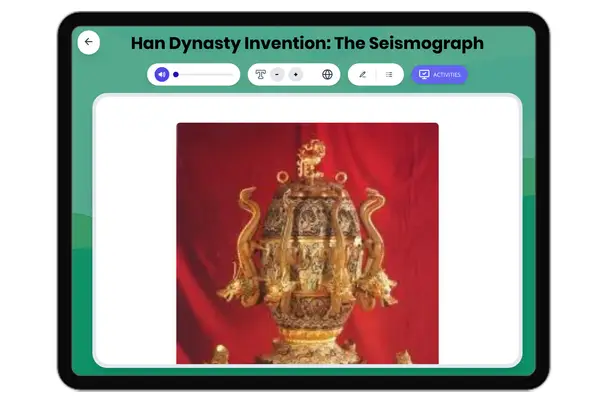
Han Dynasty: Seismograph
Discover the groundbreaking invention of the seismograph during the Han dynasty in ancient China in this engaging histor...
HSS 6.6.7RH.6-8.1RH.6-8.2WHST.6-8.2
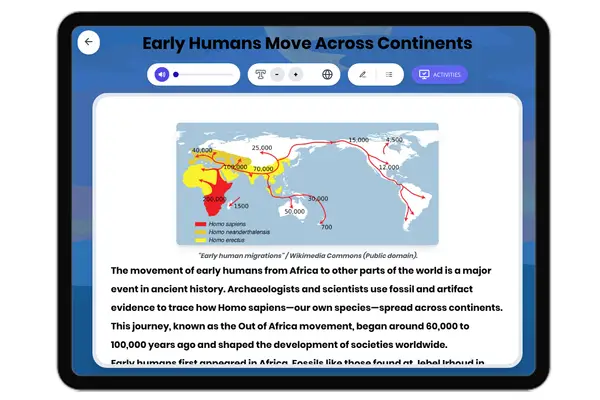
Early Human Migration
This comprehensive history reading passage explores the Out of Africa movement and how early humans migrated across cont...
CA HSS 6.1.1CCSS RH.6-8.1RH.6-8.2RH.6-8.4
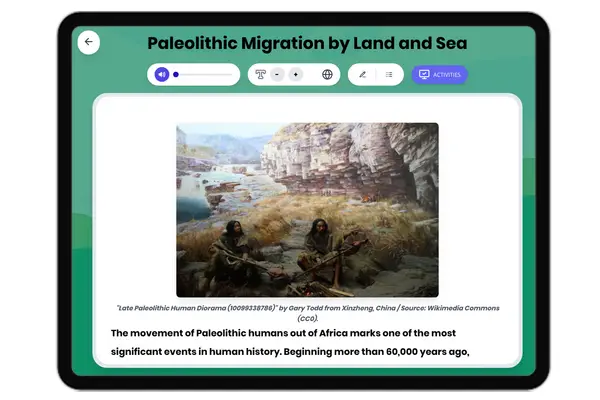
Paleolithic Migration by Land and Sea
This passage explores the migration of Paleolithic humans from Africa to the rest of the world, focusing on the routes t...
6.1RH.6-8.1RH.6-8.2RH.6-8.4
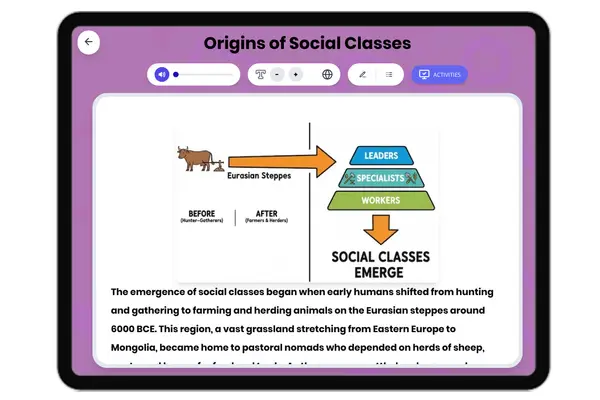
Origins of Social Classes
This engaging history reading passage explores how the rise of farming and the spread of pastoral nomads across the Eura...