The Governor’s Job: Leading the State
Interactive passage with audio narration, comprehension questions, and printable PDF.
By completing this purchase you agree to our Terms of Use and Privacy Policy. Your subscription renews automatically until you cancel. You can cancel anytime from your account settings. All sales are final and non-refundable. Digital content is available for download in your account immediately upon purchase.
What's included
Part of this bundle

The Governor’s Job: Leading the State preview and details
About this printable The Governor’s Job: Leading the State reading passage (Grades 3-5)
Sample passage and quiz from The Governor’s Job: Leading the State
Reading passage and comprehension quiz preview
California Governor Role
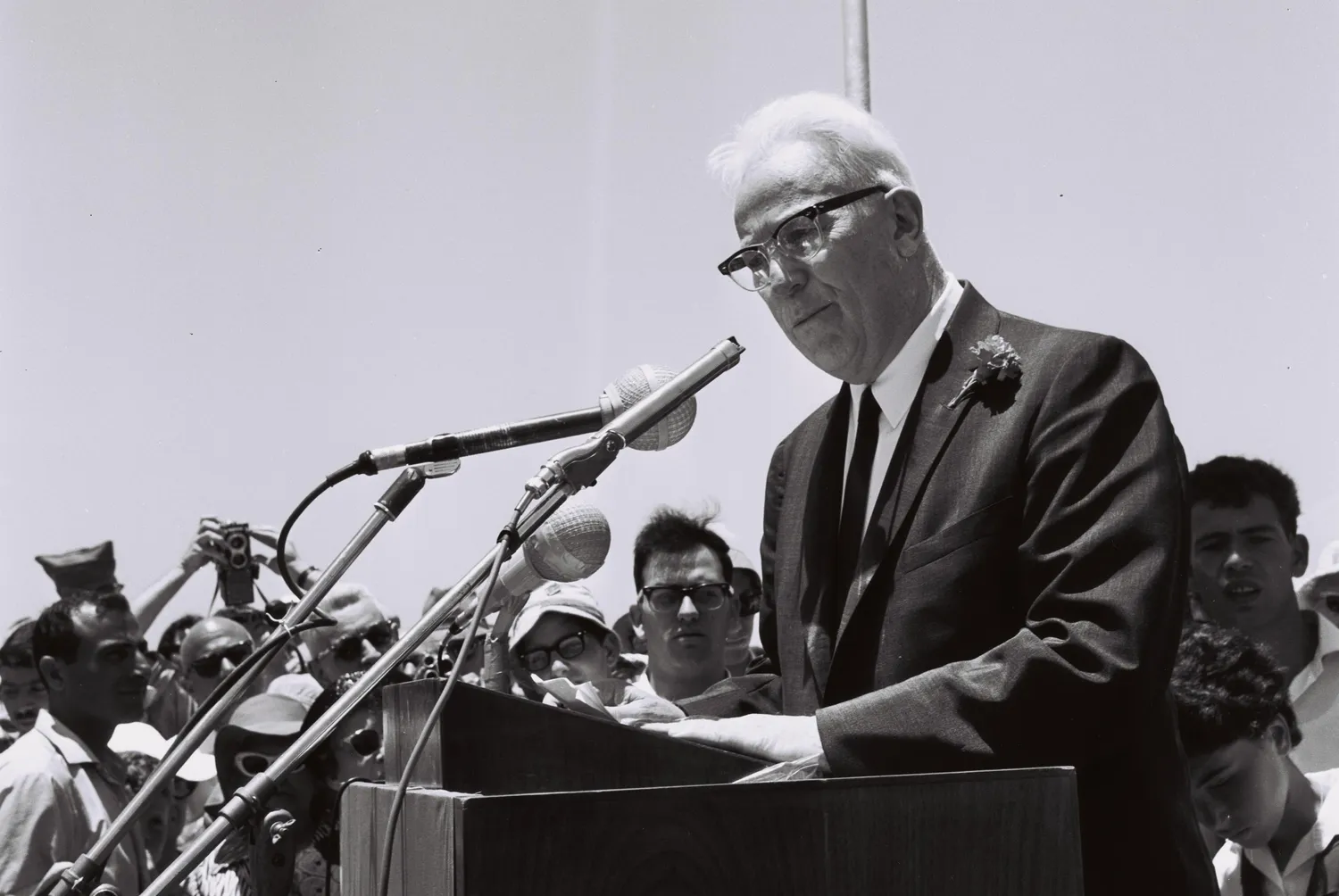
"Earl Warren 1966-07-04" by Moshe Pridan.
Source: Wikimedia Commons (Public domain).
The California governor is the leader of the state’s executive branch. The governor’s job is important because California is home to more people than any other state in America. The governor helps make sure the state government runs smoothly and serves all its citizens.
One of the governor’s main jobs is to create and suggest a yearly budget. This means the governor decides how much money should be spent on schools, roads, parks, and other state services. The governor works with lawmakers to make sure the budget is fair and meets the needs of the people. If lawmakers agree, the budget becomes law.
The governor also has the power to sign new laws or veto them. If the state legislature passes a bill, the governor reviews it. If the governor thinks it will help the people, they sign it. If the governor disagrees, they can veto, or reject, the bill. This is part of the governor’s leadership role and one example of their gubernatorial powers.
Another big responsibility is commanding the California National Guard. The National Guard helps in emergencies like fires, floods, or earthquakes. When needed, the governor gives orders to keep people safe. The governor also leads many state agencies, making decisions that affect the environment, businesses, and health care.
California governors have faced many challenges. For example, they have helped lead the state through natural disasters and times of economic change. They have also led efforts for fairness and equality in schools and jobs. The governor’s choices can have a big effect on millions of people.
The job of governor takes strong leadership and problem-solving skills. The governor must listen to many voices, make tough decisions, and always think about what is best for California. The actions of the California governor often influence the rest of the country because of the state’s size and importance.
Interesting Fact: The California governor lives in the state capital, Sacramento, and often works in the historic California State Capitol building.
Comprehension quiz (8 questions)
1. Who leads California's executive branch?
2. What does the governor suggest each year?
3. Where does the governor often work?
4. Why is the governor's job important?
5. What happens if the governor vetoes a bill?
6. How does the governor help in emergencies?
7. The governor is part of the executive branch. True or false?
8. What is a 'veto'?
Common Core standards for The Governor’s Job: Leading the State
Explain events, procedures, ideas, or concepts in a historical, scientific, or technical text, including what happened and why, based on specific information in the text.
Determine the meaning of general academic and domain-specific words or phrases in a text relevant to a grade 4 topic or subject area.
Write informative/explanatory texts to examine a topic and convey ideas and information clearly.
Perfect for the way you teach
- Build comprehension skills
- Auto-graded quiz
- Differentiated reading
- Read together at home
- Improve fluency
- Quiet reading time
- Reading curriculum support
- Independent practice
- Track Lexile growth