The Great Irish Famine
Interactive passage with audio narration, comprehension questions, and printable PDF.
By completing this purchase you agree to our Terms of Use and Privacy Policy. Your subscription renews automatically until you cancel. You can cancel anytime from your account settings. All sales are final and non-refundable. Digital content is available for download in your account immediately upon purchase.
What's included
The Great Irish Famine preview and details
About this printable The Great Irish Famine reading passage (Grades 6-8)
Sample passage and quiz from The Great Irish Famine
Reading passage and comprehension quiz preview
Great Irish Famine
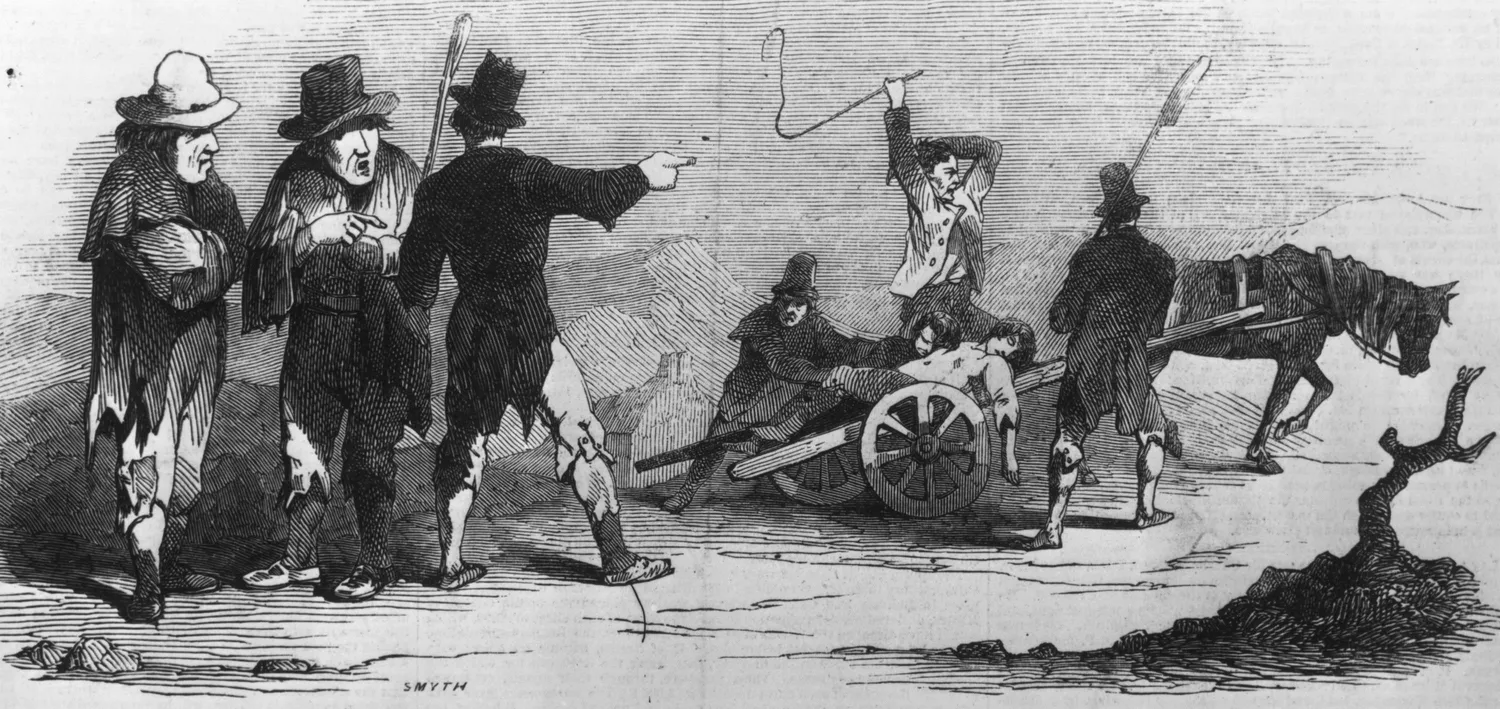
"The Famine in Ireland, Funeral at Skibbereen" by Frederick James Smyth / Wikimedia Commons (Public domain).
The Great Irish Famine began in 1845, when a disease called potato blight ruined much of Ireland’s potato crop. Potatoes were the main food for many Irish families, so the loss of this harvest caused a severe famine. A famine happens when there is not enough food for a population. Between 1845 and 1852, over a million people in Ireland died from starvation or disease. Another million left their homeland in search of survival, leading to massive migration across the Atlantic Ocean.
Many Irish immigrants chose the United States as their destination. The journey was extremely difficult. Immigrants traveled on crowded ships, often called "coffin ships" because of poor conditions and high death rates. Upon arrival in American cities such as New York and Boston, they faced new challenges. Many Americans at the time viewed the Irish with suspicion and prejudice, often blaming them for taking jobs or changing city life. Despite these obstacles, Irish immigrants played an important role in the nation’s growth.
In the United States, Irish immigrants became a major source of labor for factories, railroads, and construction projects. Their willingness to take difficult and low-paying jobs helped fuel American industrialization. However, Irish communities often lived in crowded, unsanitary neighborhoods called "slums." Poor living conditions led to health problems, but Irish families supported each other through strong community networks and cultural traditions.
The Great Irish Famine and the resulting wave of immigration dramatically changed American society. Irish Americans formed organizations, built churches, and influenced politics, especially in major cities. Some became leaders in the labor movement, fighting for workers’ rights and better pay. Over time, Irish immigrants and their descendants helped shape the identity of the United States, contributing to music, literature, and civic life.
Although the Irish faced discrimination and hardship, their experience is an important example of how adversity can lead to resilience and lasting change. The story of the Irish in America highlights both the difficulties of assimilation and the opportunities that migration can offer.
Interesting Fact: During the famine years, some Irish immigrants sent money back to their families in Ireland. These "remittances" helped relatives survive and eventually became an important part of the global economy.
Comprehension quiz (8 questions)
1. What caused the Great Irish Famine?
2. When did the famine begin?
3. What was a main food in Ireland?
4. Why were ships called 'coffin ships'?
5. How did Irish immigrants help U.S. cities?
6. Why did Irish immigrants face hardship?
7. Irish immigrants never sent money home. True or false?
8. What does 'assimilation' mean?
Perfect for the way you teach
- Build comprehension skills
- Auto-graded quiz
- Differentiated reading
- Read together at home
- Improve fluency
- Quiet reading time
- Reading curriculum support
- Independent practice
- Track Lexile growth