What Happens When Cars Collide
Interactive passage with audio narration, comprehension questions, and printable PDF.
By completing this purchase you agree to our Terms of Use and Privacy Policy. Your subscription renews automatically until you cancel. You can cancel anytime from your account settings. All sales are final and non-refundable. Digital content is available for download in your account immediately upon purchase.
What's included
What Happens When Cars Collide preview and details
About this printable What Happens When Cars Collide science reading passage, NGSS-aligned (Grades 3-5)
Sample passage and quiz from What Happens When Cars Collide
Reading passage and comprehension quiz preview
What Happens When Cars Collide
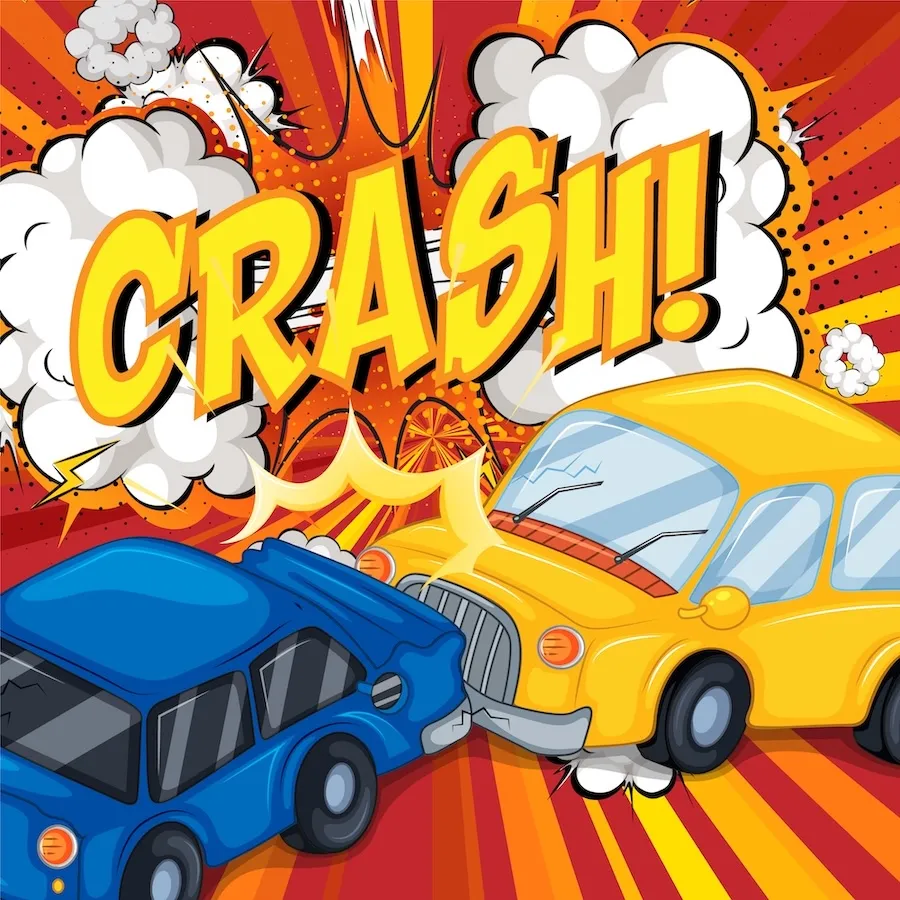
When two cars crash into each other, something important happens to their energy. A moving car has kinetic energy, which is the energy of motion. During a collision, this kinetic energy doesn't just disappear. Instead, it transfers (moves) to other objects or transforms (changes) into different forms of energy.
When one moving car hits another car, some kinetic energy transfers to the second car, making it move. The rest of the energy transforms into other forms. Some becomes sound energy—that's the loud crash you hear. Some becomes heat energy, warming up the metal. Much of the energy goes into bending and crumpling the metal parts of the cars.
The speed of the car matters a lot. A car moving at high speed has much more kinetic energy than a slow-moving car. This is why crashes at highway speeds cause much more damage than crashes in parking lots. The greater the kinetic energy, the more energy must transfer and transform during the collision.
Car engineers design special crumple zones in the front and back of cars. These are parts that bend and fold during a crash. Crumple zones absorb energy gradually, like catching a ball with your hands instead of letting it hit a wall. This reduces the force (push or pull) on the passengers inside, helping keep them safer during a collision.
Comprehension quiz (8 questions)
1. What is kinetic energy?
2. What happens to energy during a crash?
3. Why do fast cars cause more damage?
4. How do crumple zones help passengers?
5. What forms does energy transform into?
6. Where are crumple zones located on cars?
7. Energy disappears during a car collision.
8. What does the word 'transfer' mean?
Perfect for the way you teach
- Build comprehension skills
- Auto-graded quiz
- Differentiated reading
- Read together at home
- Improve fluency
- Quiet reading time
- Reading curriculum support
- Independent practice
- Track Lexile growth