This learning resource is available in interactive and printable formats. The interactive worksheet can be played online and assigned to students. The Printable PDF version can be downloaded and printed for completion by hand.
This Grade 4 science reading passage explains how animals digest food and aligns with NGSS standard 4-LS1-1. Students discover how the digestive system breaks down food into tiny pieces called nutrients that the body uses for energy and growth. The passage describes the journey of food through the mouth, stomach, and intestines, explaining how acids break food apart and how nutrients are absorbed into the blood. Students also learn that different animals have different digestive structures depending on what they eat—cows have four stomach chambers for digesting grass, while birds have a gizzard to grind food. This audio-integrated resource includes a simplified differentiated version, Spanish translations, interactive multiple-choice questions, writing activities, and graphic organizers. The materials help students build foundational understanding of animal structures and functions through accessible, grade-appropriate language and real-world examples that connect to the NGSS Disciplinary Core Idea LS1.A: Structure and Function.
CONTENT PREVIEW
Expand content preview
How food turns into energy.
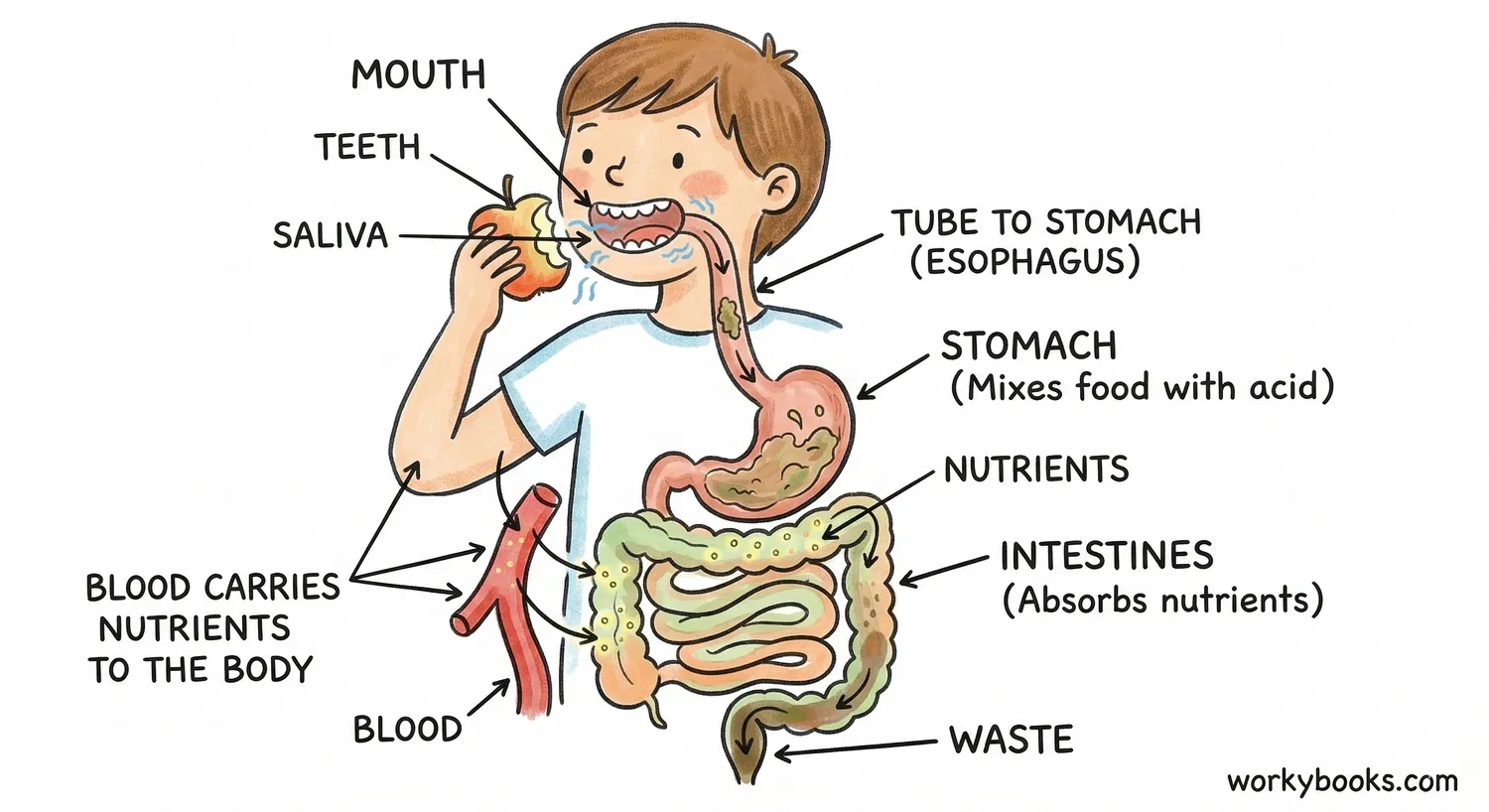
Digestion is the process of breaking down food into tiny pieces that the body can use. Animals need digestion because the body cannot use whole pieces of food for energy and growth. The food must be broken into very small parts called nutrients that can travel through the blood to all parts of the body.
When you eat, food enters your mouth first. Your teeth chew the food into smaller pieces, and saliva makes it wet and easier to swallow. The food then travels down a tube into your stomach. The stomach is like a muscular bag that squeezes the food and mixes it with special liquids called acids. These acids break the food into even tinier pieces.
After the stomach, the food moves into long tubes called intestines. In the intestines, nutrients from the food are absorbed into the blood. The blood carries these nutrients to every cell in your body so you can grow, move, and think. Whatever the body cannot use becomes waste and leaves the body.
Different animals have digestive systems that match what they eat. Cows eat grass, which is hard to digest, so they have four stomach chambers to break it down completely. Birds do not have teeth, so they have a special organ called a gizzard that grinds food into small pieces.
Interesting Fact: A cow's digestive system is so powerful that it can turn grass into milk! The nutrients from grass travel through all four stomach chambers before being absorbed into the cow's blood.
What are nutrients?
Whole pieces of foodTiny pieces the body usesLiquids in the stomachTubes in the body
Where does food go after the mouth?
Directly to the intestinesInto the bloodDown to the stomachTo the gizzard
How many stomach chambers do cows have?
One chamberTwo chambersThree chambersFour chambers
Why do nutrients travel through blood?
To reach all body partsTo leave the bodyTo make wasteTo chew food
What does the gizzard do in birds?
Absorbs nutrients into bloodMakes saliva wetGrinds food into piecesStores waste
Where are nutrients absorbed into blood?
In the mouthIn the stomachIn the intestinesIn the gizzard
Acids in the stomach make food bigger.
TrueFalse
What does digestion mean?
Eating whole pieces of foodBreaking down food into piecesRemoving waste from bodyCarrying blood through body
Perfect For:
👩🏫 Teachers
• Reading comprehension practice
• Auto-graded assessments
• Literacy skill development
👨👩👧👦 Parents
• Reading practice at home
• Comprehension improvement
• Educational reading time
🏠 Homeschoolers
• Reading curriculum support
• Independent reading practice
• Progress monitoring
Reading Features:
📖
Reading Passage
Engaging fiction or nonfiction text
❓
Comprehension Quiz
Auto-graded questions
📊
Instant Feedback
Immediate results and scoring
📄
Printable Version
Download for offline reading
🔊
Read Aloud
Voice-over with word highlighting
Reviews & Ratings
No reviews yet. Be the first to share your experience!
Related Content
How Animals See Differently
This engaging 250-word reading passage introduces fourth-grade students to the fascinating world of animal vision and ey...
NGSS 4-LS1-1LS1.D
Animal Internal Structure
This engaging science passage for Grade 4-5 students explores animal internal structure and how organs work together to ...
NGSS 4-LS1-1
What Are Bones Made Of
This engaging 250-word reading passage introduces Grade 4 students to the structure and function of bones, aligned with ...
NGSS 4-LS1-1LS1.A
How Bones Protect Organs
This engaging 250-word reading passage helps Grade 4 students understand how bones protect organs, aligned with NGSS sta...
NGSS 4-LS1-1LS1.A
How Joints Connect Bones
This 250-word reading passage teaches fourth-grade students about joints and their role in the human skeletal system. Al...
NGSS 4-LS1-1LS1.A
How Muscles Move Bones
This comprehensive 250-word reading passage introduces fourth-grade students to the fundamental concept of how muscles a...
NGSS 4-LS1-1
Two Types of Muscles
This 250-word reading passage introduces fourth-grade students to the two main types of muscles in the human body: volun...
NGSS 4-LS1-1
What Are Muscles
This engaging 250-word reading passage introduces fourth-grade students to the essential concept of muscles and how they...
NGSS 4-LS1-1
How Skin Protects Body
This audio-integrated reading passage introduces fourth-grade students to the protective functions of skin, aligned with...
NGSS 4-LS1-1
Layers of the Skin
This engaging 250-word reading passage introduces fourth-grade students to the three layers of skin and their functions....
NGSS 4-LS1-1LS1.A
What Are Plant Structures
This engaging 250-word reading passage introduces fourth-grade students to the fundamental concept of plant structures a...
NGSS 4-LS1-1
Parts of Plant Stems
This engaging 250-word reading passage introduces fourth-grade students to the internal structure and function of plant ...
NGSS 4-LS1-1LS1.A
How Water Moves Inside Plants
This 250-word reading passage introduces fourth-grade students to the concept of water transport in plants, aligned with...
NGSS 4-LS1-1
Parts of a Flower
This comprehensive 250-word reading passage introduces fourth-grade students to the essential parts of a flower and thei...
NGSS 4-LS1-1LS1.A
How Fish Gills Work
This engaging 250-word reading passage introduces fourth-grade students to the concept of fish gills and how they functi...
NGSS 4-LS1-1
How Leaves Make Food
This engaging Grade 4 science reading passage explains how leaves make food through photosynthesis. Students discover th...
NGSS 4-LS1-1LS1.A
How Animal Hearts Work
This 250-word audio-integrated reading passage introduces fourth-grade students to the essential function of the heart a...
NGSS 4-LS1-1LS1.A
Animal Skeleton Structure
This 250-word reading passage introduces fourth grade students to animal skeleton structure, aligned with NGSS 4-LS1-1 a...
NGSS 4-LS1-1LS1.A
How Animal Lungs Work
This 250-word reading passage introduces fourth-grade students to how animal lungs work, aligned with NGSS standard 4-LS...
NGSS 4-LS1-1LS1.A
What Is Inside a Seed
This engaging 250-word reading passage helps Grade 4 students understand the internal structure of seeds, aligned with N...