This learning resource is available in interactive and printable formats. The interactive worksheet can be played online and assigned to students. The Printable PDF version can be downloaded and printed for completion by hand.
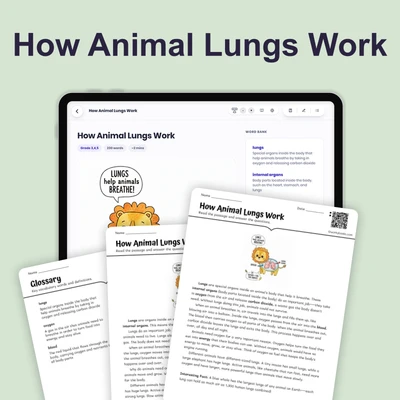
This engaging 250-word science reading passage helps Grade 4 students understand the differences between lungs and gills as respiratory structures. Aligned with NGSS standard 4-LS1-1, the passage explains how lungs take oxygen from air while gills extract oxygen from water. Students explore why different environments require different body structures for the same function of getting oxygen into the body. The passage uses simple, age-appropriate language and real-world examples to build foundational understanding of animal structures and their functions. Audio integration supports diverse learners by providing text-to-speech functionality. The passage includes bolded vocabulary terms with immediate definitions, helping students learn key science terminology in context. Accompanying activities include multiple-choice comprehension questions, writing prompts, and graphic organizers that reinforce understanding of structure-function relationships. This resource is perfect for introducing respiratory systems, comparing animal adaptations, and preparing students for hands-on investigations about how different animals meet their needs in various environments. The passage supports the NGSS Disciplinary Core Idea LS1.A: Structure and Function.
CONTENT PREVIEW
Expand content preview
Lungs breathe air; gills breathe water.
All animals need oxygen to survive. Oxygen is a gas that the body uses to make energy. Animals get oxygen in different ways depending on where they live.
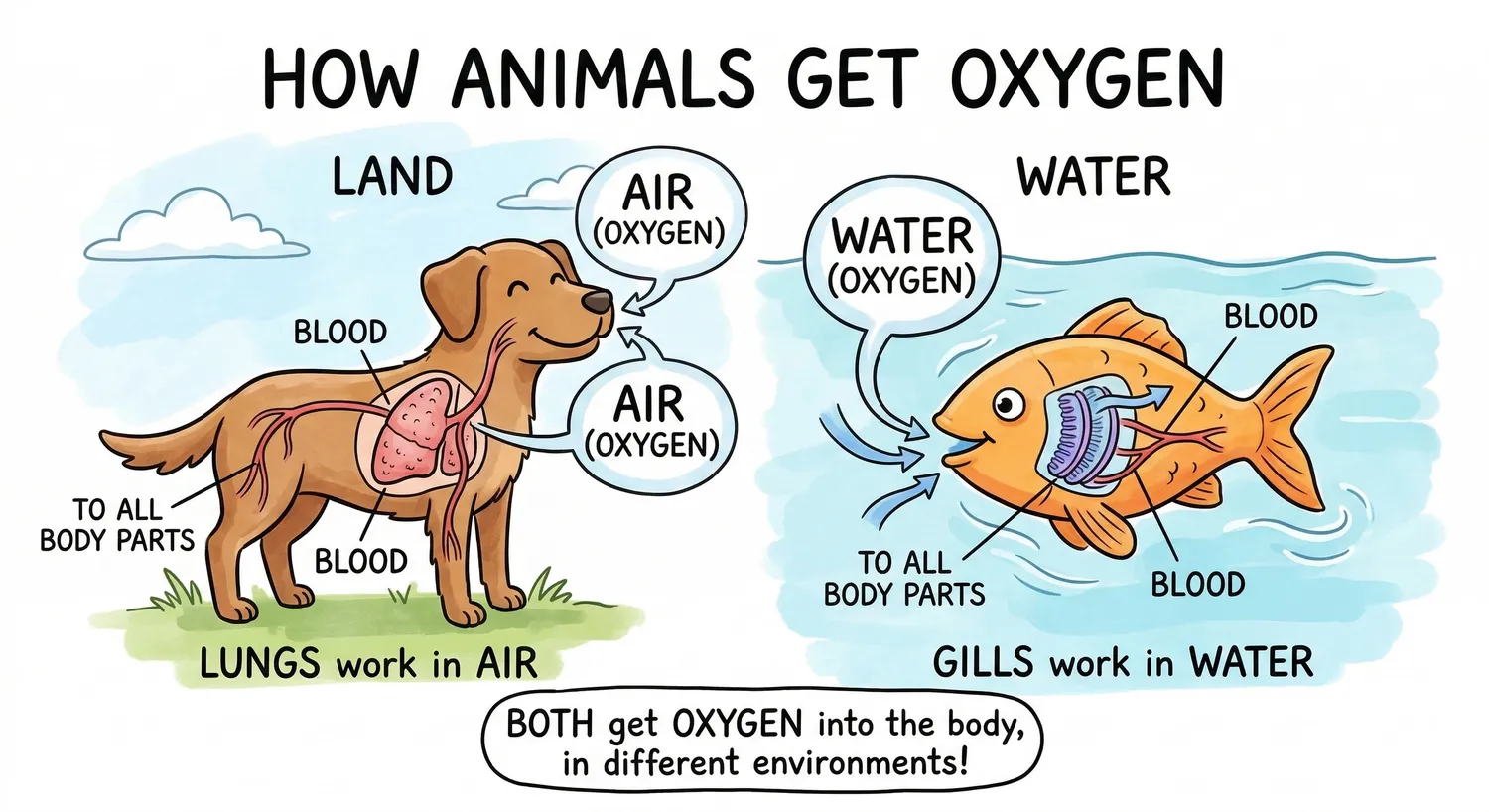
Lungs are body parts that take oxygen from air. Lungs are inside the chest of animals like humans, dogs, and birds. When you breathe in, air enters your lungs. The lungs pull oxygen out of the air and send it into the blood. The blood carries oxygen to all parts of the body. Animals with lungs cannot breathe underwater because their lungs only work with air.
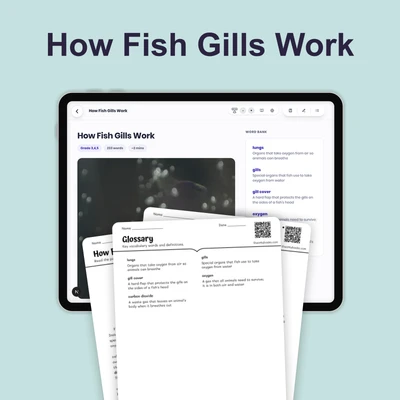
Gills are body parts that take oxygen from water. Gills are located near the head of animals like fish and tadpoles. Water flows over the gills, and the gills pull oxygen out of the water. Just like lungs send oxygen to the blood, gills do the same thing. Most fish cannot breathe air because their gills only work in water.
Both lungs and gills do the same job—they get oxygen into the body. But they work in different places. Lungs work in air. Gills work in water. Different environments, or surroundings, require different structures, or body parts. This is why land animals have lungs and water animals have gills.
Interesting Fact: Some animals, like lungfish and certain frogs, have both lungs and gills at different times in their lives! This helps them survive in water when they are young and on land when they grow up.
What do all animals need to survive?
OxygenGillsLungsWater
Where are lungs located in the body?
Near the headInside the chestIn the stomachOn the skin
What do gills take oxygen from?
AirFoodWaterSoil
Why can't fish breathe on land?
Their gills only work in waterThey don't have bloodThey are too smallThey don't need oxygen
How do lungs and gills differ?
They work in different environmentsOnly lungs send oxygen to bloodGills don't get oxygenLungs are only in fish
What carries oxygen throughout the body?
AirBloodWaterGills
Lungs and gills do the same job.
TrueFalse
What does environment mean in the passage?
Body partsType of oxygenSurroundings where animals liveHow animals move
Perfect For:
👩🏫 Teachers
• Reading comprehension practice
• Auto-graded assessments
• Literacy skill development
👨👩👧👦 Parents
• Reading practice at home
• Comprehension improvement
• Educational reading time
🏠 Homeschoolers
• Reading curriculum support
• Independent reading practice
• Progress monitoring
Reading Features:
📖
Reading Passage
Engaging fiction or nonfiction text
❓
Comprehension Quiz
Auto-graded questions
📊
Instant Feedback
Immediate results and scoring
📄
Printable Version
Download for offline reading
🔊
Read Aloud
Voice-over with word highlighting
Reviews & Ratings
No reviews yet. Be the first to share your experience!
Related Content
How Animals See Differently
This engaging 250-word reading passage introduces fourth-grade students to the fascinating world of animal vision and ey...
NGSS 4-LS1-1LS1.D
Animal Internal Structure
This engaging science passage for Grade 4-5 students explores animal internal structure and how organs work together to ...
NGSS 4-LS1-1
What Are Bones Made Of
This engaging 250-word reading passage introduces Grade 4 students to the structure and function of bones, aligned with ...
NGSS 4-LS1-1LS1.A
How Bones Protect Organs
This engaging 250-word reading passage helps Grade 4 students understand how bones protect organs, aligned with NGSS sta...
NGSS 4-LS1-1LS1.A
How Joints Connect Bones
This 250-word reading passage teaches fourth-grade students about joints and their role in the human skeletal system. Al...
NGSS 4-LS1-1LS1.A
How Muscles Move Bones
This comprehensive 250-word reading passage introduces fourth-grade students to the fundamental concept of how muscles a...
NGSS 4-LS1-1
Two Types of Muscles
This 250-word reading passage introduces fourth-grade students to the two main types of muscles in the human body: volun...
NGSS 4-LS1-1
What Are Muscles
This engaging 250-word reading passage introduces fourth-grade students to the essential concept of muscles and how they...
NGSS 4-LS1-1
How Skin Protects Body
This audio-integrated reading passage introduces fourth-grade students to the protective functions of skin, aligned with...
NGSS 4-LS1-1
Layers of the Skin
This engaging 250-word reading passage introduces fourth-grade students to the three layers of skin and their functions....
NGSS 4-LS1-1LS1.A
What Are Plant Structures
This engaging 250-word reading passage introduces fourth-grade students to the fundamental concept of plant structures a...
NGSS 4-LS1-1
Parts of Plant Stems
This engaging 250-word reading passage introduces fourth-grade students to the internal structure and function of plant ...
NGSS 4-LS1-1LS1.A
How Water Moves Inside Plants
This 250-word reading passage introduces fourth-grade students to the concept of water transport in plants, aligned with...
NGSS 4-LS1-1
Parts of a Flower
This comprehensive 250-word reading passage introduces fourth-grade students to the essential parts of a flower and thei...
NGSS 4-LS1-1LS1.A
How Fish Gills Work
This engaging 250-word reading passage introduces fourth-grade students to the concept of fish gills and how they functi...
NGSS 4-LS1-1
How Leaves Make Food
This engaging Grade 4 science reading passage explains how leaves make food through photosynthesis. Students discover th...
NGSS 4-LS1-1LS1.A
How Animal Hearts Work
This 250-word audio-integrated reading passage introduces fourth-grade students to the essential function of the heart a...
NGSS 4-LS1-1LS1.A
Animal Skeleton Structure
This 250-word reading passage introduces fourth grade students to animal skeleton structure, aligned with NGSS 4-LS1-1 a...
NGSS 4-LS1-1LS1.A
How Animal Lungs Work
This 250-word reading passage introduces fourth-grade students to how animal lungs work, aligned with NGSS standard 4-LS...
NGSS 4-LS1-1LS1.A
What Is Inside a Seed
This engaging 250-word reading passage helps Grade 4 students understand the internal structure of seeds, aligned with N...