Earthquake Resources for Middle School
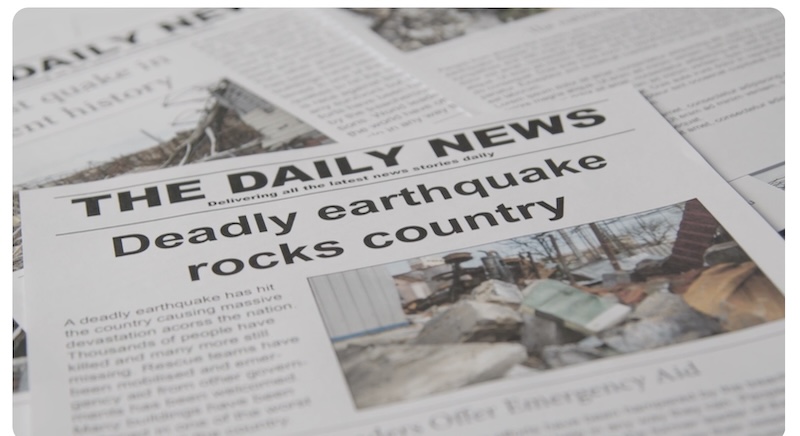
Understanding earthquakes is a fundamental part of earth science education. These comprehensive earthquake resources covers what causes earthquakes, how they’re measured, where they occur most frequently, and essential earthquake safety tips—all designed for middle school students in grades 5-8.
What is an Earthquake?
An earthquake is a sudden shaking of the ground caused by the movement of rocks beneath Earth’s surface. When large sections of rock break or shift along a fault line, they release energy that travels through the ground as seismic waves. This energy causes the trembling and shaking we feel during an earthquake.
Think of it like this: if you bend a plastic ruler and suddenly let go, it snaps back and vibrates. The same principle applies to rocks deep underground. They build up stress over time, and when they finally break or slip, that stored energy releases all at once.
What Causes Earthquakes? A Simple Explanation
To understand what causes earthquakes, we first need to understand plate tectonics—the theory that explains how Earth’s outer layer moves and changes.
Earth’s Layers and Tectonic Plates
Earth’s outer layer, called the crust, isn’t one solid piece. Instead, it’s broken into massive sections called tectonic plates. These plates float on a layer of hot, semi-liquid rock called the mantle. There are about 15 major plates and several smaller ones, all constantly moving—though very slowly, usually just a few centimeters per year.
Fault Lines: Where Earthquakes Happen
Fault lines are cracks in Earth’s crust where tectonic plates meet and interact. These boundaries are where most earthquakes occur.
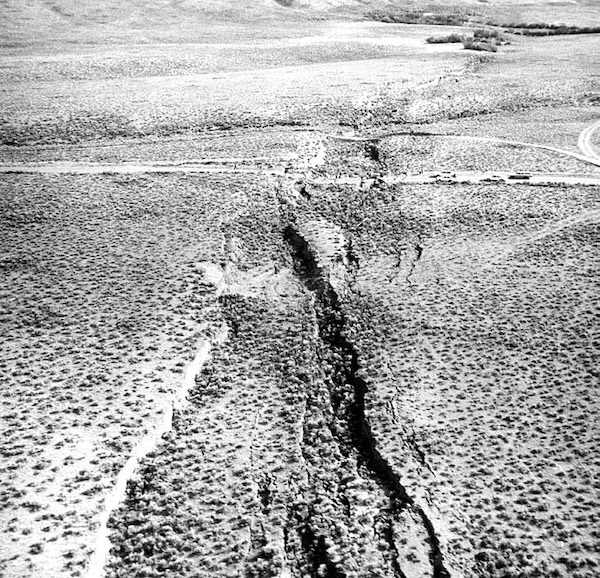
Fault scarps that outline the trough (graben) produced during the 1983 Borah Peak earthquake. Photo taken near Willow Creek at Doublespring Pass Road., R.E. Wallace, USGS Earthquake Information Bulletin 501, Wikimedia Commons
The three main types of plate boundaries are:
- Convergent boundaries – where plates push toward each other
- Divergent boundaries – where plates pull apart from each other
- Transform boundaries – where plates slide past each other horizontally
The San Andreas Fault
The San Andreas Fault in California is a famous example of a transform boundary, where the Pacific Plate and North American Plate grind past each other. This 800-mile fault system runs through California and is responsible for many of the state’s earthquakes, including the devastating 1906 San Francisco earthquake.
📖 Earthquake Resources Reading Passage: San Andreas Fault
The Earthquake Process
When tectonic plates move, friction along fault lines can cause rocks to lock together. Stress builds up over years, decades, or even centuries. Eventually, the stress becomes too great, and the rocks suddenly slip or break. This sudden release of energy creates seismic waves that radiate outward from the break point, causing an earthquake.
Types of Seismic Waves
When an earthquake occurs, it produces different types of seismic waves that travel through Earth in different ways. Scientists use instruments called seismographs to detect and record these waves.
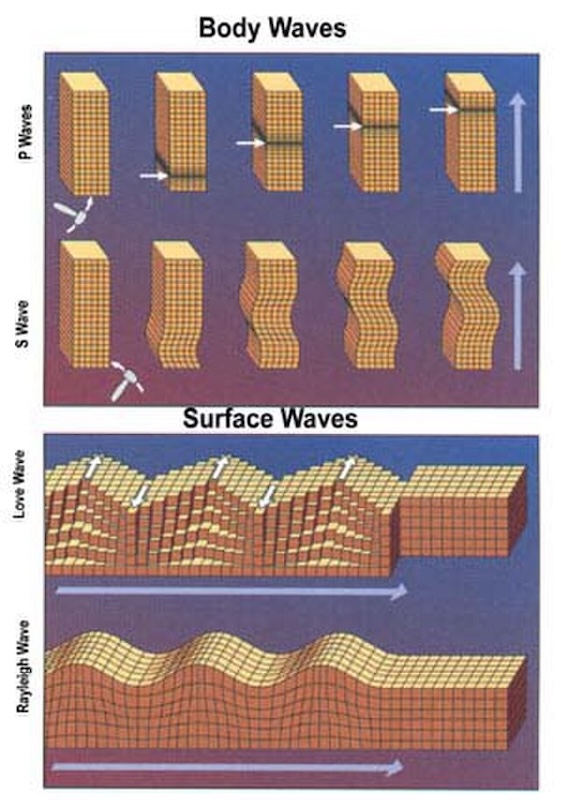
A seismic wave is an elastic wave generated by an impulse such as an earthquake or an explosion. Seismic waves may travel either along or near the earth’s surface (Rayleigh and Love waves) or through the earth’s interior (P and S waves).https://earthquake.usgs.gov/, Wikimedia Commons
📖 Earthquake Resources Reading Passage: Seismic Waves
P Waves (Primary Waves)
P waves are the fastest seismic waves and the first to arrive at a seismograph station after an earthquake. They’re also called “push-pull” waves because they compress and expand rock as they travel—similar to how sound waves move through air. P waves can travel through solids, liquids, and gases.
S Waves (Secondary Waves)
S waves are slower than P waves and arrive second at seismograph stations. They move rock side-to-side or up-and-down, perpendicular to the direction they’re traveling—like a wave moving through a rope when you shake it. S waves can only travel through solid material, which is why they don’t pass through Earth’s liquid outer core.
📖 Reading Passage: P Waves vs S Waves
Surface Waves
Surface waves travel along Earth’s surface and are usually the slowest but most destructive seismic waves. They cause most of the damage during an earthquake because they move the ground in complex rolling and shaking motions.
Key Difference Between P Waves and S Waves:
| Feature | P Waves | S Waves |
|---|---|---|
| Speed | Fastest | Slower |
| Arrival | First | Second |
| Motion | Push-pull (compression) | Side-to-side (shear) |
| Travel through liquids? | Yes | No |
How Are Earthquakes Measured?
Scientists measure earthquakes using two main scales: magnitude and intensity.
📖 Earthquake Resources Reading Passage: Measuring Earthquakes
The Richter Scale and Magnitude
The Richter scale measures the magnitude of an earthquake—the total energy released at the earthquake’s source. Developed by Charles Richter in 1935, this scale uses numbers typically ranging from 0 to 10.
Here’s what different magnitudes feel like:
- Magnitude 2.0-2.9: Usually not felt, but recorded by seismographs
- Magnitude 3.0-3.9: Often felt, but rarely causes damage
- Magnitude 4.0-4.9: Noticeable shaking; items may rattle
- Magnitude 5.0-5.9: Can cause damage to weak buildings
- Magnitude 6.0-6.9: Can cause serious damage in populated areas
- Magnitude 7.0-7.9: Major earthquake; serious damage over large areas
- Magnitude 8.0+: Great earthquake; severe destruction
Important to know: the Richter scale is logarithmic, meaning each whole number increase represents 10 times more ground motion and about 31 times more energy released. A magnitude 7.0 earthquake releases over 900 times more energy than a magnitude 5.0 earthquake!
The Mercalli Intensity Scale
While magnitude measures energy at the source, the Mercalli scale measures intensity—how strong the shaking feels at a specific location. Intensity depends on distance from the epicenter, local soil conditions, and building construction.
How Seismographs Work
A seismograph (or seismometer) is the instrument scientists use to detect and record seismic waves. Modern seismographs use electronic sensors, but the basic principle remains the same: a heavy mass stays relatively still while the ground (and the instrument’s frame) moves around it during an earthquake.
The recording a seismograph produces is called a seismogram. By analyzing seismograms from multiple stations, scientists can determine an earthquake’s location, depth, and magnitude.
📖 Earthquake Resources Reading Passage: Seismograph
Epicenter vs. Hypocenter: What’s the Difference?
Two terms students often confuse are epicenter and hypocenter (also called the focus):
- Hypocenter (Focus): The actual point underground where the earthquake begins—where rocks first break or slip
- Epicenter: The point on Earth’s surface directly above the hypocenter
News reports typically mention the epicenter because it indicates where surface damage will likely be greatest.
Where Do Earthquakes Occur Most?
Earthquakes don’t happen randomly around the world. They concentrate along plate boundaries, especially around the Pacific Ocean.
📖 Earthquake Resources Reading Passage: Earthquake Zones and Patterns
Earthquake Resource-Ring of Fire
The Ring of Fire is a horseshoe-shaped zone surrounding the Pacific Ocean where about 75% of the world’s earthquakes occur. This region includes the coasts of South America, Central America, North America (including California and Alaska), Japan, the Philippines, Indonesia, and New Zealand.
The Ring of Fire is so seismically active because it contains numerous subduction zones—places where one tectonic plate slides beneath another. This process creates intense geological activity, producing both earthquakes and volcanic eruptions.
Major Earthquake Zones in the United States
Several regions in the United States experience frequent seismic activity:
California and the San Andreas Fault: Home to the San Andreas Fault system, California experiences thousands of small earthquakes each year and remains at risk for major seismic events.
The Cascadia Subduction Zone: Running from northern California through Oregon and Washington to British Columbia, this subduction zone poses one of the greatest earthquake risks in North America. Scientists believe it’s capable of producing magnitude 9.0+ earthquakes and devastating tsunamis.

Illustration of the Cascadia Subduction Zone, including the spreading center and subducting Juan de Fuca plate. Based on an illustration of Cascadia earthquake sources, with earthquakes removed and other minor edits made to make the figure useful for teaching about subduction zones. Carie Frantz, Public Domain Dedication, Wikimedia Commons.
📖 Earthquake Resources Reading Passage: Cascadia Subduction Zone
The New Madrid Seismic Zone: Surprisingly, some of the largest earthquakes in U.S. history occurred not on the West Coast, but in the central United States. The New Madrid Seismic Zone, centered near the Missouri-Arkansas border, produced a series of massive earthquakes in 1811-1812 that rang church bells as far away as Boston.
📖 Reading Passage: New Madrid Seismic Zone
Alaska: The most seismically active state, with more earthquakes than any other, including the 1964 Great Alaska Earthquake (magnitude 9.2).
Hawaii: Volcanic activity causes frequent small earthquakes.
Earthquake Effects and Damage
Earthquakes can cause many types of damage and secondary hazards.
📖 Earthquake Resources Reading Passage: Earthquake Hazards and Damage
Direct Effects
- Ground shaking: The primary cause of building damage and collapse
- Surface rupture: When fault movement breaks through to the surface
- Ground displacement: Permanent shifting of the ground
Secondary Effects
Tsunamis: Giant ocean waves triggered by underwater earthquakes. When a major earthquake occurs beneath the ocean floor, it can displace massive amounts of water, creating waves that travel across entire ocean basins at speeds up to 500 mph.
📖 Earthquake Resources Reading Passage: Tsunamis and Earthquakes
Liquefaction: One of the most dramatic earthquake hazards occurs when saturated, loose soil temporarily loses its strength and behaves like liquid during shaking. Buildings can sink, tilt, or even topple as the ground beneath them turns to a fluid-like state.
📖 Reading Passage: Liquefaction
Landslides: Shaking can destabilize hillsides and cliffs
Aftershocks and Foreshocks: Earthquakes rarely occur as isolated events. Foreshocks are smaller earthquakes that sometimes precede a larger main earthquake, while aftershocks are smaller earthquakes that follow the main quake—sometimes for weeks, months, or even years. Aftershocks can be dangerous because they may cause additional damage to already weakened structures.
📖 Earthquake Resources Reading Passage: Aftershocks and Foreshocks
Fires: Often caused by broken gas lines and damaged electrical systems
Earthquake Safety Tips for Students
Knowing what to do before, during, and after an earthquake can save lives.
📖 Earthquake Resources Reading Passage: Earthquake Safety and Preparedness
Before an Earthquake: Preparedness
- Learn the earthquake drill procedures at your school
- Identify safe spots in each room: under sturdy desks or tables, against interior walls
- Know the dangers: stay away from windows, heavy furniture, and items that could fall
- Help your family create an earthquake emergency kit with water, food, flashlight, first aid supplies, and important documents
During an Earthquake: Drop, Cover, and Hold On
The Drop, Cover, Hold On method is the recommended response:
- DROP to your hands and knees immediately
- COVER your head and neck under a sturdy desk or table; if no shelter is available, cover your head with your arms against an interior wall
- HOLD ON to your shelter and be prepared to move with it until the shaking stops
Important safety notes:
- Do NOT run outside during shaking
- Do NOT stand in a doorway (this is outdated advice)
- If in bed, stay there and cover your head with a pillow
- If outside, move away from buildings, trees, and power lines
- If driving, pull over safely, stop, and stay in the vehicle
After an Earthquake
- Expect aftershocks and be ready to Drop, Cover, and Hold On again
- Check yourself and others for injuries
- If indoors, exit carefully; watch for falling debris
- Stay away from damaged buildings
- Listen to emergency broadcasts for instructions
Can Earthquakes Be Predicted?
Currently, scientists cannot predict exactly when and where earthquakes will occur. However, they can:
- Identify high-risk zones based on fault lines and historical earthquake patterns
- Estimate probabilities of earthquakes occurring in certain regions over decades
- Issue early warnings seconds to minutes before shaking arrives at a location (using electronic systems that detect P waves)
Research continues into possible earthquake precursors—changes that might signal an impending earthquake—but reliable short-term prediction remains elusive.
Earthquake Engineering
Engineers design modern buildings in earthquake zones to withstand seismic forces. This field, known as earthquake engineering, combines physics, materials science, and structural design to save lives.
📖 Reading Passage: Earthquake Engineering
Key features of earthquake-resistant buildings include:
- Flexible foundations that can absorb ground motion
- Base isolators that separate buildings from ground shaking
- Cross-bracing and shear walls that resist lateral forces
- Lightweight construction materials that reduce the forces buildings must resist
- Structural redundancy so buildings don’t collapse if one element fails
STEM Challenge: Build an Earthquake-Proof Structure
A popular earthquake STEM challenge for middle school involves building model structures and testing them on a shake table. Students learn firsthand how different designs respond to seismic forces.
Key Earthquake Vocabulary Words for Students
- Aftershock: A smaller earthquake following the main earthquake
- Epicenter: The point on Earth’s surface directly above where an earthquake starts
- Fault: A crack in Earth’s crust where rocks have moved
- Foreshock: A smaller earthquake that occurs before a larger one
- Hypocenter (Focus): The underground point where an earthquake originates
- Liquefaction: When saturated soil loses strength and behaves like liquid during shaking
- Magnitude: A measure of the energy released by an earthquake
- P waves: The fastest seismic waves; can travel through all materials
- S waves: Slower seismic waves that only travel through solids
- Seismograph: An instrument that detects and records seismic waves
- Seismologist: A scientist who studies earthquakes
- Subduction zone: Where one tectonic plate slides beneath another
- Tectonic plates: Large sections of Earth’s crust that move slowly over time
- Tremor: A small earthquake or vibration in the ground
- Tsunami: A large ocean wave caused by an underwater earthquake or volcanic eruption
Earthquake Resources and Projects for Middle School
Ready to bring earthquake science to life in your classroom? Here are engaging activities aligned with NGSS standards:
Hands-On Earthquake Activities
- Earthquake Wave Demonstration: Use a Slinky to model P waves (compression) and S waves (transverse motion)
- Fault Model: Create a model using foam blocks to demonstrate different fault types and plate movements
- Seismograph Construction: Build a simple seismograph using a cardboard box, string, and marker to record simulated vibrations
- Liquefaction Experiment: Place a container of wet sand on a vibrating surface with a small object on top to observe how saturated soil responds to shaking
Earthquake Resources Project Ideas for Middle School
- Research and present on a famous historical earthquake
- Design and test earthquake-resistant structures
- Create an earthquake preparedness plan for your home
- Map recent earthquakes using USGS data
- Compare earthquake risks in different regions
📚 Earthquake Resources Reading Passages
Enhance your earthquake unit with our curriculum-aligned reading passages designed for middle school students:
| # | Reading Passage | Key Concepts Covered |
|---|---|---|
| 1 | What Causes Earthquakes? | Plate tectonics, stress buildup, energy release |
| 2 | Earthquake Faults | Fault types, plate boundaries, fault mechanics |
| 3 | Seismic Waves | Wave types, energy transfer, wave behavior |
| 4 | Measuring Earthquakes | Richter scale, Mercalli scale, magnitude vs intensity |
| 5 | Earthquake Hazards and Damage | Primary/secondary effects, destruction patterns |
| 6 | Earthquake Safety and Preparedness | Drop Cover Hold On, emergency planning |
| 7 | Earthquake Zones and Patterns | Global distribution, plate boundary connections |
| 8 | San Andreas Fault | Transform boundary, California geology, 1906 earthquake |
| 9 | Tsunamis and Earthquakes | Ocean floor displacement, wave formation, coastal hazards |
| 10 | Cascadia Subduction Zone | Pacific Northwest risk, subduction mechanics, megathrust earthquakes |
| 11 | New Madrid Seismic Zone | Intraplate earthquakes, 1811-1812 events, central US risk |
| 12 | Liquefaction | Soil behavior, saturation, structural damage |
| 13 | P Waves vs S Waves | Wave comparison, speed, material travel |
| 14 | Seismograph | Detection technology, seismograms, earthquake location |
| 15 | Earthquake Engineering | Building design, base isolation, structural safety |
| 16 | Aftershocks and Foreshocks | Earthquake sequences, secondary risks, patterns |
Each passage includes comprehension questions, vocabulary activities, and extension tasks aligned with NGSS Earth Science standards.
Additional Resources
Looking for more science learning materials? Explore our complete collection of NGSS-aligned science resources, reading passages, and interactive activities designed specifically for middle school earth science.
Related Posts
Prokaryotic Cells vs Eukaryotic Cells
Engaging Prefix and Suffix Worksheets for 1st Grade