Biodiversity and Ecosystem Health
Interactive passage with audio narration, comprehension questions, and printable PDF.
By completing this purchase you agree to our Terms of Use and Privacy Policy. Your subscription renews automatically until you cancel. You can cancel anytime from your account settings. All sales are final and non-refundable. Digital content is available for download in your account immediately upon purchase.
What's included
Biodiversity and Ecosystem Health preview and details
About this printable Biodiversity and Ecosystem Health science reading passage, NGSS-aligned (Grades 5-8)
Sample passage and quiz from Biodiversity and Ecosystem Health
Reading passage and comprehension quiz preview
Biodiversity and Ecosystem Health
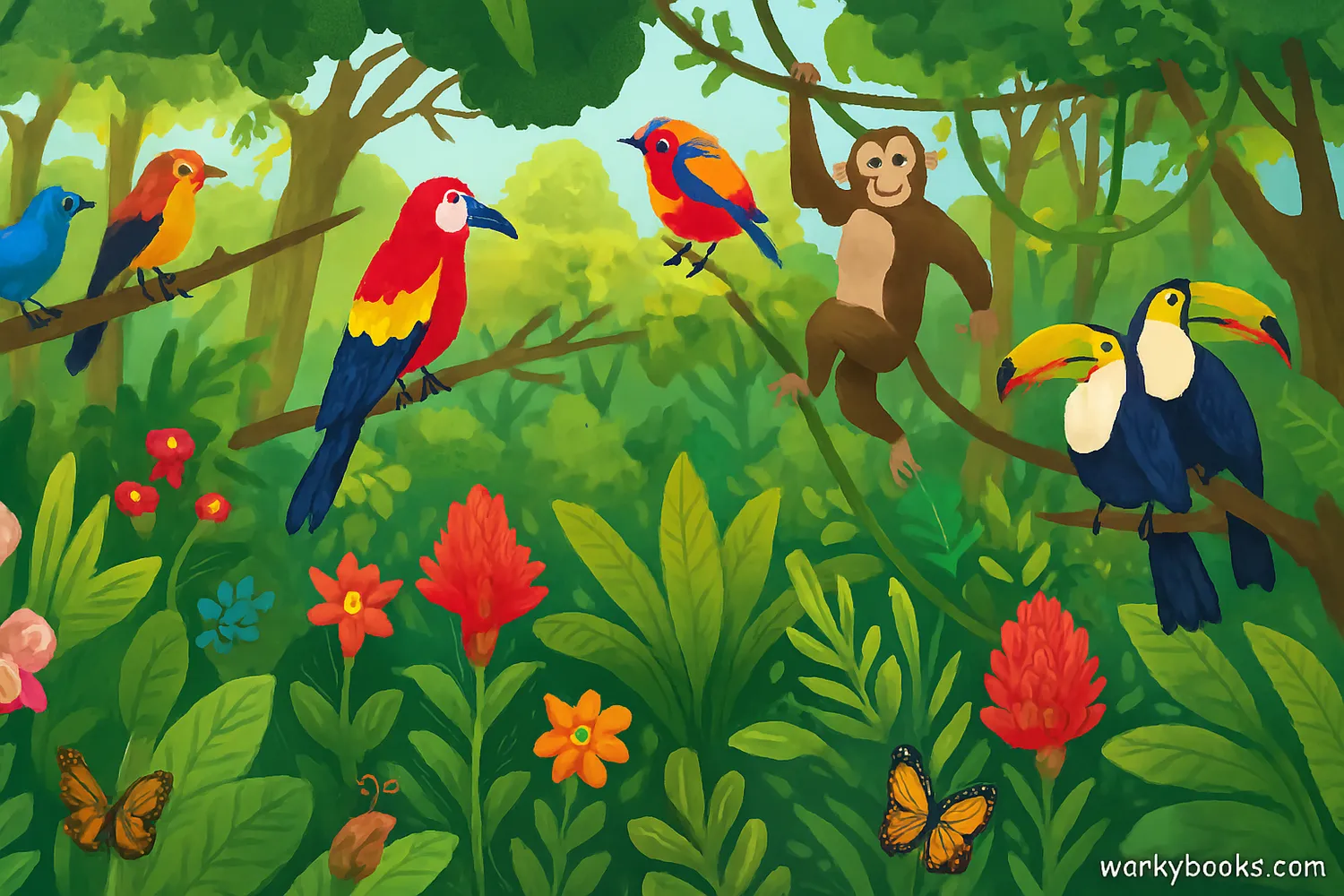
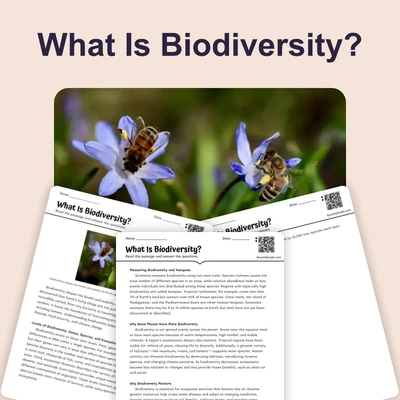
Biodiversity refers to the variety of living organisms—plants, animals, fungi, and microbes—within a particular region or ecosystem. Scientists have observed that ecosystems with higher biodiversity are generally healthier, more stable, and better able to recover from disturbances like storms, fires, or disease outbreaks. When an ecosystem has many different species, each with unique roles, it often functions more efficiently and is less likely to collapse if one species is lost. This relationship between biodiversity and ecosystem health is a central topic in ecology and is studied through careful observation and experimentation.
How Biodiversity Supports Ecosystem Function
Ecosystems rely on different species to perform a wide range of functions, such as pollination, decomposition, and nutrient cycling. When there is high biodiversity, there is often redundancy—multiple species can perform similar roles. For example, in a grassland, several species of insects may pollinate plants. If one pollinator declines, others can fill its role, making the system more stable. Scientific experiments show that ecosystems with high biodiversity produce more biomass (total living matter) and are more resilient after disturbances. In a famous study, researchers found that grasslands with more plant species recovered faster after a drought compared to those with fewer species.
Special Roles: Keystone, Foundation, and Indicator Species
Some species have roles that are especially important for ecosystem health. Keystone species have a disproportionately large impact compared to their abundance. For example, sea otters are keystone species in kelp forests because they eat sea urchins, which would otherwise destroy kelp beds. When otters are removed, urchin populations explode, and kelp forests disappear. Foundation species, like coral and large trees, create habitats that support many other organisms. Indicator species are sensitive to environmental changes; scientists monitor them to assess ecosystem health. Amphibians and lichens often serve as indicator species because they respond quickly to pollution or climate change.
Biodiversity, Stability, and Human Impact
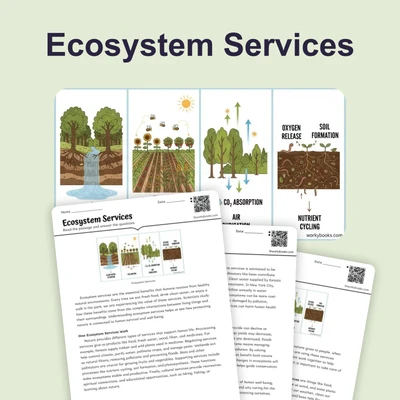
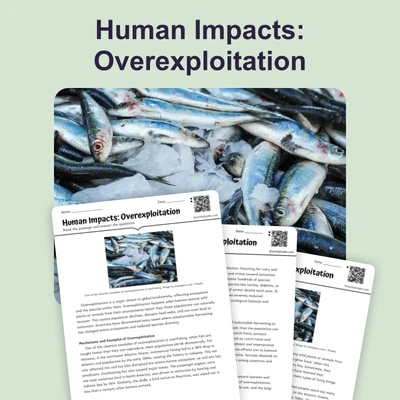
Research on biodiversity-ecosystem function helps scientists and policymakers understand how to protect natural environments. Ecosystems with high biodiversity are more productive and better able to provide ecosystem services, such as clean water, air, and food. Human activities like habitat destruction, pollution, and climate change can reduce biodiversity, weakening these natural systems. By protecting biodiversity, we help ensure that ecosystems remain healthy and capable of supporting both wildlife and human communities.
Maintaining biodiversity is not just about saving rare species—it is about preserving the complex web of relationships that keeps ecosystems functioning. Science continues to reveal more about these connections and their importance for our planet’s future.
Interesting Fact: The reintroduction of wolves to Yellowstone National Park in the 1990s reshaped the park’s rivers and forests, showing how one keystone species can transform an entire ecosystem.
Comprehension quiz (10 questions)
1. What does biodiversity refer to?
2. Which of the following is a function performed by species in an ecosystem?
3. What is a keystone species?
4. What happens when there is redundancy in an ecosystem?
5. Which is an example of an indicator species?
6. What is the main benefit of high biodiversity after a disturbance?
7. Why are foundation species important?
8. True or False: Human activities like pollution can lower biodiversity.
9. True or False: The reintroduction of wolves to Yellowstone had no effect on the ecosystem.
10. What is one ecosystem service mentioned in the passage?
Perfect for the way you teach
- Build comprehension skills
- Auto-graded quiz
- Differentiated reading
- Read together at home
- Improve fluency
- Quiet reading time
- Reading curriculum support
- Independent practice
- Track Lexile growth