Endangered Species and the Sixth Extinction
Interactive passage with audio narration, comprehension questions, and printable PDF.
What's included
Endangered Species and the Sixth Extinction preview and details
About this printable Endangered Species and the Sixth Extinction science reading passage, NGSS-aligned (Grades 5-8)
Sample passage and quiz from Endangered Species and the Sixth Extinction
Reading passage and comprehension quiz preview
Endangered Species and the Sixth Extinction
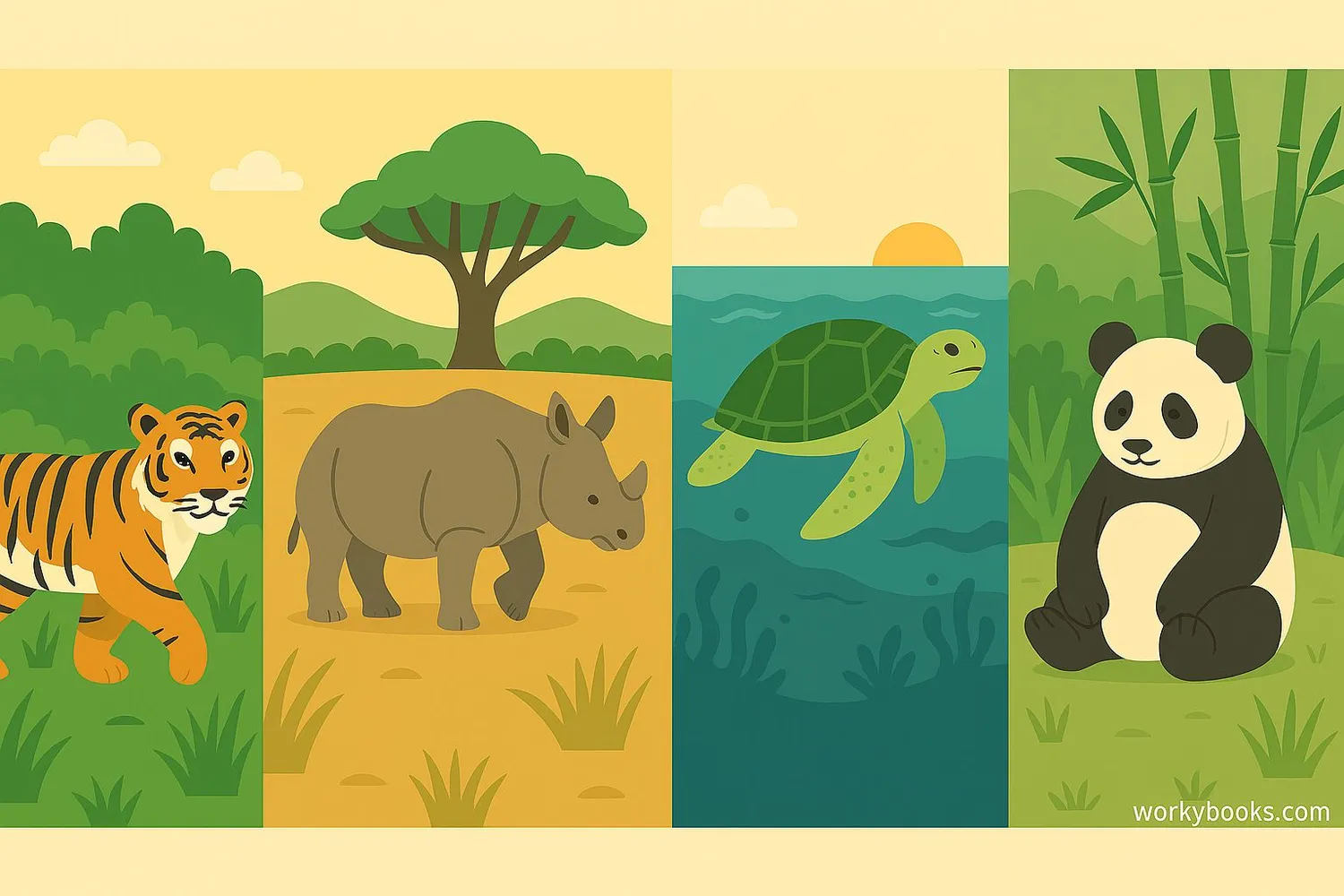
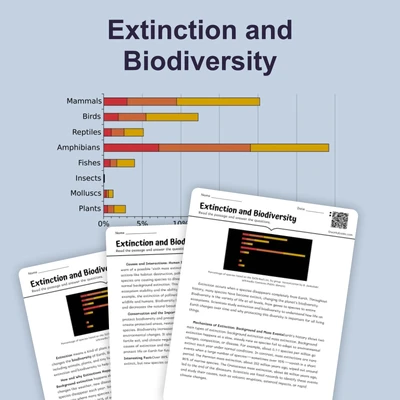
Earth’s biodiversity is facing a crisis unlike any in millions of years. Every year, scientists record the disappearance of species at rates far higher than the background extinction rate, which is about one species per million species per year under normal conditions. Today, extinction is happening 100 to 1000 times faster, driven mainly by human activities. This rapid loss of species is called the Sixth Extinction, and it threatens the stability and health of ecosystems worldwide.
The Mechanisms Behind Mass Extinction
Mass extinction events have occurred five times before in Earth’s history. For example, the Permian extinction wiped out around 90% of species, and the Cretaceous extinction ended the reign of the dinosaurs. What makes the current crisis different is its cause. Scientists use the acronym HIPPO to describe the main human-driven factors: Habitat loss, Invasive species, Pollution, Population growth, and Overexploitation. Each of these alters natural systems in complex ways. For instance, when forests are cleared for farms or cities, animals lose their homes and food sources. Invasive species can outcompete native species, while pollution can poison water and soil. Human population growth increases demand for resources, and overexploitation—like overfishing or illegal hunting—can push species to the brink of extinction.
Measuring and Responding to the Crisis
Scientists use tools like the IUCN Red List to assess which species are at risk. In the United States, the Endangered Species Act provides legal protection for species categorized as "endangered" or "threatened." Notable examples of species on the brink include the California condor, the black-footed ferret, the vaquita porpoise, and the Sumatran rhino. For some, conservation efforts have made a difference. The bald eagle, gray wolf, and humpback whale were once in danger but have recovered thanks to targeted protection and habitat restoration. These success stories show that human action can reverse declines, but prevention is usually easier than recovery.
Complexities and the Future of Biodiversity
The biodiversity crisis affects not just individual species but entire ecosystems and the services they provide, such as clean air, water, and food. Scientists also debate new technologies like de-extinction, which might one day bring back extinct species like the woolly mammoth or passenger pigeon. However, most agree that conserving existing species and habitats is the most effective way to maintain the intricate balance of life on Earth. Solving the Sixth Extinction will require international cooperation, science-based policies, and public awareness.
Our understanding of this crisis comes from collecting data, analyzing patterns, and using systems thinking to connect human actions to ecological outcomes. By learning from both past mass extinctions and recent conservation successes, we can make choices that help protect the planet’s rich diversity for the future.
Interesting Fact: The vaquita porpoise is the world’s rarest marine mammal, with fewer than 10 individuals remaining in the wild.
Comprehension quiz (10 questions)
1. What is the main cause of the current high rate of species extinction?
2. What does the acronym HIPPO stand for?
3. According to the passage, how does the current extinction rate compare to the background extinction rate?
4. What is the role of the IUCN Red List?
5. Which of the following is a success story where a species was brought back from the edge of extinction?
6. What does 'de-extinction' mean as used in the passage?
7. Why is prevention of extinction usually easier than recovery, according to the passage?
8. Which of the following is NOT listed as a current example of a species on the brink of extinction?
9. True or False: The Endangered Species Act gives legal protection to species in the United States.
10. True or False: Most scientists agree that de-extinction is more important than conserving existing species.
Perfect for the way you teach
- Build comprehension skills
- Auto-graded quiz
- Differentiated reading
- Read together at home
- Improve fluency
- Quiet reading time
- Reading curriculum support
- Independent practice
- Track Lexile growth